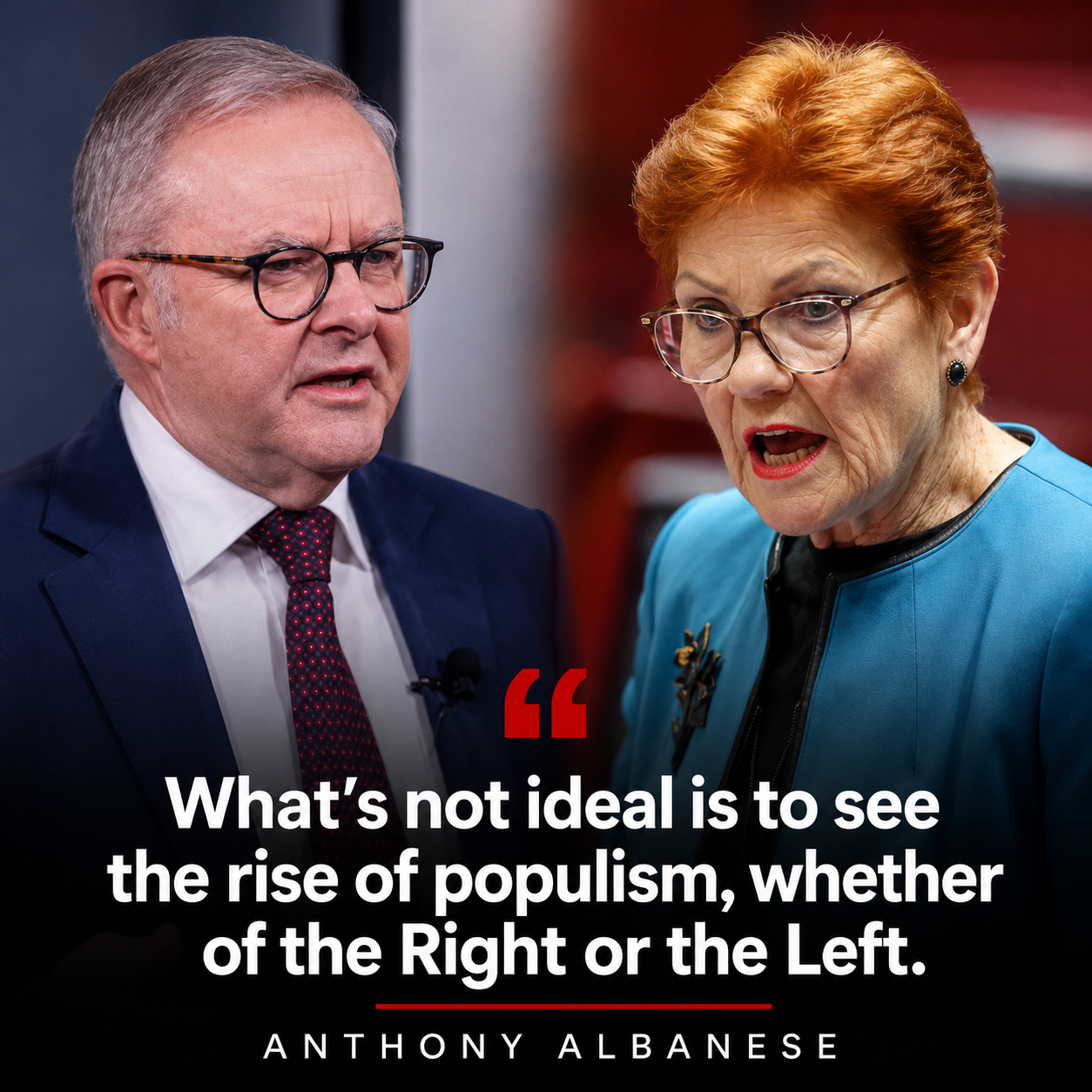
Anthony Albanese’s acknowledgement that the rise of One Nation has become a factor in Australia’s political debate reveals a much bigger story than a dispute over tax policy.
At its core, the issue is not about political parties.
It is about whether ordinary Australians still believe the system is working for them.
Across the country, households continue to face pressure from rising living costs, expensive housing, higher insurance premiums and increasing everyday expenses.
For many families, economic concerns that were once temporary have become a permanent feature of daily life.
Mortgage repayments remain a challenge for homeowners.
Renters continue to compete for a limited supply of available properties.
Small businesses are dealing with rising costs while consumers become more cautious about spending.
This environment has created fertile ground for political change.
Voters who feel ignored by traditional parties often begin looking elsewhere.
Some move towards minor parties.
Others support independents.
Many simply become more sceptical of the promises made by major political organisations.
The housing market remains one of the biggest drivers of frustration.
Young Australians increasingly question whether home ownership is realistically achievable.
Even households with stable incomes often find themselves struggling to save deposits large enough to enter the property market.
At the same time, renters are facing ongoing pressure from rising rents and low vacancy rates.
This has transformed housing from an economic issue into a political one.
Every policy involving taxation, investment, migration or housing supply now attracts intense public scrutiny.
Australians want to know whether new policies will genuinely improve affordability or simply create more uncertainty.
The debate over taxation reflects the same concerns.
Many voters are less interested in ideological arguments than in practical outcomes.
They want to know how policy changes will affect their household budget.
Will they pay more tax?
Will housing become more affordable?
Will investment opportunities improve or decline?
Will future generations have greater opportunities than they do today?
These questions have become central to modern Australian politics.
The growing support for alternative political movements suggests that many voters are no longer satisfied with conventional answers.
Public trust has become increasingly difficult to maintain when economic conditions remain challenging for extended periods.
Political leaders across the spectrum now face pressure to demonstrate tangible results rather than simply announce new policies.
The challenge extends beyond taxation.
Australians are also concerned about healthcare costs, energy prices, infrastructure pressures and long-term economic growth.
People want confidence that governments have a clear plan for the future.
They want evidence that economic sacrifices today will lead to better outcomes tomorrow.
This explains why voter behaviour is changing.
Economic anxiety often reshapes political loyalties more effectively than campaign advertising or parliamentary debates.
When people feel financially secure, they are more likely to remain loyal to established political parties.
When they feel under pressure, they become more willing to explore alternatives.
Australia is not unique in experiencing this trend.
Across many democracies, rising living costs and housing pressures have contributed to the growth of parties positioned outside traditional political structures.
The common factor is usually frustration.
Not necessarily anger at a single policy, but a broader belief that existing institutions are struggling to deliver meaningful improvements.
For the Albanese government, the challenge is convincing voters that current reforms will improve living standards and create greater economic opportunity.
For opposition parties and emerging political movements, the challenge is demonstrating that they can offer credible alternatives rather than simply criticise the status quo.
Ultimately, the political debate is likely to be decided by outcomes rather than rhetoric.
If housing becomes more affordable, if businesses regain confidence and if household budgets become less strained, public confidence may improve.
If those pressures continue, support for alternative political voices may continue to grow.
That is why the discussion surrounding tax policy has become so significant.
It is not simply about government revenue.
It is about whether Australians believe the country is moving in the right direction.
And for an increasing number of voters, that question may determine how they cast their ballot at future elections.






