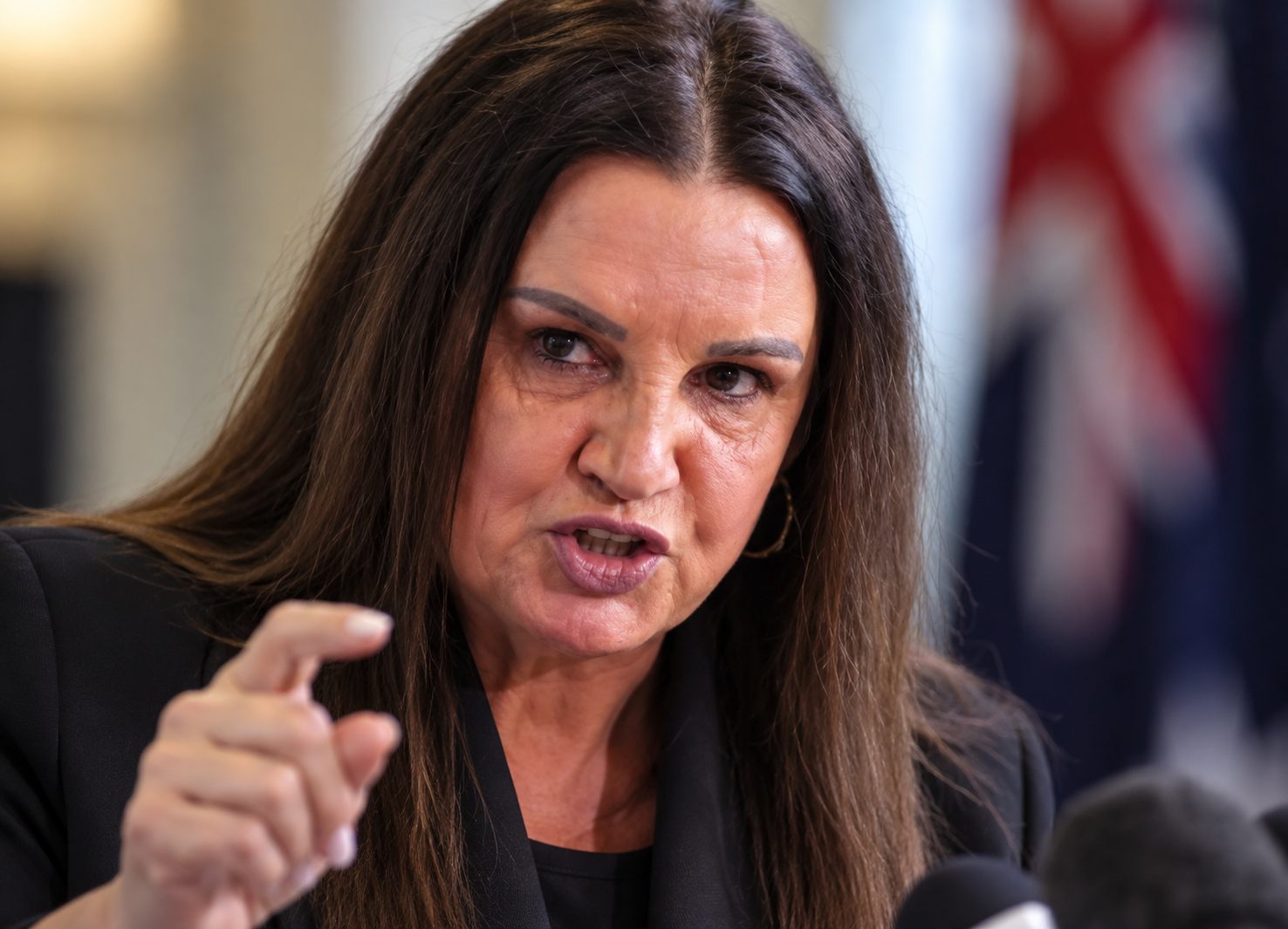
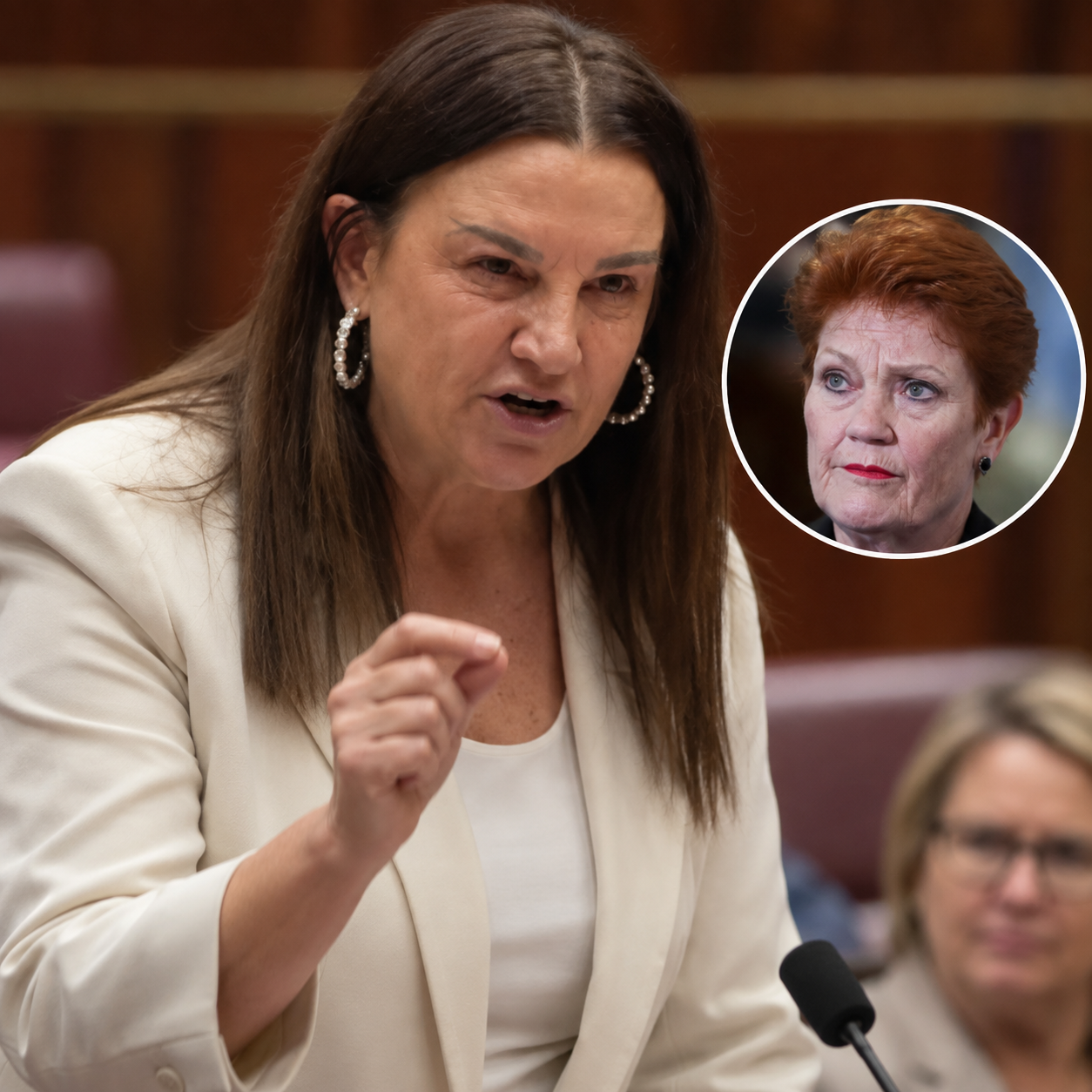
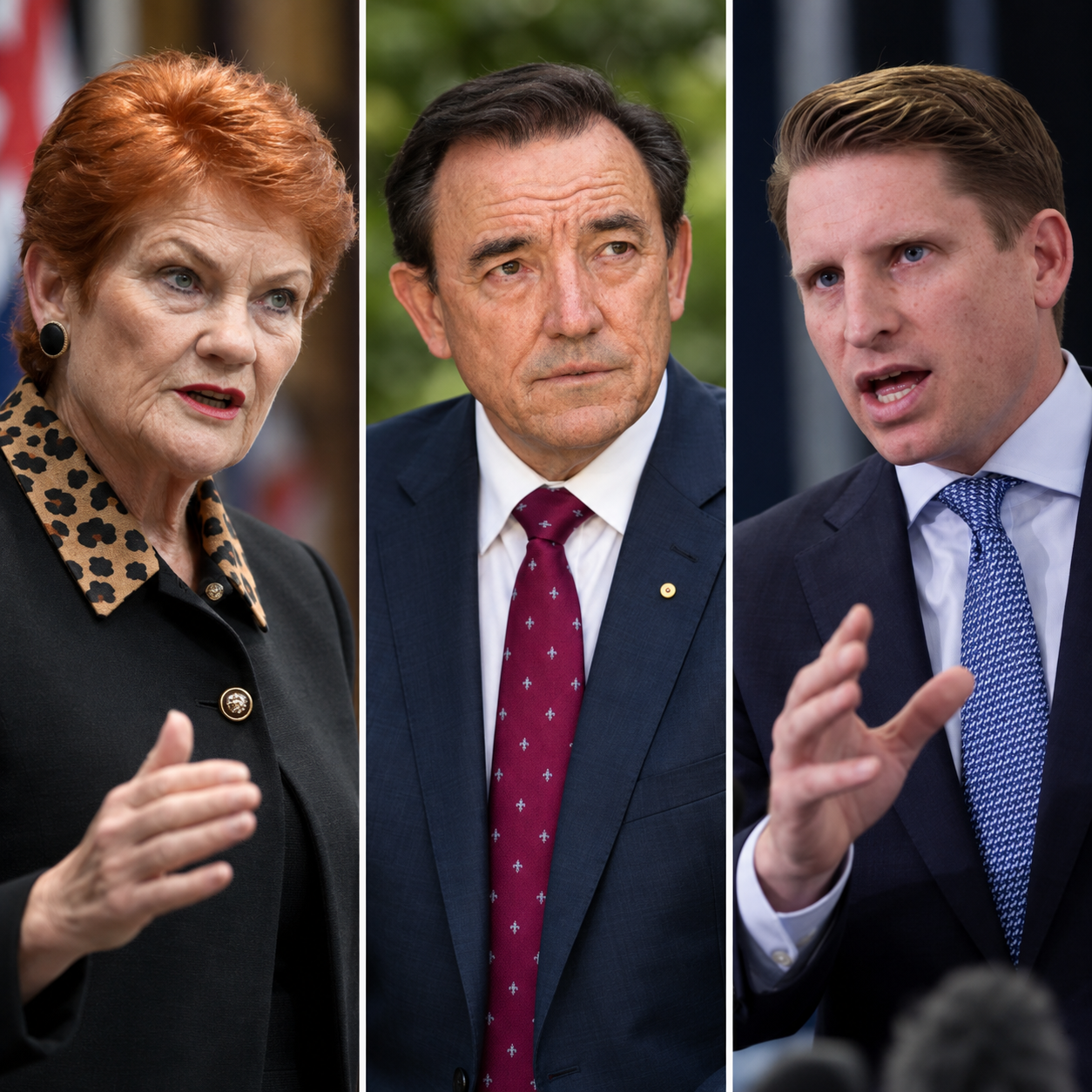
Jacqui Lambie has launched a fierce attack on Pauline Hanson, accusing the One Nation leader of cowardice, division and disrespect towards veterans as the row over a cartoon calling Liberal MP Andrew Hastie a “traitor” deepens in Canberra.
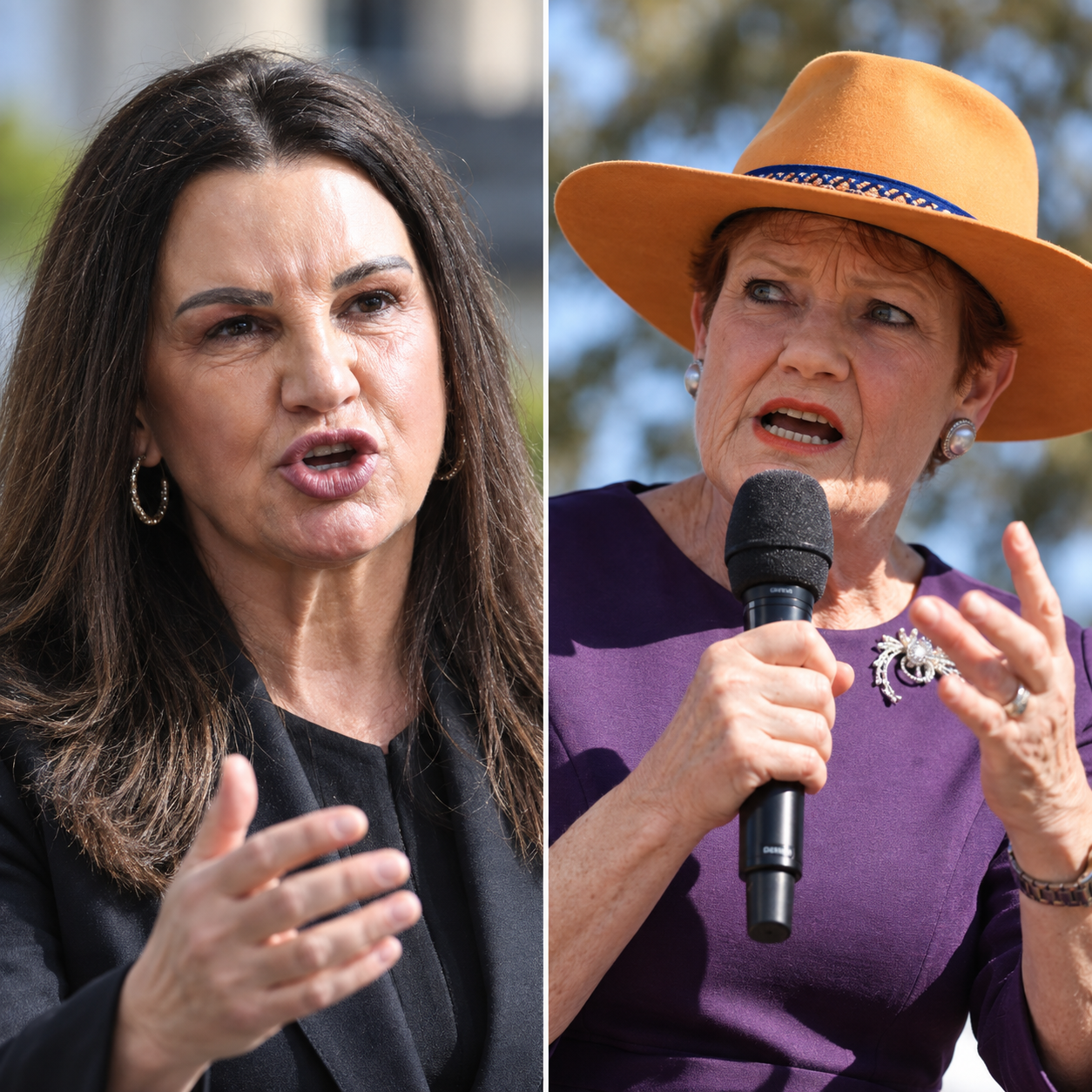
The independent Tasmanian senator, herself a military veteran, said Hanson’s handling of the dispute showed her “true colours” and demanded that the One Nation video be removed from social media.
Lambie’s intervention has added more weight to a backlash that now stretches well beyond the Liberal Party, with RSL Australia, senior Coalition figures and other parliamentarians also condemning the language used in the cartoon.
The dispute centres on a One Nation animated video titled Don’t Be Hastie, published in July and authorised by Hanson.
The video repeatedly brands Hastie a “traitor” while attacking him over two issues that have made him a target for parts of the conservative right: his evidence in Ben Roberts-Smith’s defamation case and his later vote for an amended version of the Albanese government’s anti-hate legislation.
Hastie, a former SAS captain who served twice in Afghanistan, has argued that the accusation is not just a personal slur but an insult to other veterans who believe soldiers should uphold the rule of law and high standards of conduct.
Lambie has taken much the same view, but in more colourful terms.
In media interviews this week, she described Hanson as a “bloody coward”, said she was “absolutely fuming”, and accused the One Nation leader of attacking a veteran’s service for political gain.
“What she’s doing in those cartoons is absolutely disgusting,” Lambie said.
She said attacking Hastie, or any veteran, in that way was “the lowest ebb you can possibly do” and told Hanson to “leave our veterans alone”.
Lambie also said Hanson was “an angry little woman with so much baggage”, accused her of dividing the country rather than uniting it, and argued that any veteran thinking of voting for or standing with One Nation should “think twice”.
The language was a dramatic escalation, but it also reflected the increasingly emotional territory the argument has entered.
At its core, the row is no longer just about one satirical video.
It has become a fight over military loyalty, political accountability and whether a veteran’s service record can be turned into ammunition in an ordinary partisan brawl.
Lambie’s anger appears to stem from that broader principle.
She served in the Australian Defence Force from 1989 to 2000, including with the Royal Australian Corps of Transport and the Royal Australian Corps of Military Police, and has long made veterans’ issues central to her political identity.
That background has given her particular licence to weigh in when she believes current or former service personnel are being treated unfairly.
For Lambie, the critical issue is not whether politicians should be criticised. It is whether a former soldier’s military service should be weaponised in a way that suggests disloyalty to the country itself.
The One Nation cartoon does precisely that.
Hastie has said the word “traitor” appears eight times in the video. He has challenged Hanson to either own the accusation openly or remove the material altogether.
Hanson has refused both options.
She has insisted she did not personally call Hastie a traitor and has defended the production as satire. Even as the backlash intensified, she continued to leave the video online and told critics to “take a chill pill”.
That response has only hardened opposition.
RSL Australia said that once military service is used as the “punchline” in a political attack, the issue stops being ordinary politics and becomes a broader attack on veterans. Opposition Leader Angus Taylor said the video should be taken down. Former prime minister Tony Abbott has said much the same.
Lambie’s attack stands out because she is not a Liberal ally defending a party colleague. Nor is she a natural Hanson supporter who has suddenly switched sides.
She has frequently clashed with both major parties and has built her own anti-establishment appeal. Her criticism therefore carries a different kind of force: it comes from someone who is not defending Coalition discipline, but what she sees as a basic line of decency.
The most contentious part of the cartoon is the way it frames Hastie’s role in the Ben Roberts-Smith litigation.
One Nation and its supporters have presented his evidence as a betrayal of a former SAS comrade. That description leaves out a vital fact.
Hastie did not simply decide to volunteer testimony against Roberts-Smith. He was subpoenaed to appear in the Federal Court during Roberts-Smith’s defamation proceedings in 2022.
That distinction matters enormously.
Appearing under subpoena means a witness is legally compelled to attend and answer questions. Hastie has repeatedly argued that obeying the court process and telling the truth under oath cannot fairly be described as treachery.
He has also noted that he was far from the only former SAS member to give evidence in the case. More than 20 former special forces personnel testified during the proceedings.
By framing his conduct as betrayal, Hastie argues, Hanson’s party is not only attacking him but casting a shadow over other veterans who also engaged with the legal process.
The Roberts-Smith matter itself has been one of the most explosive legal and cultural disputes in modern Australian public life.
Roberts-Smith, a Victoria Cross recipient and one of the country’s most decorated living soldiers, lost his high-profile defamation case against Nine newspapers and journalists Nick McKenzie and Chris Masters in 2023. The court found that several serious imputations had been proved to the civil standard.
That result did not amount to a criminal conviction.
But the legal pressure on Roberts-Smith increased again in April this year when he was arrested and charged with five counts of the war crime of murder relating to alleged killings in Afghanistan between 2009 and 2012.
He denies wrongdoing, and those criminal allegations have not yet been determined in court.
The difference between a civil finding and unresolved criminal charges is crucial, and so is the difference between supporting due process and branding someone a traitor for participating in it.
That is the distinction Lambie and Hastie say Hanson is deliberately blurring.
The other grievance highlighted in the One Nation video concerns Hastie’s vote on the federal anti-hate laws earlier this year.
Hastie originally signalled he would oppose Labor’s legislation, raising concerns about free speech and freedom of religion. The bill was later amended, with some of the most controversial provisions removed, and he ultimately voted for the revised version.
Critics say he broke his word. Hastie says he voted for a materially different bill from the one he had earlier criticised.
That dispute is politically relevant, but it is separate from the far more loaded suggestion that a former soldier is a traitor to his country.
It is the second accusation that has transformed a rough political cartoon into a national argument.
The controversy has already had internal consequences for One Nation and its allies.
Barnaby Joyce, who had also been criticised by Hastie during the flare-up, reached out to apologise. Hastie accepted that apology on Friday, drawing a distinction between Joyce and Hanson.
Hanson, however, has not retreated.
Her stance has left her increasingly isolated as criticism has mounted from Liberals, independents, veterans’ groups and others who might not agree on much else politically but do agree that the use of “traitor” has gone too far.
Lambie has sought to push the point further than most.
She said Hanson had “no idea of patriotism” and argued that hiding behind party cartoons while allowing them to attack a veteran was the act of a coward, not a leader.
That language is in keeping with Lambie’s well-established style: blunt, emotional and often deliberately confrontational. But it also reflects a more strategic political judgement.
One Nation has been working to broaden its appeal, particularly among conservative voters disillusioned with the Coalition. By making the Hastie cartoon an issue of respect for veterans, Lambie is attempting to cut directly at one of the constituencies Hanson has long tried to court.
Her warning to veterans to think carefully before backing One Nation was therefore not only moral but political.
The dispute also highlights the difficulties of defending inflammatory material as mere satire.
Australia’s political culture has long tolerated aggressive cartoons, mocking caricature and deliberately provocative commentary. Public figures are expected to withstand ridicule. But that tradition has never meant all political rhetoric is equal in its consequences.
Calling someone a hypocrite, a weak politician or even a coward is one thing. Calling a former soldier a traitor, and doing so repeatedly, carries a very different moral and emotional charge.
That is why the issue has resonated so strongly within veteran circles.
Lambie has framed Hanson’s conduct as more than tasteless politics. She sees it as a form of degradation directed at people who served in uniform and who should not have their service recast as betrayal merely because they took an unpopular political or legal position later in life.
Hanson’s supporters, by contrast, argue that the cartoon is hard-edged political commentary and that those condemning it are overreacting or attempting to shut down satire.
That defence may still resonate with some One Nation voters. But the growing political fallout suggests it has not been persuasive beyond that base.
The matter is unlikely to fade quickly.
Hastie has said he does not intend to take legal action, but he has vowed to impose political costs on One Nation. Lambie has made clear she intends to keep publicly pressuring Hanson. The RSL has already entered the argument. And the Roberts-Smith case, which sits behind so much of the bitterness, remains a live and highly sensitive issue in Australian public life.
What began as an online cartoon has therefore become a much larger test of political judgement.
For Lambie, the answer is already settled. In her view, Hanson’s conduct has revealed exactly who she is.
For Hanson, the refusal to back down suggests she believes the controversy will energise supporters rather than damage her.
The immediate question is whether that calculation holds as criticism keeps coming from across the political spectrum.
The larger one is whether voters, especially veterans and conservative Australians who value military service, see the line between rough political combat and something more corrosive in the same place Lambie does.