A major Australian biomonitoring study has found unusually high exposure to the sunscreen ingredient homosalate among children, adding pressure on regulators to tighten limits on a UV filter already restricted more heavily in Europe.
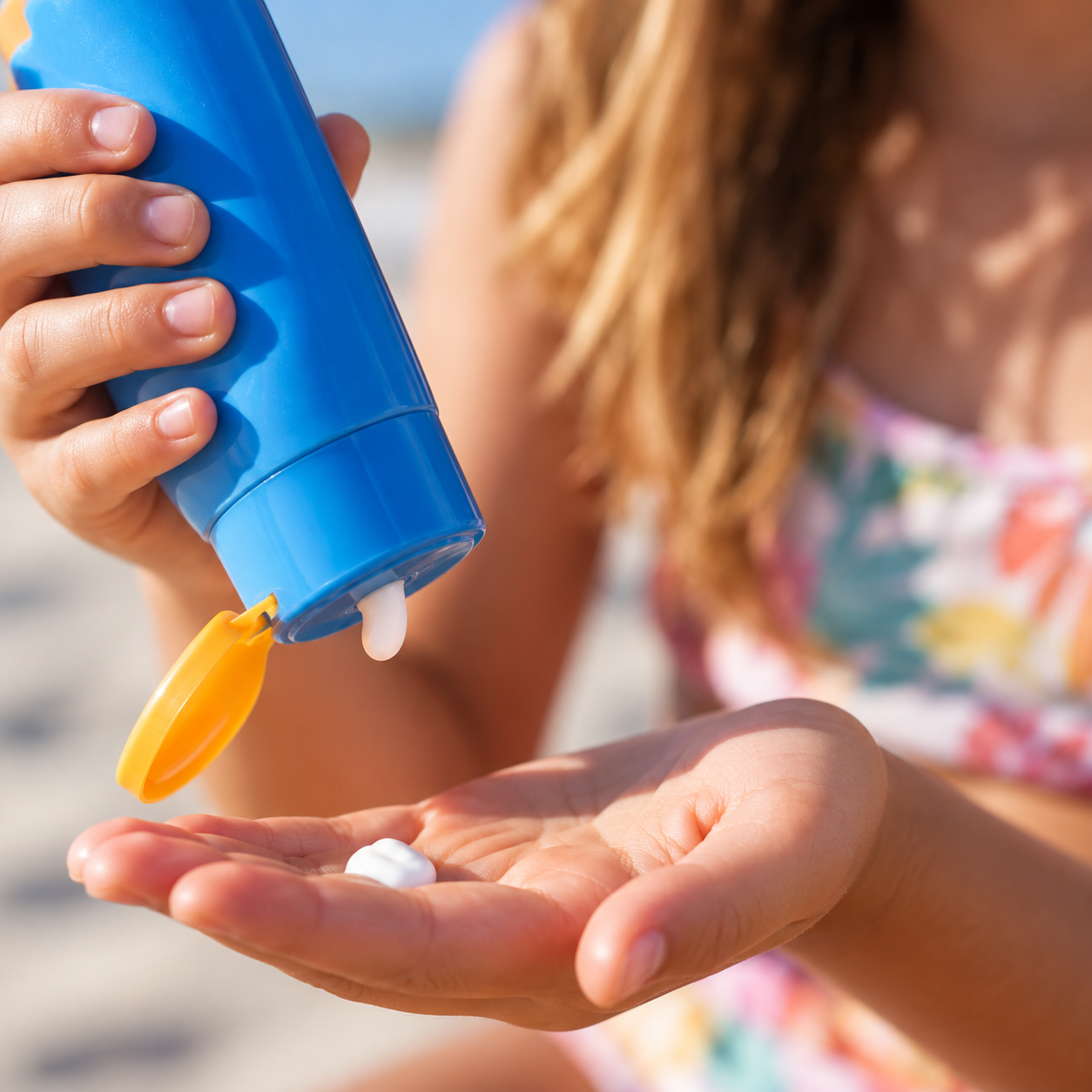
The study, published on September 4 in the peer-reviewed journal Environmental Science & Technology, analysed archived urine samples representing about 18,700 Australians collected between 2012 and 2023.
Researchers measured biomarkers associated with three commonly used ultraviolet filters: homosalate, 2-ethylhexyl salicylate — also known as octisalate — and octocrylene.
The most striking results involved children aged 15 and under.
For a biomarker of one form of homosalate, 80 per cent of pooled children’s urine samples exceeded the German Human Biomonitoring Commission’s HBM-I guidance value.
More significantly, 53 per cent of those pooled samples exceeded the higher HBM-II value.
HBM-I represents a concentration at or below which no adverse health effects are expected on current knowledge and no action is considered necessary.
HBM-II is a higher toxicology-based threshold. At or above that level, adverse health effects are considered possible and the German system recommends exposure reduction and appropriate medical advice.
Researchers also found that 23 per cent of pooled children’s samples exceeded the HBM-I guidance value for a biomarker of 2-ethylhexyl salicylate.
No comparable HBM-I exceedances were found for the octocrylene biomarker examined in the study.
The findings are important, but they require careful interpretation.
The researchers did not test 18,700 people individually and conclude that 53 per cent of Australian children were being harmed by sunscreen.
Instead, individual urine samples were combined into 187 pools, with each pool representing 100 people grouped according to factors including age, sex and collection period.
The percentages therefore describe the proportion of pooled samples exceeding the guidance values, not the percentage of individual Australian children with a diagnosed health problem.
The study also measured chemical exposure, not clinical illness.
It did not demonstrate that children with homosalate metabolites in their urine had suffered hormone disruption, kidney damage, fertility problems or any other specific medical condition.
That distinction is particularly important because homosalate has frequently been described as a potential endocrine disruptor.
European scientific advisers have raised concerns about its potential endocrine-disrupting properties, including evidence of estrogenic and anti-androgenic activity in experimental research.
However, the evidence has not established that sunscreen use at the exposure levels experienced by Australian children is causing hormonal disease.
The health-based biomonitoring values used in the new study were derived using toxicological evidence and human toxicokinetic data. For the homosalate biomarker highlighted by the researchers, the critical effects underlying the guidance values related to adverse kidney effects.
That makes a headline claiming that most Australian children have dangerous levels of a proven “hormone-disrupting chemical” stronger than the evidence supports.
What the study does show is that exposure among children was high enough, under an established biomonitoring framework, to justify closer regulatory scrutiny.
“The vast number of pooled children’s urine samples exceeding the HBM-I value” and about half exceeding HBM-II suggested homosalate exposure may be above levels considered acceptable in at least some individuals, the researchers concluded.
They recommended stricter limits on the maximum concentration permitted in sunscreen, potentially with particular attention to products intended for children.
The scientists were equally explicit about what they did not want the findings to achieve: a collapse in public confidence in sunscreen.
Australia has among the highest skin cancer rates in the world and sunscreen remains a central part of national sun-protection advice.
The authors warned that poorly communicated concerns about chemical exposure could have “disastrous consequences” if families responded by abandoning effective sun protection.
The Australian Therapeutic Goods Administration has taken a similar position.
The regulator says the benefits of sunscreen continue to far outweigh potential risks and urges Australians to keep using it alongside shade, protective clothing, hats and sunglasses.
At the same time, the TGA has already concluded that homosalate deserves tighter controls.
Australia currently permits homosalate at concentrations of up to 15 per cent in therapeutic sunscreens.
That is substantially higher than the European Union limit, where homosalate is restricted to a maximum concentration of 7.34 per cent in specified facial products and is not permitted in propellant spray products.
The EU restrictions followed assessments by the European Commission’s Scientific Committee on Consumer Safety.
In 2021, the committee concluded that homosalate could not be considered safe as a UV filter across cosmetic products at concentrations of up to 10 per cent, taking account of concerns about potential endocrine activity.
It subsequently concluded that a concentration of up to 7.34 per cent could be considered safe in face creams and pump sprays under the assessed conditions.
Australia began moving towards tighter controls before the latest biomonitoring study was published.
The Australian Industrial Chemicals Introduction Scheme issued an evaluation concerning homosalate in December 2024, while the TGA published a broader sunscreen ingredient safety review in July 2025.
The TGA recommended regulatory controls for homosalate and oxybenzone after considering systemic absorption and potential toxicity under an Australian sunscreen exposure model.
That model is particularly relevant because Australians can use sunscreen more frequently and over larger areas of the body than populations in countries with lower year-round ultraviolet exposure.
The TGA has described proposed restrictions as precautionary, noting that the toxicological signals driving its earlier review came largely from animal studies involving higher and longer exposures than those normally experienced by people.
As of the latest Australian permissible-ingredients rules, homosalate can still be used at up to 15 per cent while the regulatory process continues.
The new study gives regulators something they previously had less of: large-scale biomonitoring evidence showing what exposure looks like in the Australian population.
Researchers used surplus pathology samples collected between 2012 and 2023 and separated them into age groups ranging from children aged zero to five through to adults aged 61 and older.
Children consistently showed much higher concentrations of the investigated UV-filter biomarkers than older people.
The authors suggested that this probably reflects Australia’s strong sun-protection culture.
Children are routinely encouraged to use sunscreen through schools, childcare centres and public health programs, and Queensland state schools are required to have sun-protection policies and provide access to broad-spectrum sunscreen.
Exposure can occur primarily through absorption across the skin, but the researchers said oral exposure was also plausible — particularly in children — through products used on the lips, hand-to-mouth behaviour or eating after sunscreen has been applied to the hands.
Rather than interpreting widespread exposure as evidence that public-health advice had failed, the researchers said high detection levels could partly demonstrate that Australians were following sunscreen recommendations.
The challenge is therefore not simply to reduce sunscreen use, but to maintain protection from ultraviolet radiation while ensuring the active ingredients are used at concentrations with an adequate safety margin.
The study does have significant limitations.
About 92 per cent of the samples came from Queensland and approximately 75 per cent originated in south-east Queensland.
That means the sample was not geographically representative of the Australian population.
The authors nevertheless argued comparable exposure was plausible elsewhere because sunscreen use is widespread nationally.
The pooled design also prevents researchers from knowing whether every individual within a high-concentration pool had elevated exposure or whether a smaller number of highly exposed individuals drove the average.
The paper explicitly acknowledges that individual concentrations could not be reconstructed from the pooled samples.
Those limitations make the study a strong signal for further research and regulation rather than proof of widespread clinical harm.
The findings arrive during a period of unusually intense scrutiny of Australia’s sunscreen industry.
That scrutiny is not limited to chemical ingredients.
In 2025, consumer group CHOICE independently tested 20 sunscreens advertised as SPF50 or SPF50+ and reported that 16 did not achieve their claimed protection level in its testing.
The controversy triggered a major TGA investigation into SPF testing and the reliability of a base formulation used across numerous products.
By March 2026, the regulator said all 19 sunscreens it reviewed that used the same base formulation as Ultra Violette Lean Screen SPF50+ had been cancelled from the Australian Register of Therapeutic Goods and recalled.
Other sunscreen recalls also occurred for separate reasons, including product separation.
That history is different from the homosalate issue.
The SPF controversy concerned whether certain products delivered the protection claimed on their labels. The new research concerns systemic exposure to permitted UV-filter ingredients even when sunscreen is being used correctly.
Both questions matter because confidence in sunscreen depends on consumers believing products are effective as well as safe.
Public-health authorities remain concerned that sensational claims could push Australians towards a more immediate and well-established danger: ultraviolet radiation.
The TGA says Australians should continue using sunscreen and choose products included on the Australian Register of Therapeutic Goods, identifiable by an AUST number on the label.
For primary sun protection, it recommends at least SPF30 and stresses that sunscreen should be only one part of a broader strategy that includes shade, clothing, a hat and sunglasses.
The new study does not overturn that advice.
Instead, it strengthens the case for regulators and manufacturers to reduce avoidable chemical exposure where safer concentrations or alternative formulations can deliver the same protection.
For Australian parents, that leaves a more nuanced message than either “sunscreen is dangerous” or “there is nothing to investigate”.
The proven threat from UV radiation remains substantial. Sunscreen continues to save skin from damage and help prevent cancer.
But the biomonitoring results suggest Australia’s particularly intensive sunscreen use may also require standards tailored to Australian exposure — especially for children who may be applying these products repeatedly for years.
The question now facing regulators is not whether Australians should stop protecting themselves from the sun, but whether that protection can be delivered with lower exposure to homosalate without sacrificing effectiveness.