Veteran senator Jacqui Lambie has launched an extraordinary attack on Pauline Hanson, accusing the One Nation leader of dividing Australia and showing her “true colours” as the political backlash over a cartoon branding former SAS officer Andrew Hastie a “traitor” continues to grow.
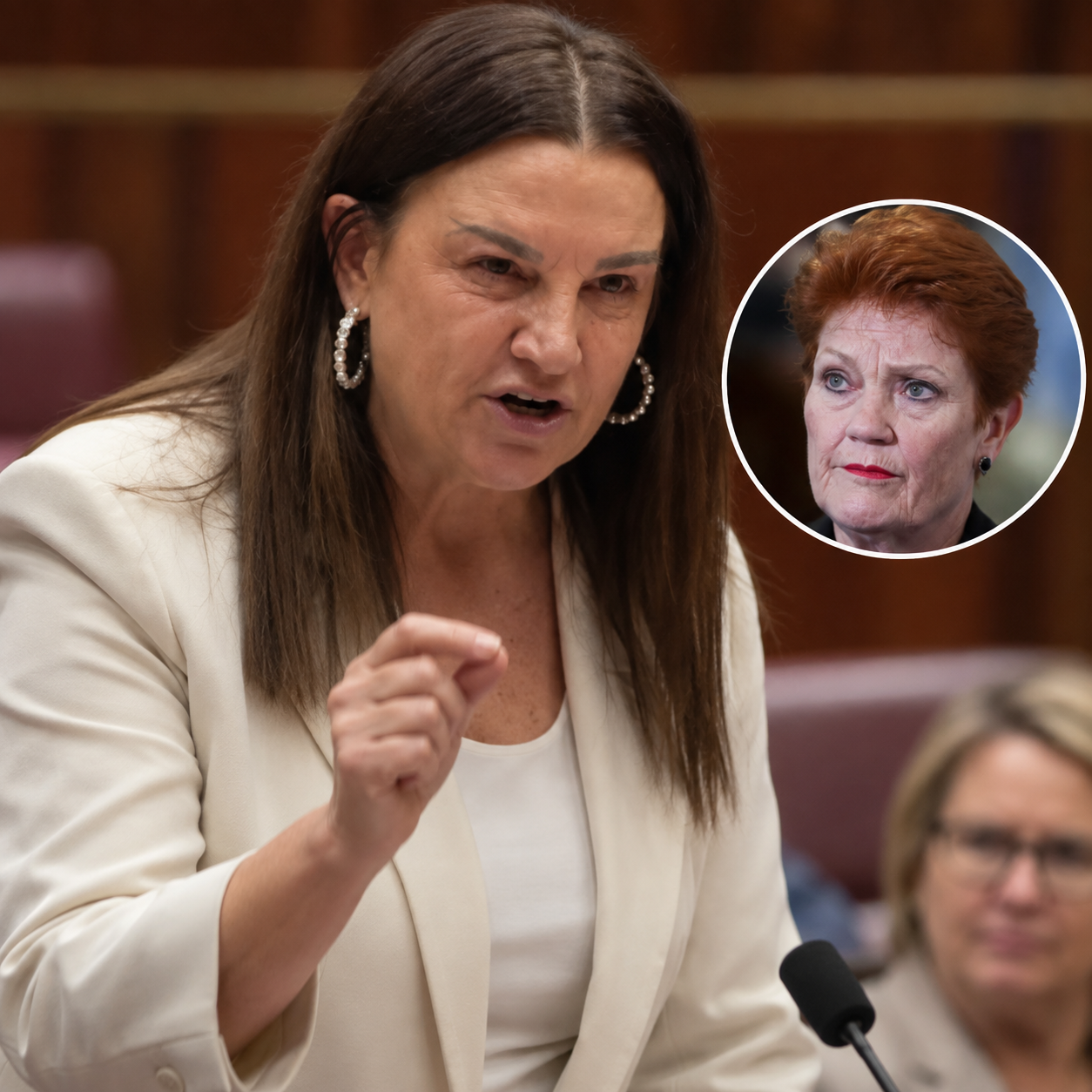
Lambie, who served in the Australian Defence Force for more than a decade before entering federal politics, condemned Hanson over a One Nation animated video that repeatedly uses the word “traitor” while attacking Hastie over his evidence in Ben Roberts-Smith’s defamation case.
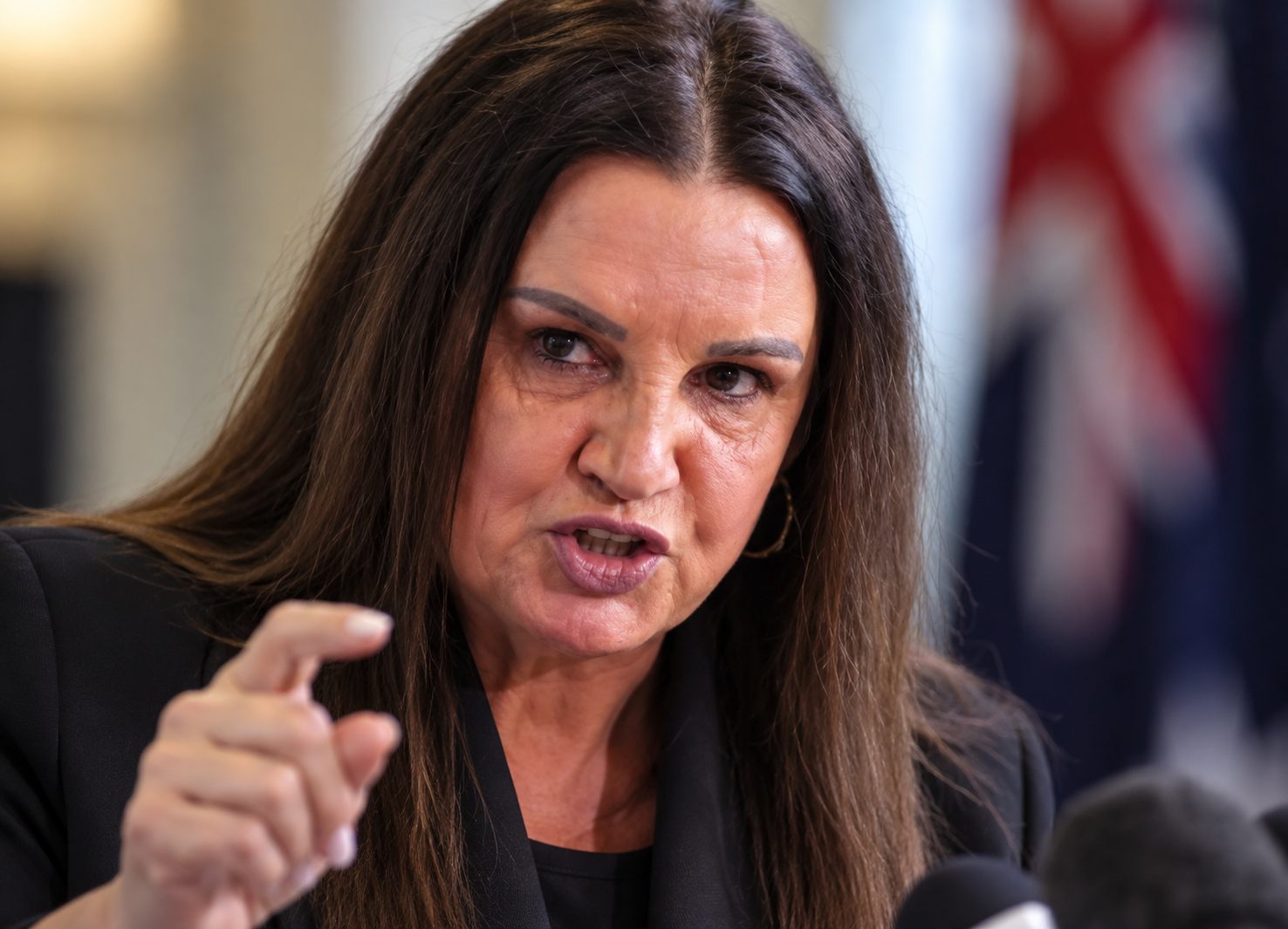
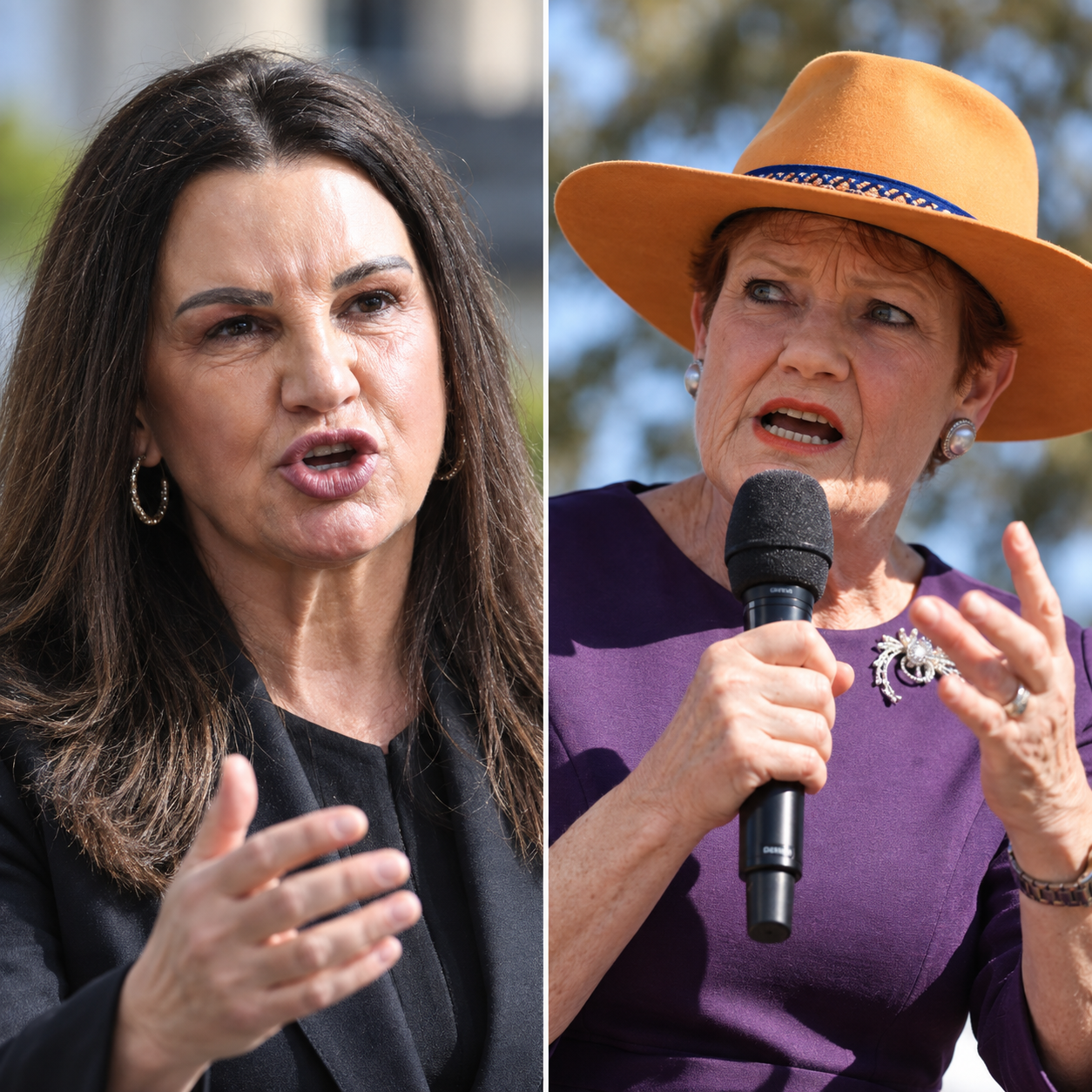
Speaking as the controversy intensified in Canberra, the Tasmanian senator described Hanson as an “angry little woman” and accused her of fuelling division rather than bringing Australians together.
“She’s dividing this country,” Lambie said, arguing that Hanson’s handling of the dispute revealed what she regarded as the One Nation leader’s real character.
Lambie’s intervention was particularly personal because both she and Hastie are former Australian Defence Force members.
She told ABC Radio National that attacking a veteran over his military service was among the lowest forms of political conduct and urged Hanson to immediately remove the cartoon and apologise.
Her criticism went well beyond disagreement over political satire.
Lambie argued that the video sent a damaging message to former service personnel by suggesting that complying with a court process and giving evidence about another soldier could be characterised as betrayal.
She also issued a direct warning to veterans considering supporting One Nation, telling them they should think carefully about what the controversy said about the party’s attitude towards military service.
The dispute centres on a One Nation animated video titled Don’t Be Hastie, published in July as part of the party’s political cartoon series.
The video attacks Hastie over two separate issues: his involvement in the failed defamation case brought by Victoria Cross recipient Ben Roberts-Smith against Nine newspapers, and his later support for an amended version of federal anti-hate legislation.
Hastie says the word “traitor” appears eight times in the cartoon.
The Western Australian Liberal MP has accused Hanson of trying to distance herself from language contained in material she authorised and promoted.
Hanson has said she did not personally call Hastie a traitor and has defended the production as satire.
She has refused repeated calls to remove it.
That defence has failed to satisfy Lambie.
For her, the critical issue is the context in which the insult is used.
Hastie joined the Australian Army in 2001, later served with the Special Air Service Regiment and deployed twice to Afghanistan before entering politics.
Lambie served in the ADF from 1989 until 2000, including with the Royal Australian Corps of Transport and Royal Australian Corps of Military Police.
Her military background has shaped much of her parliamentary career, particularly her work on veterans’ health, compensation and treatment by government agencies.
That experience formed the basis of her fury at the One Nation video.
She argued Hanson had no right to use a veteran’s service record as ammunition simply because she disagreed with what that veteran later did in civilian life.
The question of what Hastie actually did in the Roberts-Smith case has also become central to the dispute.
One Nation’s cartoon presents his evidence as one of the reasons he was labelled a traitor.
But Hastie did not simply decide to volunteer testimony against his former SAS colleague.
He was subpoenaed to appear before the Federal Court in 2022.
Reporting from the proceeding described him as a reluctant witness. He told the court at the time that he did not want to be there.
Justice Anthony Besanko later described Hastie as a straightforward witness.
Hastie has repeatedly argued that obeying a subpoena, appearing in court and answering questions truthfully under oath were legal obligations rather than acts of betrayal.
He has also broadened his criticism beyond his own reputation.
More than 20 SAS veterans gave evidence during the litigation, according to Hastie, and he has challenged One Nation to explain whether its characterisation applies to those former soldiers as well.
The Roberts-Smith case itself requires careful distinction between civil findings and criminal allegations.
Roberts-Smith sued Nine newspapers and journalists over reports accusing him of serious misconduct in Afghanistan.
In 2023, the Federal Court dismissed his defamation case after finding Nine had established the substantial truth of several serious imputations to the civil standard of proof.
His appeal was dismissed by the Full Court in 2025.
Roberts-Smith has since been charged with five counts of the war crime of murder over alleged killings of Afghan men between 2009 and 2012.
Those are criminal allegations that remain before the courts. Roberts-Smith denies wrongdoing and has not been convicted of those offences.
The legal history makes the word “traitor” especially combustible in the current political fight.
Hastie argues he fulfilled his legal duties and upheld standards expected of Australian soldiers. Hanson’s critics say the cartoon instead implies that giving evidence damaging to a decorated former comrade represents disloyalty.
That interpretation has now prompted condemnation well beyond the Liberal Party.
RSL Australia issued a public statement saying that once a veteran’s military service becomes the basis for calling them a traitor, the dispute stops being merely partisan.
The organisation said such rhetoric risks telling veterans that their service can later be portrayed as betrayal whenever their actions become politically inconvenient.
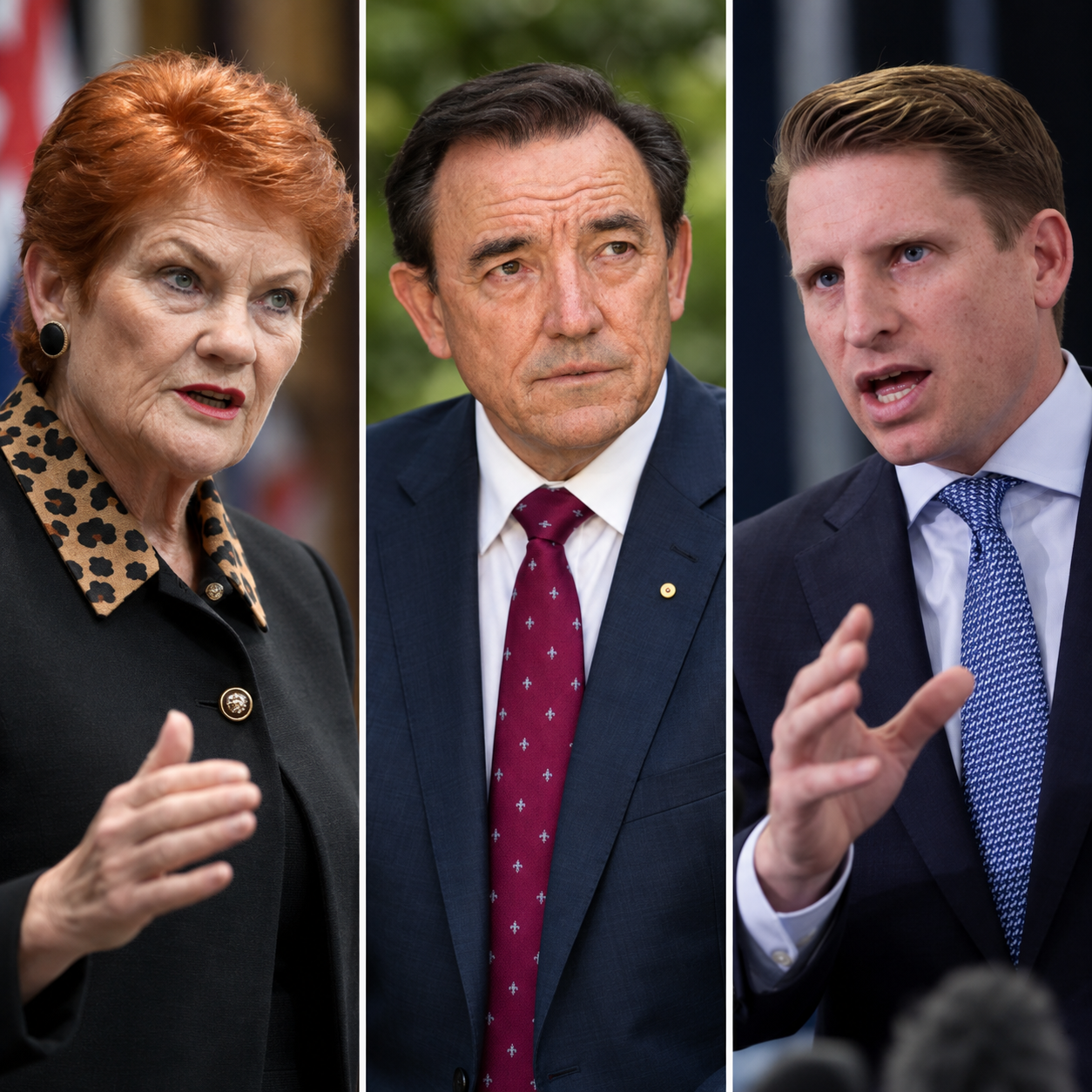
Opposition Leader Angus Taylor has called for the video to be removed.
Former prime minister Tony Abbott has also said One Nation should take it down, adding another influential conservative voice to criticism of Hanson.
Greens figures and Labor politicians have separately condemned the language.
Even within One Nation, the response has not been completely uniform.
The party’s Western Australian leader, Rod Caddies, distanced himself from the cartoon this week and called for politicians to lower the temperature of public debate.
Barnaby Joyce, who joined One Nation after the video was originally published, has now gone further.
After Hastie initially accused both Hanson and Joyce of being “lying cowards”, Joyce contacted the Liberal MP and apologised.
Hastie accepted the apology on Friday, saying Joyce had explained that he had no involvement in producing the cartoon and had not been a member of One Nation when it was published.
That left Hanson as the principal target of Hastie’s criticism.
Hanson has shown no sign of following Joyce’s lead.
She has continued to defend the cartoon and told those objecting to it to “take a chill pill”, dismissing the controversy as overblown.
The video remained pinned to her social media account as the dispute entered another day.
That refusal has transformed what began as a relatively old piece of political satire into a much larger argument about leadership and accountability.
Hastie says Hanson has two defensible choices: directly stand behind the accusation, or remove the cartoon.
He argues that continuing to host and promote the video while simultaneously saying she did not personally call him a traitor allows her to avoid responsibility for her own party’s message.
Lambie’s intervention adds another dimension because she is neither a Liberal colleague defending Hastie on party grounds nor a traditional political ally.
The independent Tasmanian senator has regularly attacked both major parties and has often occupied positions outside conventional left-right political blocs.
She and Hanson have also competed for some of the same anti-establishment and working-class voters, particularly in Tasmania.
One Nation openly targeted Lambie’s Senate position during the 2025 federal election campaign, with Hanson criticising her voting record and attempting to build the party’s support in the state.
That history gives the latest confrontation an additional political edge.
But Lambie has framed her attack primarily around veterans rather than electoral rivalry.
Her message is that there should be a boundary around the use of military service in political campaigning — particularly where a former soldier was complying with a court order.
The issue also raises a broader question about political satire.
Australia has a long tradition of aggressive caricature and personal ridicule in political cartoons, and public figures are routinely subjected to material designed to offend, provoke or exaggerate.
Hanson’s supporters argue the One Nation animation falls into that tradition and that political opponents are deliberately treating satire as a literal accusation.
Critics counter that satire does not make the meaning of words disappear, particularly when a party repeatedly uses a term as serious as “traitor” and links it directly to a former soldier’s conduct.
RSL Australia’s intervention effectively supports that second view.
Hastie has said he does not intend to take legal action against Hanson, preferring instead to fight the issue politically.
That means the argument will likely be settled in public opinion rather than a courtroom.
One Nation has been seeking to expand its vote and portray itself as an alternative conservative force capable of challenging the Coalition on issues including immigration, free speech and national identity.
The Hastie dispute now tests whether its combative political style carries a cost with another constituency the party has sought to court: military veterans.
Lambie has made that question explicit.
Her warning to veterans considering One Nation was not simply that they should disagree with Hanson on one cartoon, but that they should ask what the episode reveals about how the party treats former soldiers who take positions it dislikes.
Hanson, meanwhile, has given no indication that the expanding criticism will force a retreat.
That leaves both women in familiar territory: outspoken senators who built their political brands through blunt language, confrontation and a willingness to challenge opponents directly.
This time, however, Lambie believes Hanson has crossed a line that extends beyond their personal or political rivalry.
With Joyce apologising, senior Liberals demanding the video’s removal, the RSL publicly condemning it and Hastie refusing to let the issue go, the pressure is now concentrated squarely on the One Nation leader.
Hanson can continue to insist the cartoon is satire.
Her critics, led by Lambie, are equally determined to argue that calling an Australian veteran a traitor is not something that can be waved away with that label.