Few social issues are generating more heated debate in Australia today than the question of how sex should be defined in law.
What was once considered a straightforward legal and biological concept has increasingly become the subject of political, legal and cultural disagreement.
As governments, regulators and advocacy groups continue debating the issue, Australians are finding themselves drawn into a conversation that reaches far beyond politics.
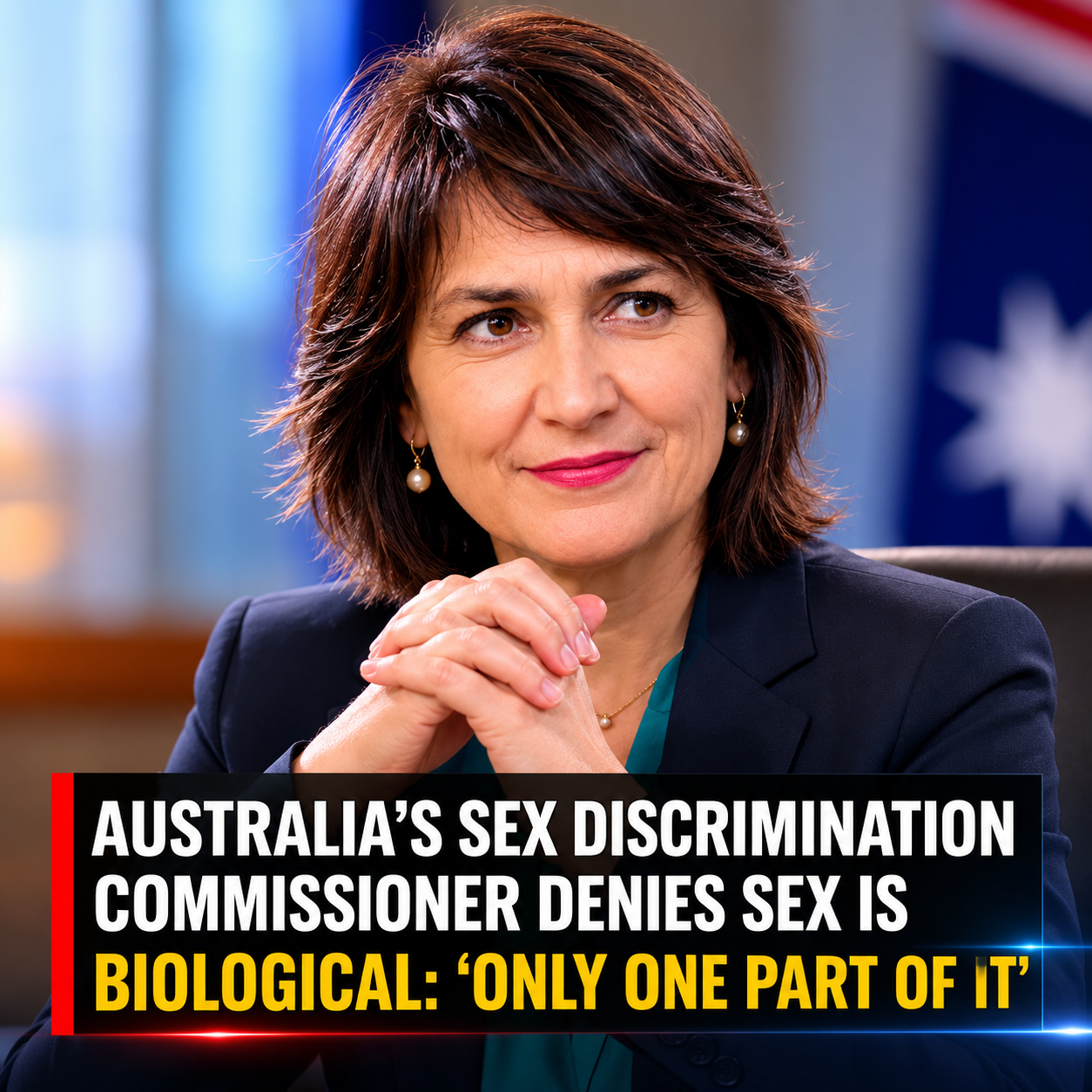
The discussion touches schools, workplaces, sporting competitions, healthcare services and anti-discrimination laws.
It also raises difficult questions about how societies balance individual rights, legal protections and community expectations.
For many Australians, the issue is not simply theoretical.
They want clarity.
They want to understand how laws will apply in everyday situations.
And they want confidence that policymakers can provide consistent rules that are both fair and practical.
Supporters of using biological sex as the primary legal definition argue that biological distinctions remain important in a wide range of settings.
They point to women’s sport, single-sex facilities, medical treatment and data collection as areas where biological differences can have practical consequences.
Many believe legal definitions should reflect biological reality in order to avoid confusion and maintain certainty.
Others argue that human identity is more complex than biological characteristics alone.
They contend that laws should recognise a broader understanding of sex and gender in order to ensure that all individuals receive equal treatment and protection from discrimination.
These competing perspectives have become increasingly difficult to reconcile.
As a result, governments and public institutions often find themselves navigating highly sensitive and emotionally charged territory.
The debate has become particularly prominent because it intersects with several areas of public policy at once.
Education systems face questions about participation, facilities and student wellbeing.
Sporting organisations must determine eligibility rules that balance inclusion with competitive fairness.
Employers seek guidance on workplace rights and obligations.
Healthcare providers must navigate complex medical, ethical and legal considerations.
The challenge for lawmakers is creating frameworks that provide certainty while accommodating diverse viewpoints.
That task becomes more difficult when public opinion itself remains divided.
Polling over recent years has frequently shown strong support for protecting individual rights while also maintaining certain sex-based protections in specific settings.
Many Australians appear to support both principles simultaneously.
This explains why the issue often defies simple political categorisation.
People from across the political spectrum hold a variety of views.
Some prioritise inclusion.
Others prioritise biological definitions.
Many attempt to balance both objectives.
The legal implications are significant.
Definitions written into legislation can influence court decisions, regulatory guidance and institutional policies for years or even decades.
As a result, debates that may initially appear symbolic can ultimately have substantial practical consequences.
The discussion is also occurring within a broader international context.
Several countries have reviewed or amended laws relating to sex and gender in recent years.
These changes have often generated intense public debate, reflecting the complexity of the issues involved.
Australia is now confronting many of the same questions.
How should competing rights be balanced?
What definitions should apply in different settings?
And how can governments maintain public confidence while addressing concerns from multiple communities?
There are no easy answers.
What is clear is that Australians are increasingly demanding transparency and consistency from policymakers.
People want to know how decisions are made and what consequences those decisions may have.
For governments and public institutions, the challenge is ensuring that debate remains focused on evidence, law and practical outcomes rather than political slogans alone.
The conversation surrounding sex definitions is unlikely to disappear anytime soon.
As legal reforms continue to be discussed, the issue will remain central to wider debates about rights, identity and the role of public institutions in modern Australia.
Ultimately, the question is not merely how words are defined.
It is how those definitions shape laws, policies and everyday life for millions of Australians.