Only weeks ago, Ben Carroll looked Victorian Premier Jacinta Allan in the eye and assured her he had no intention of challenging her leadership.
Today, the Deputy Premier is openly seeking her job.
The dramatic reversal has transformed Carroll from Labor’s loyal second-in-command into the leading contender to become Victoria’s next Premier, placing him at the centre of one of the state’s most significant political upheavals in recent years.
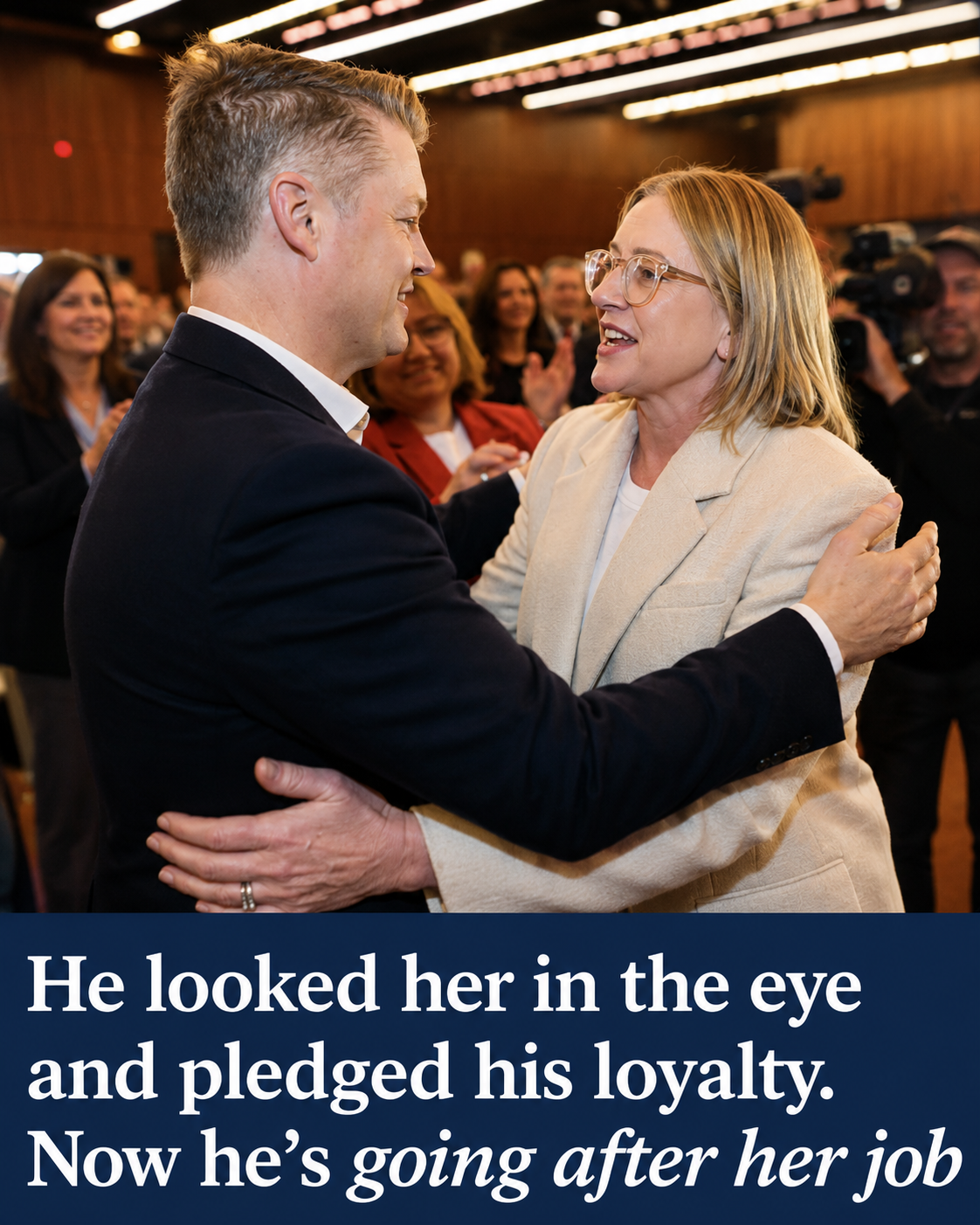
As speculation surrounding Labor’s leadership intensified, Carroll confirmed he would nominate himself should the parliamentary party proceed with a leadership ballot, ending days of uncertainty over whether a serious challenger would emerge against Jacinta Allan.
The announcement surprised many observers because only a month earlier Carroll had publicly and privately expressed support for the Premier, insisting he was not seeking the state’s top political office.
That apparent change of heart has inevitably prompted questions about both Carroll’s political judgement and the circumstances that led him to conclude Victoria required new leadership.
Supporters argue his decision reflects a recognition that Labor’s declining electoral position demanded decisive action.
Critics, meanwhile, contend the move raises uncomfortable questions about political loyalty and trust within the government’s senior ranks.
Regardless of where opinions fall, Carroll’s leadership bid has firmly established him as one of the most influential figures in Victorian politics.
Born and raised in Melbourne, Carroll entered Parliament at a relatively young age after developing an early interest in public service and Labor politics.
Over the years he steadily built a reputation as a disciplined and reliable operator inside government, serving across several ministerial portfolios and gaining experience in both policy development and political management.
Unlike some political figures who emerge rapidly through high-profile campaigns, Carroll’s career has largely been characterised by incremental advancement through the party’s organisational and parliamentary structures.
Colleagues have frequently described him as diligent, approachable and highly organised, qualities that helped establish him as one of Labor’s most dependable ministers.
His ministerial responsibilities have spanned a range of important areas, allowing him to develop experience across transport, public services, education and other key sectors of government.
That broad administrative background contributed to his appointment as Deputy Premier, positioning him as one of Jacinta Allan’s closest political allies following her elevation to the premiership.
For much of Allan’s leadership, Carroll publicly projected an image of unity within the government.
He regularly defended cabinet decisions, promoted government initiatives and rejected suggestions that Labor was becoming divided over its future direction.
Those actions make his decision to challenge for the leadership all the more politically significant.
Leadership contests rarely emerge without sustained internal pressure, particularly in governments that have been in office for an extended period.
Victoria’s Labor administration has governed the state for more than a decade, first under Daniel Andrews and subsequently under Jacinta Allan.
During that period the government delivered major infrastructure investments and significant reforms across health, education and transport.
However, prolonged periods in office also tend to expose governments to increasing political fatigue, particularly when economic pressures, cost-of-living concerns and declining opinion polls begin affecting public confidence.
Recent polling suggesting Labor faces a difficult electoral environment appears to have intensified discussions within caucus about whether new leadership could improve the party’s prospects before the next state election.
Carroll’s willingness to contest the leadership reflects those growing concerns inside parliamentary Labor.
Although he has not publicly criticised Allan personally, his candidacy inevitably represents a judgement that different leadership may better position the government for the challenges ahead.
Political leadership contests in Australia are often shaped as much by internal assessments of electoral viability as by ideological differences.
In many cases, parliamentary colleagues determine that replacing a leader offers the best opportunity to reset public perceptions before voters return to the polls.
That calculation appears central to the current developments unfolding inside Victorian Labor.
Should Carroll succeed, he would become Victoria’s 50th Premier and inherit responsibility for governing Australia’s second-most populous state during a period of considerable economic and political complexity.
Among the most pressing issues confronting any incoming Premier would be managing Victoria’s substantial public debt, overseeing major infrastructure projects, improving housing affordability and responding to continuing cost-of-living pressures affecting households across the state.
Public confidence in government integrity has also become an increasingly prominent issue in Victorian politics.
Carroll has already indicated that accountability and transparency would feature prominently under his leadership, signalling a desire to distinguish his administration from those that preceded it.
In recent statements, he has outlined proposals including stronger anti-corruption measures and a Royal Commission into Victoria’s construction sector, initiatives intended to demonstrate that a Carroll government would pursue a reform-focused agenda rather than simply continue existing policies.
Whether those commitments ultimately persuade both Labor MPs and Victorian voters remains uncertain.
Leadership transitions can generate renewed political momentum, but history demonstrates they are not guaranteed to reverse declining public support.
Much depends on whether the electorate views the incoming leader as representing genuine change or merely a different face within the same long-serving government.
For Ben Carroll, the immediate challenge extends beyond winning support inside the Labor caucus.
He must also convince Victorians that his leadership would represent a meaningful departure from the political circumstances that prompted growing dissatisfaction with the current administration.
As the leadership contest unfolds, Carroll’s political career has entered its defining chapter.
Whether remembered as the loyal deputy who reluctantly stepped forward during a time of crisis or as the ambitious minister who turned against his leader will ultimately depend on both the outcome of the leadership ballot and the success of any future government he may lead.
Observers say Carroll’s greatest political advantage may be that he enters the contest with extensive ministerial experience while remaining relatively less polarising than some other senior Labor figures.
Throughout his parliamentary career, he has generally maintained a reputation as a consensus builder capable of working across different factions within the Victorian Labor Party.
That reputation could prove critical if caucus members ultimately seek a leader capable of restoring unity after weeks of increasingly public internal unrest.
However, Carroll’s path to the premiership is not without significant political risks.
By challenging a sitting Premier whom he had recently pledged to support, he has inevitably exposed himself to accusations of political opportunism.
Opponents are likely to argue that his decision demonstrates ambition rather than principle, while supporters insist changing political circumstances required a different course of action.
The issue of loyalty has become one of the defining themes of the leadership battle.
Only weeks before announcing his candidacy, Carroll reportedly reassured Allan that he had no intention of contesting the leadership.
As dissatisfaction within Labor’s parliamentary ranks intensified, however, pressure reportedly grew for him to reconsider that position.
Senior MPs concerned about the government’s electoral prospects increasingly viewed Carroll as the candidate most capable of uniting the caucus while presenting voters with a fresh face before the next state election.
Leadership contests in Australian politics frequently evolve with remarkable speed.
Political support that appears solid one week can evaporate the next as MPs respond to opinion polling, internal discussions and shifting perceptions about electoral viability.
For that reason, public declarations of loyalty often become difficult to sustain once a parliamentary party begins seriously contemplating a leadership change.
Should Carroll ultimately secure the leadership, he would inherit a government confronting multiple long-term challenges.
Victoria continues to face significant fiscal pressures following years of major infrastructure investment, while housing affordability, health system demand and cost-of-living concerns remain among the issues most frequently raised by voters.
Business groups have also continued calling for regulatory certainty and measures to stimulate private investment, while local councils and community organisations have highlighted the need for continued investment in transport, education and essential public services.
At the same time, Labor must contend with an Opposition eager to portray the leadership turmoil as evidence that the government has become distracted by internal politics.
Every leadership transition presents an opportunity for political renewal, but it also carries the risk of reinforcing perceptions of instability.
History offers examples supporting both outcomes.
Some Australian governments have successfully revived their electoral fortunes after replacing a leader, while others have discovered that leadership change alone was insufficient to overcome broader voter dissatisfaction.
For Carroll, success will therefore depend not simply on winning the confidence of Labor MPs but on persuading the wider Victorian electorate that he represents genuine renewal rather than continuity under a different name.
That may prove to be the defining challenge of his political career.
If elected Premier, he will inevitably be compared not only with Jacinta Allan but also with Daniel Andrews, whose nearly decade-long premiership fundamentally reshaped Victorian politics.
Those comparisons will influence public expectations from the very beginning of any Carroll administration.
Political analysts also suggest Carroll’s governing style could differ noticeably from his predecessors.
He has cultivated an image as a pragmatic administrator focused on detailed policy implementation rather than high-profile political confrontation.
Whether that approach resonates with voters seeking stability after months of political uncertainty remains to be seen.
The coming days are expected to determine whether Labor’s parliamentary caucus believes Carroll offers the party its best opportunity to remain in government.
If a formal leadership ballot proceeds, MPs will cast secret votes to determine who should lead the Victorian Labor Party into the next election.
Should Carroll emerge victorious, he would immediately become Premier of Victoria without the need for a statewide election because Labor currently commands a majority in the Legislative Assembly.
If Jacinta Allan instead retains the support of her colleagues, she will remain Premier and attempt to reunify a parliamentary party that has experienced one of its most turbulent periods since taking office.
Regardless of the outcome, Ben Carroll’s decision to move from publicly affirming his loyalty to actively seeking the leadership has already altered the course of Victorian politics.
Within the space of a single month, he has gone from being the Premier’s most senior deputy to her principal challenger, ensuring that his name will remain at the centre of one of the state’s most closely watched political contests.
The leadership battle now extends beyond the personal relationship between Carroll and Allan. It has become a broader referendum on Labor’s direction after more than a decade in power, with caucus members facing a choice between continuity and renewal as they weigh who is best placed to lead Victoria through the next chapter of its political history.






