What starts as a sharp political joke online does not always stay harmless for long.
That reality is now catching up with some Australian small business owners who joined a viral AI meme trend targeting Prime Minister Anthony Albanese after anger over proposed capital gains tax changes.
What looked like a fast-moving social media protest has evolved into something much more commercially serious, with legal experts warning that businesses using realistic AI-generated images of public figures could create genuine legal exposure if those posts leave the wrong impression.
The original frustration is easy to understand.
For many business owners, selling a company is not simply another transaction. It often represents years of long hours, personal sacrifice, financial uncertainty and reinvested profits that could have gone elsewhere. For some, that eventual sale is retirement planning. For others, it is debt reduction, family security or simply the reward for surviving years of hard business decisions.
That is why the reaction to proposed capital gains tax changes became emotional so quickly.
Instead of lengthy political arguments, business owners found a far simpler way to express frustration. AI-generated images began appearing online showing Albanese as a silent shareholder, reluctant staff member or accidental business partner collecting a slice of the rewards without contributing to the work.
The concept worked because it translated a complicated tax argument into something immediately understandable.
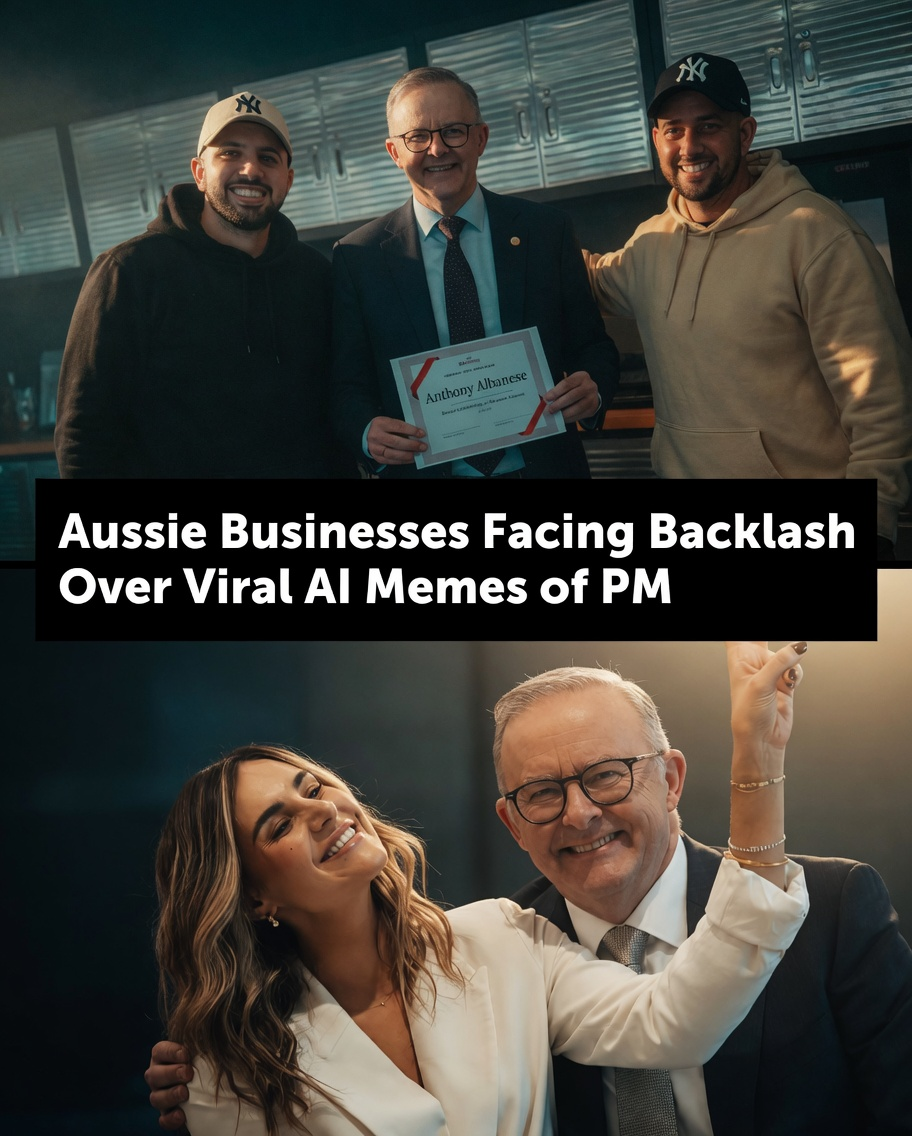
A viral AI meme trend over tax policy has sparked broader concerns about commercial risk, trust and misleading business content.
And that is exactly where things became more complicated.
Social media rewards fast, emotional and highly visual content. Small businesses understand this better than most because attention online has become brutally competitive. Paid traffic is expensive. Organic reach is inconsistent. Visibility is harder to earn than it was just a few years ago.
That is one reason artificial intelligence has become so attractive. What previously required designers, agencies or expensive campaign work can now be created in minutes. For businesses already managing cost pressure, that efficiency feels like a gift.
And in many situations, it absolutely is.
The problem starts when speed replaces judgement.
The legal issue here is not simply that an image was created with AI. The real question is whether a normal viewer could reasonably believe the politician actually endorsed, visited or became commercially connected to the business.
That distinction matters far more than many operators may realise.
One of the most common mistakes businesses make with viral content is assuming intention protects them. If the original post was meant as satire, many assume that should be enough.
But the internet rarely preserves original context.
A caption explaining the joke can vanish the moment somebody screenshots the post. A repost can push the content into completely different audiences. Someone encountering the image later may never see the explanation that made the joke obvious to the original audience.
That is where the risk changes.
Because once context disappears, interpretation becomes unpredictable.
There is also a broader business lesson hiding underneath this entire story.
This is not really just about Albanese, tax policy or political humour. It is about how businesses are adapting to AI faster than they are adapting their judgement.
Artificial intelligence has lowered the barrier to creating polished commercial content so dramatically that many businesses now treat speed as the main advantage. Faster production. Faster posting. Faster reactions to trending topics.
But fast marketing is not automatically smart marketing.
A post that gets massive reach may feel successful in the moment. That does not automatically mean it creates business value.
Some visibility builds trust.
Some visibility quietly damages it.
That difference matters far more for smaller businesses than larger brands. Local operators rely heavily on repeat customers, community credibility and word-of-mouth trust. A confusing or misleading campaign can create reputational damage long before any legal issue appears.
That makes this more than a legal warning story.
It is a business judgement story.
The wider political debate over capital gains tax will continue regardless of what happens to this meme trend. Supporters will argue reform is necessary. Critics will argue entrepreneurship is being unfairly targeted. That debate belongs in politics.
The more practical business question is much simpler.
How should owners use AI without creating unnecessary risk?
The answer is not avoiding AI altogether.
The answer is using it more strategically.
This same risk logic applies far beyond political memes. The same problems can emerge when businesses create fake celebrity endorsements, fictional customer visits or promotional imagery that implies events which never happened.
Technology changes speed. It does not remove commercial responsibility.
Before posting AI-generated content from a business account, owners should pause and ask a few practical questions.
Would an ordinary customer believe this actually happened?
Could the content imply endorsement or affiliation?
Would the joke still be obvious if the caption disappeared?
Could the post look misleading once shared outside its original audience?
Is the short-term attention worth the longer-term reputational or legal risk?
Those questions are simple, but they separate strategic marketing from careless marketing.
The businesses that benefit most from artificial intelligence will probably not be the ones chasing every viral moment. They will be the ones using the technology with better judgement, stronger trust awareness and a clearer understanding of how quickly public perception can shift.
Because what feels like a funny social post today can become a much more expensive lesson once it escapes your own audience.






