One Nation’s newly appointed Victorian leader Warren Pickering says protesters who targeted Pauline Hanson’s Melbourne campaign events inadvertently helped promote the party, arguing the demonstrations reinforced One Nation’s claim that political debate is becoming increasingly difficult in Victoria.
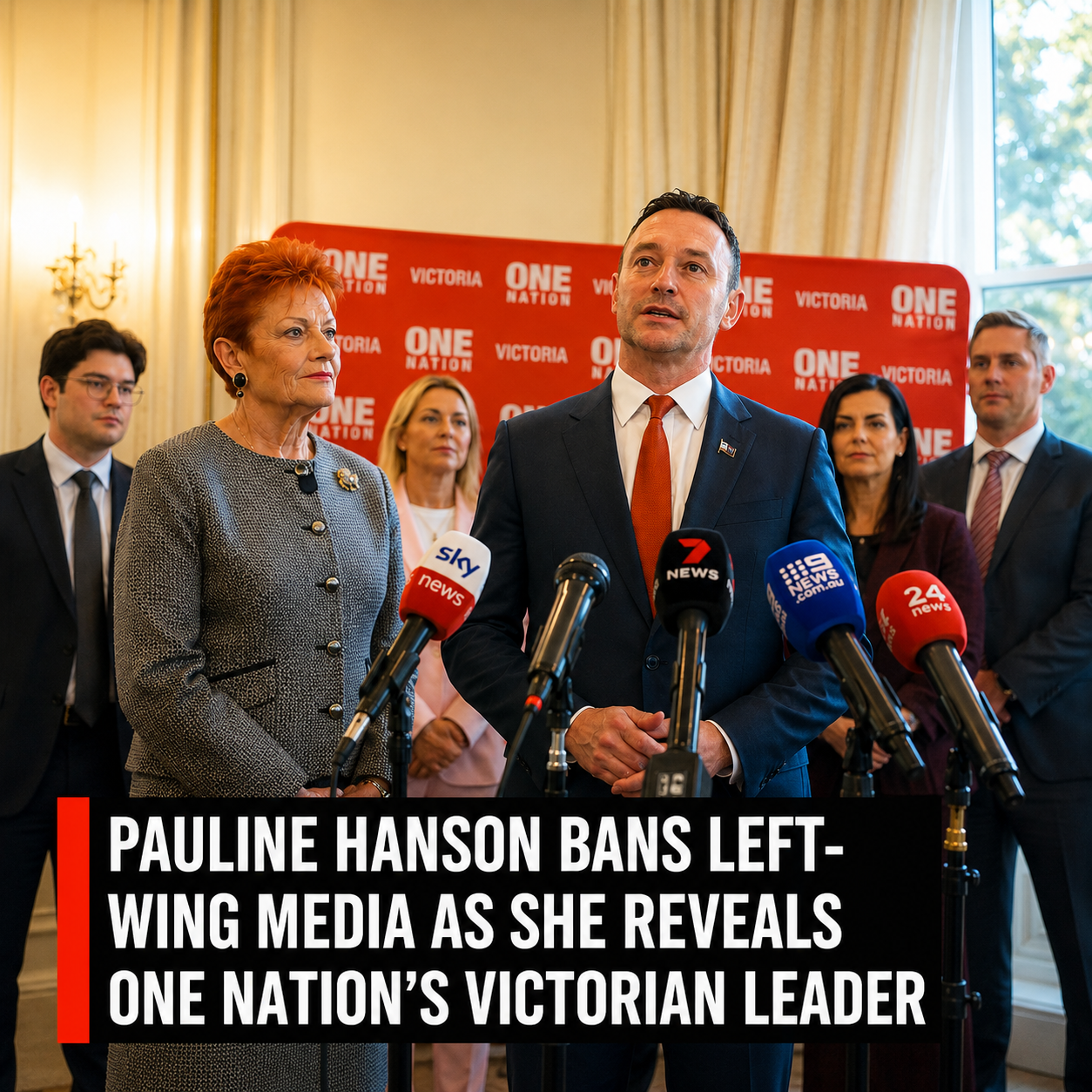
Speaking after demonstrations outside a One Nation function in Melbourne, Pickering dismissed suggestions the protests had disrupted the evening, instead claiming they merely attracted additional attention to the party’s Victorian campaign.
His remarks followed a night of demonstrations outside the Tower Hotel in Hawthorn, where Pauline Hanson attended a function after officially launching One Nation’s Victorian election campaign and introducing the party’s first candidates for the November state election.
Victoria Police maintained a significant presence around the venue as protesters gathered outside, with officers establishing barriers to separate demonstrators, attendees and members of the media.
Despite the visible security operation, Pickering argued the protesters had achieved little beyond drawing attention to Hanson’s arrival.
“I think at this event specifically, we’ve had them turn up and all they did here was serve as effectively a doorbell for when the Senator herself turned up,” Pickering said during an interview with News24 host Paul Murray.
He maintained that the demonstration ultimately increased public awareness of One Nation’s campaign rather than preventing supporters from attending the event.
While downplaying the practical impact of the protest, Pickering said he believed the demonstrations reflected a broader trend in which political opponents sought to silence views they disagreed with.
He argued that people holding different political opinions increasingly faced organised attempts to disrupt public events instead of engaging in debate.
“You cannot express or share a value set outside of those of the raging intolerant without them turning up to try and shut down all dialogue,” he said.
“It’s not good enough.”
Pickering also claimed security concerns had already forced One Nation to alter its campaign plans.
According to the party, its original intention had been to hold the Victorian campaign launch on the steps of Parliament House before organisers were advised against doing so because of safety considerations.
Although the party ultimately accepted that advice, Pickering said he believed the decision illustrated what he described as an increasingly restrictive political environment.
“We claim to live in a democratic state… we’re simply not anymore,” he said.
Those comments form part of One Nation’s broader argument that political debate is being constrained by a small but vocal group of activists, a message the party has increasingly emphasised as it prepares for the Victorian election.
Witnesses at Monday night’s demonstration said dozens of protesters gathered outside the Hawthorn venue while police maintained a separation between demonstrators and guests entering the function.
Some protesters allegedly broke through temporary police barriers before officers re-established the cordon.
Video and photographs from the scene showed demonstrators chanting slogans and displaying placards criticising Pauline Hanson, One Nation and Israel.
Among the signs visible during the protest were messages including “No Nazi Never Again”, while other banners expressed broader anti-racism and pro-Palestinian messages.
According to reports from the event, some demonstrators directed abusive remarks towards attendees entering the venue.
Victoria Police Public Order Response officers remained on site throughout the evening and no major injuries were reported. Publicly available information has not indicated that any criminal charges had been laid in connection with the protest at the time of publication.
One Nation National Director James Ashby also criticised the demonstrations, arguing the level of security required for Hanson reflected an increasingly hostile political environment.
Ashby claimed the party had received security advice resulting in changes to both its daytime press conference and evening function.
He further alleged that threatening comments had been directed at people attending the dinner, describing the situation as unacceptable for a democratic society.
“We’ve been told that the security around Pauline Hanson is greater than that of our Prime Minister, which is a frightening thought that democracy has got to these levels,” Ashby said.
He also argued that the protest illustrated the challenges faced by politicians seeking to campaign in Victoria while expressing views that attract organised opposition.
At the centre of the event was One Nation’s official launch of its Victorian election campaign.
Earlier in the day, Pauline Hanson announced Warren Pickering would lead the party into the November election while contesting the lower house seat of Pakenham.
The party also unveiled eight Legislative Council candidates as it seeks to expand its representation in the Victorian Parliament after several years of increasing electoral support nationally.
Pickering used the interview following the protest to argue that Victorians were increasingly looking for an alternative to the Labor Government.
He said One Nation intended to campaign on issues including crime, cost-of-living pressures, government spending and public accountability.
“If Victorians want meaningful change, they have to vote for it,” he said.
He acknowledged that One Nation had never governed Victoria but argued voters should compare the party’s promises with the record of governments that had held office for many years.
Political demonstrations have become an increasingly common feature of Australian election campaigns, particularly for parties and candidates whose policies attract strong public reactions.
Under Australian law, peaceful protest is protected as an important democratic freedom, provided demonstrations remain within legal boundaries and do not involve violence, intimidation or other criminal conduct.
Police may impose conditions or establish exclusion zones where necessary to protect public safety or prevent clashes between opposing groups.
The events in Melbourne also followed renewed controversy surrounding One Nation’s relationship with sections of the media.
Earlier on the same day, Hanson barred journalists from the ABC, The Guardian and The Age from attending the campaign launch, accusing the organisations of biased reporting.
That decision attracted criticism from media organisations and political opponents, who argued public figures should remain open to scrutiny from all accredited journalists.
One Nation, however, maintains that it has been subjected to years of unfair coverage and says it is entitled to determine who attends privately organised campaign events.
The combination of protests outside the evening function and the earlier dispute over media access ensured that One Nation’s Victorian campaign launch generated significant attention beyond its policy announcements.
For Pickering, however, that publicity appeared to confirm the party’s broader campaign message.
He argued that attempts to disrupt One Nation events would ultimately encourage more Victorians to examine the party’s platform rather than discourage public engagement.
Whether that strategy resonates with voters will become clearer as campaigning intensifies ahead of Victoria’s state election on 28 November, when One Nation hopes to convert growing opinion poll support into additional parliamentary seats.






