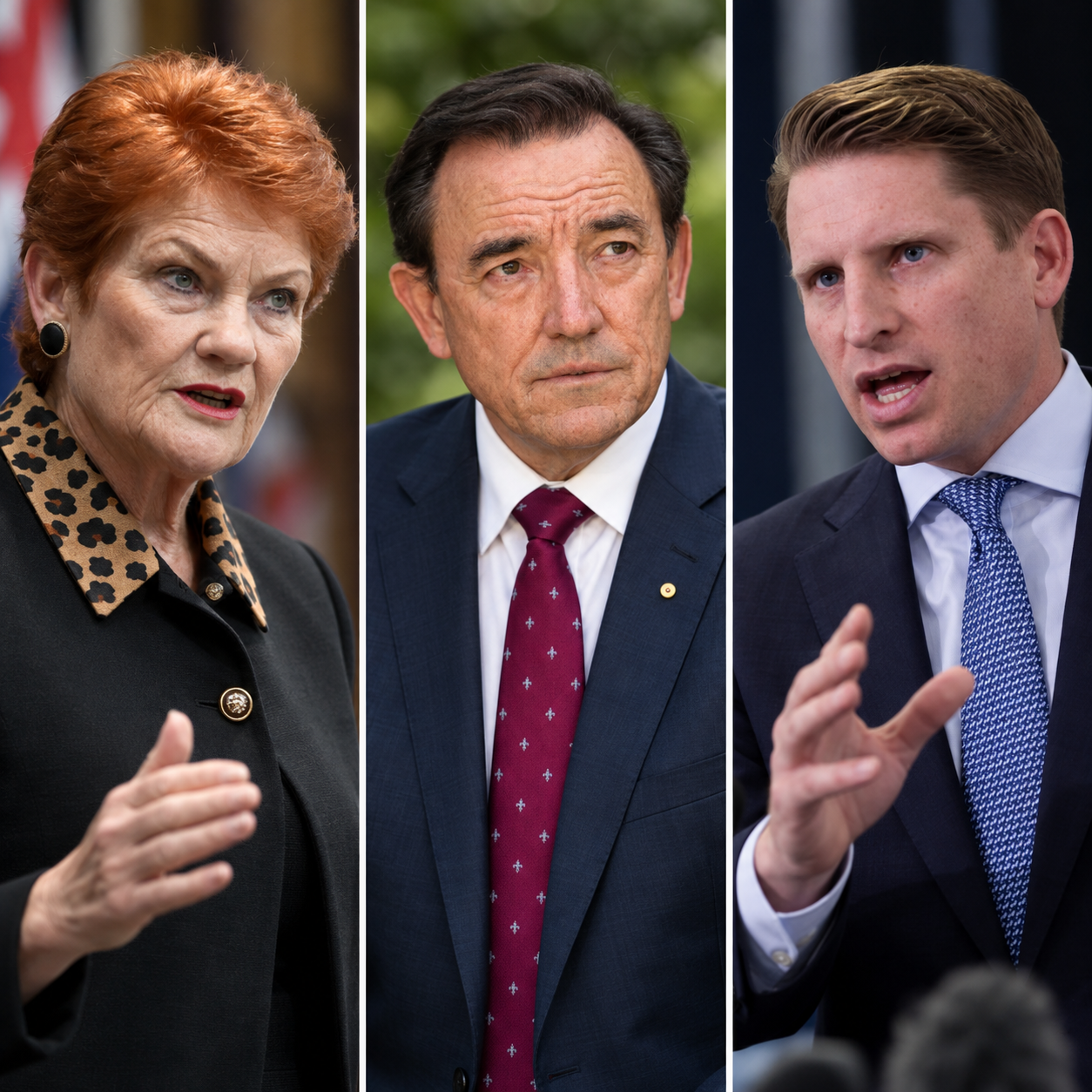
Pauline Hanson’s One Nation has officially confirmed Victorian party president Warren Pickering as the party’s leader for the 2026 Victorian state election, ending weeks of speculation over who would spearhead the campaign and setting the stage for an ambitious push into one of Australia’s most closely watched state contests.
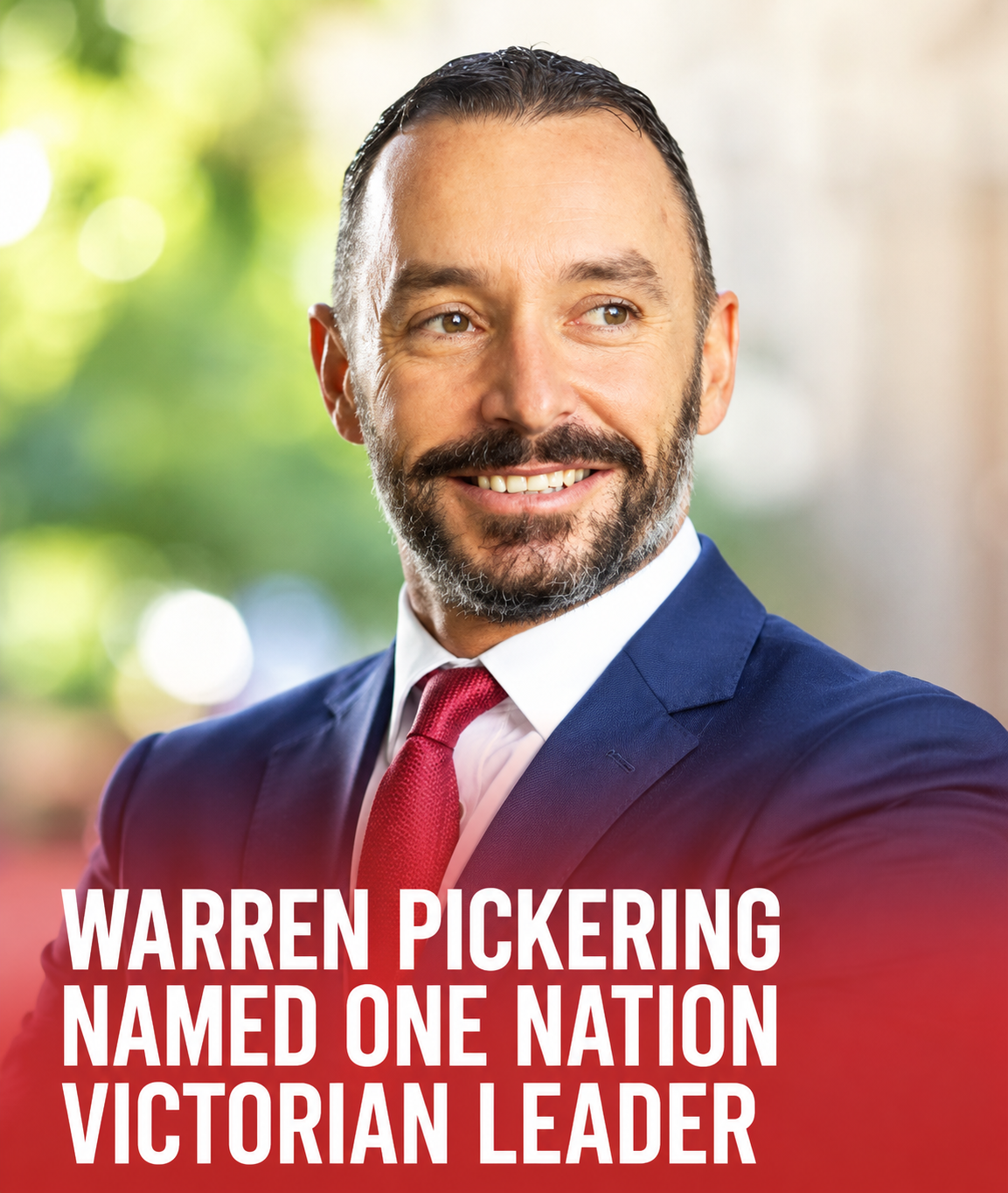
Pickering will contest the lower house seat of Pakenham, a marginal electorate in Melbourne’s rapidly growing south-east that is expected to become one of the key battlegrounds at the November election.
The announcement follows repeated speculation that former Special Air Service soldier Heston Russell or former Northern Territory chief minister Adam Giles could be selected to lead the party in Victoria. Both men publicly rejected suggestions they would take on the role, leaving Pickering to emerge as the party’s chosen leader.
For One Nation, the decision represents more than simply selecting a campaign figurehead. It signals the party’s intention to compete seriously for lower house representation in Victoria after several years of growing electoral support across the state.
Standing alongside federal leader Pauline Hanson at the campaign launch, Pickering pledged to offer Victorians an alternative to both Labor and the Liberal Party, arguing that many voters had become increasingly disillusioned with the state’s political establishment.
He described the upcoming election as an opportunity for voters to reject what One Nation characterises as years of declining public confidence in government, rising living costs and concerns over crime, infrastructure spending and government accountability.
Pickering is no newcomer to One Nation.
He has served as the Victorian president of the party for several years and has previously led One Nation campaigns in the state. Before entering politics, he worked in a range of occupations including bricklaying, the coal industry and military service, experiences the party says have shaped his views on employment, regional Australia and government policy.
His selection also reflects a strategic shift.
Earlier expectations suggested Pickering would again seek election through the Legislative Council, where proportional representation often offers smaller parties a stronger pathway into Parliament.
Instead, One Nation has chosen to place him directly into the contest for Pakenham, signalling confidence that the party can become increasingly competitive in lower house seats as support grows across outer metropolitan and regional Victoria.
Pakenham is expected to attract significant attention during the campaign.
The electorate sits on Melbourne’s expanding urban fringe, where rapid population growth, housing affordability, transport pressures and cost-of-living concerns have become defining political issues.
The seat has traditionally been closely contested between Labor and the Liberal Party, making it an attractive target for parties seeking to capitalise on voter dissatisfaction with the major parties.
One Nation’s leadership believes these demographic and political trends provide an opportunity to expand beyond its traditional support base.
Pauline Hanson has repeatedly argued that frustration over household budgets, immigration, crime, energy prices and government spending has created conditions that favour parties offering alternatives to Labor and the Coalition.
While announcing Pickering’s leadership, Hanson said the Victorian election presented One Nation with its strongest opportunity yet to expand its parliamentary presence in the state.
Beyond Pickering, the party also unveiled a broader team of upper house candidates representing each of Victoria’s eight Legislative Council regions.
The slate includes incumbent MP Rikkie-Lee Tyrrell, who is seeking re-election, along with candidates drawn from business, local government, the legal profession and community organisations. Among those announced were former Liberal figure Colleen Harkin, Geelong councillor Chris Burson, animator Mark Nicholson, Fiona Lopez, Aaron Sandford and Natalie Adams.
The launch itself attracted significant public attention.
Large groups of protesters gathered outside the Melbourne event attended by Hanson, prompting a substantial police presence as officers separated demonstrators from party supporters.
The campaign launch also generated controversy after One Nation excluded journalists from ABC, The Guardian and The Age from attending its official press conference, with Hanson accusing those organisations of consistently unfair coverage of the party.
Although the media restrictions became a story in their own right, Pickering sought to keep the focus on the party’s election message.
He argued Victoria required stronger action on crime, greater transparency in government and renewed support for regional communities, while indicating more detailed policy announcements would be released as the campaign progresses.
The timing of the announcement is significant.
Victoria heads to the polls on 28 November 2026 after one of the most turbulent periods in the state’s recent political history. Labor enters the campaign under new Premier Ben Carroll following the departure of Jacinta Allan, while the Liberal Party is also attempting to rebuild support after consecutive election defeats.
Against that backdrop, One Nation hopes voter dissatisfaction with both major parties will translate into stronger primary votes across metropolitan and regional electorates.
Recent polling has suggested One Nation has improved its standing among some Victorian voters, particularly in outer suburban and regional communities where cost-of-living pressures, energy prices and public safety remain dominant issues.
Whether that support ultimately converts into lower house victories remains uncertain under Victoria’s preferential voting system, where smaller parties often require strong preference flows to secure seats.
Political analysts note that while One Nation has previously achieved representation in Victoria’s upper house through proportional representation, winning lower house electorates presents a considerably greater challenge.
Success depends not only on attracting a significant primary vote but also on preference distributions and local campaigning in individual electorates.
For Pickering personally, Pakenham offers both opportunity and risk.
A victory would establish him as the public face of One Nation in Victoria’s Legislative Assembly and strengthen the party’s influence in state politics.
A defeat, however, would likely see the party continue relying primarily on upper house representation despite broader statewide ambitions.
Hanson nevertheless expressed confidence that the political climate has shifted in One Nation’s favour.
She argued many Victorians have become frustrated with rising living costs, government debt, housing affordability and public confidence in state institutions, creating conditions in which smaller parties may perform more strongly than in previous elections.
With Warren Pickering now officially confirmed as the party’s Victorian leader, One Nation has removed one of the final uncertainties surrounding its election campaign.
The coming months will determine whether the party’s growing profile can be translated into electoral success as Victorians prepare to choose the composition of the state’s 61st Parliament in November.