Hundreds of students from both government and private schools across Victoria are expected to walk out of classrooms next week as part of a nationwide protest opposing the growing political influence of Pauline Hanson and One Nation, in what organisers describe as a youth-led response to Australia’s changing political landscape.
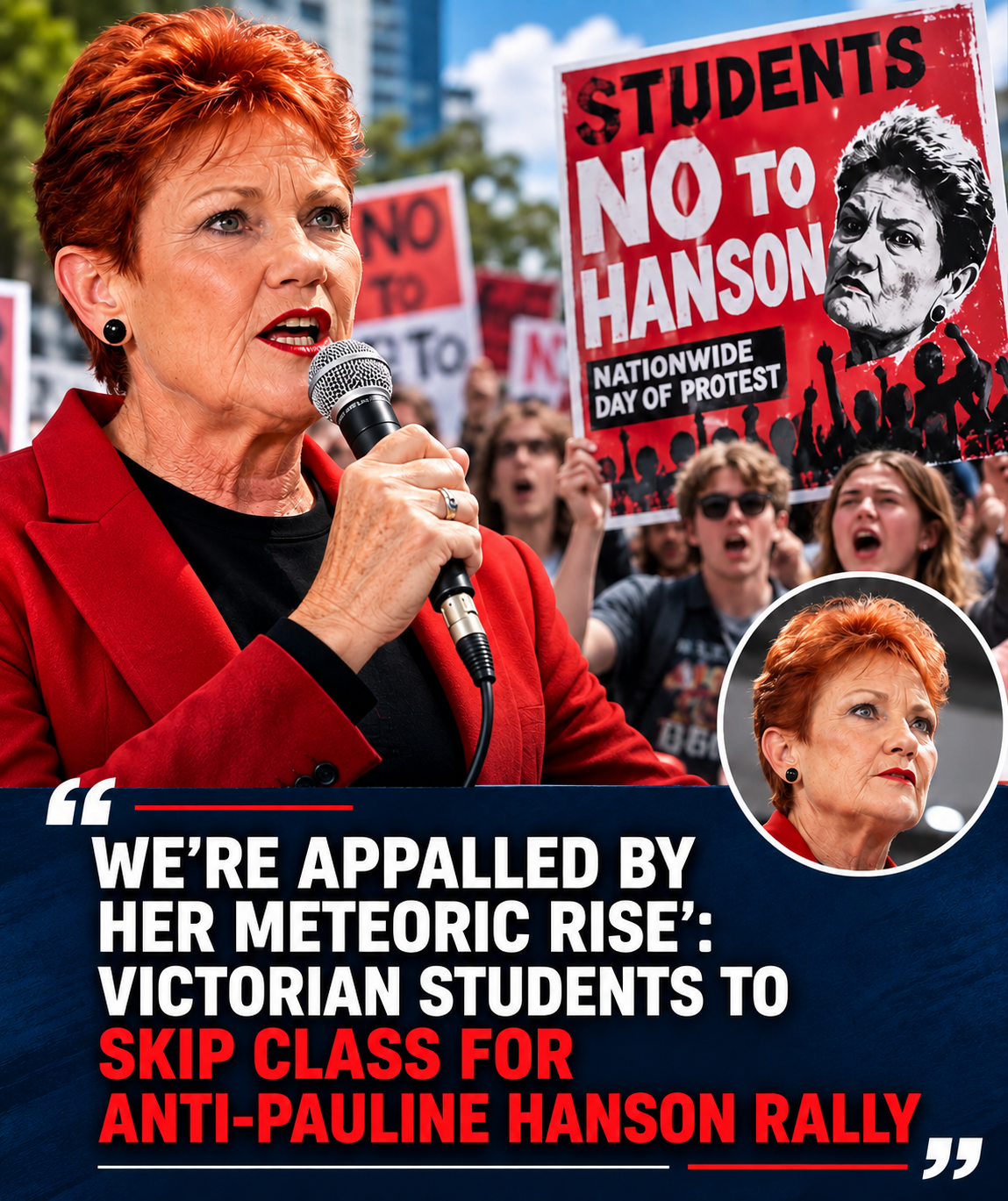
The demonstration, organised under the banner “Students Say No to Hanson”, is scheduled to take place on 13 August, with rallies planned in several Australian cities. In Melbourne, participants are expected to gather outside the State Library of Victoria after leaving school during the afternoon.
Organisers say students are protesting what they see as the increasing popularity of Senator Pauline Hanson and her One Nation party ahead of the Victorian election campaign.
One organiser, Jules Arpula from Mount Alexander College, said students were alarmed by what they described as the party’s growing political momentum.
“We’re appalled by her meteoric rise,” organisers said in promotional material for the protest, arguing that they “refuse to sit back and watch Australia turn into Trump’s America.”
The organisers accuse One Nation of promoting policies and rhetoric they believe are harmful to migrants, minority communities and young Australians. Supporters of the protest also argue that students have a legitimate interest in participating because political decisions made today will directly affect their future.
Students from several Melbourne schools, including Methodist Ladies’ College, Northcote High School and University High School, are expected to participate, alongside university students from institutions such as RMIT and Monash University. Student activist organisations and several pro-Palestinian campus groups have also endorsed the rally.
The planned walkout comes at a time when Pauline Hanson and One Nation have attracted renewed political attention in Victoria.
Recent opinion polling has suggested One Nation is enjoying stronger public support than in previous years, while the party has announced candidates for the upcoming Victorian state election and expanded its campaign across the state.
The party has recently been highly visible in Victorian politics through campaign launches, fundraising events and policy announcements focused on immigration, crime, government spending and education.
Several of those appearances have themselves attracted demonstrations from political opponents, with protesters gathering outside campaign events in Melbourne this week.
While organisers describe next week’s student action as a peaceful protest against what they consider far-right politics, One Nation supporters have argued that the party is being unfairly characterised by its critics.
Pauline Hanson has consistently defended her party’s positions, saying One Nation advocates for stronger border security, lower immigration, tougher law-and-order policies and measures aimed at reducing government waste.
The planned school walkout has also prompted discussion about student attendance.
The Victorian Department of Education has confirmed that normal attendance expectations remain in place despite the planned protest.
Under existing education policy, parents and carers remain responsible for ensuring children attend school unless an absence is approved or otherwise authorised. Schools will continue operating as normal during the demonstrations.
Student walkouts have become an increasingly common form of political expression in Australia over the past decade, with previous nationwide actions focusing on climate change, education funding, Indigenous issues and international conflicts.
Supporters argue that such demonstrations provide young people with an opportunity to participate in democratic debate before they reach voting age.
Critics, however, contend that political activism should not come at the expense of classroom learning and argue students should express their views outside school hours.
The latest protest reflects broader political tensions that have intensified in Australia over immigration, national identity and social policy.
One Nation has positioned itself as a party advocating for tighter immigration controls, changes to multicultural policy and reforms to government spending. Those positions have attracted both growing electoral support and significant public opposition.
Political analysts have noted that the party’s resurgence has coincided with wider debates over the cost of living, housing affordability and public confidence in Australia’s major political parties. While supporters argue One Nation is giving voice to voters who feel ignored by the political establishment, critics say the party’s messaging risks increasing division within the community.
Those competing views are expected to remain a prominent feature of public debate as Victoria moves closer to the state election campaign.
For the students planning to leave class next week, organisers say the objective is to send a political message rather than disrupt education.
Whether the demonstrations ultimately influence public opinion remains to be seen, but the planned rallies highlight how Australia’s increasingly polarised political environment is drawing younger Australians into debates traditionally dominated by older voters.
No changes have been announced to the scheduled rallies, and organisers say demonstrations will proceed as planned unless advised otherwise by authorities. Schools across Victoria are expected to manage attendance in accordance with existing education policies while the protests take place.






