Victoria has launched a new multi-million-dollar strategy aimed at attracting more international students, with the state government arguing the sector remains one of Victoria’s most valuable economic assets despite continuing debate over its impact on housing affordability.
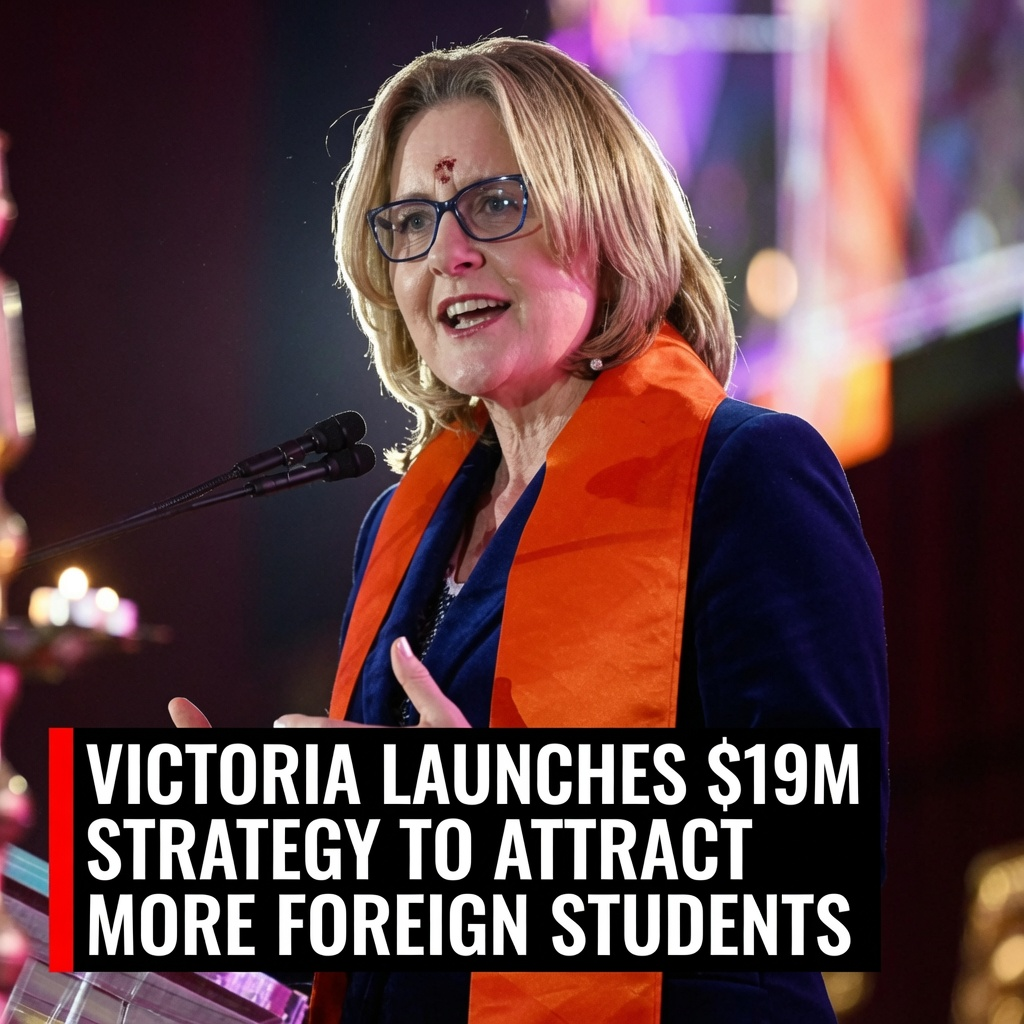
The Allan Labor Government has committed $18.6 million over two years to its new Study with Victoria strategy, designed to strengthen the state’s position as a leading international education destination while improving support services for overseas students.
Premier Jacinta Allan and Minister for Economic Growth and Jobs Steve Dimopoulos announced the initiative, describing international education as a major contributor to Victoria’s economy and future workforce.
According to the government, approximately 322,000 international students from around 170 countries studied in Victoria during 2025.
Those students were estimated to generate approximately $17.9 billion in export revenue while supporting around 69,000 jobs across universities, vocational education, accommodation, hospitality, retail, transport and related industries.
The government says the new strategy aims not only to attract additional students but also to enhance their overall experience while studying in Victoria through stronger industry partnerships, improved student support and closer engagement with education providers.
Steve Dimopoulos described international education as one of Victoria’s most important economic sectors and argued continued investment would strengthen employment opportunities across the state.
He also criticised political opponents who support tighter limits on international student numbers, arguing significant reductions would have major consequences for universities and businesses that rely on the sector.
International education has become Australia’s largest services export and one of the country’s most valuable export industries overall.
Universities, English language colleges, vocational institutions and private education providers collectively enrol hundreds of thousands of overseas students each year.
The fees paid by international students provide a substantial source of revenue for many tertiary institutions, supporting research, teaching programs and campus infrastructure.
Beyond tuition fees, international students contribute to local economies through spending on accommodation, food, transport, entertainment and other everyday living expenses.
Businesses in Melbourne’s central business district and surrounding university precincts have long relied on student populations to support restaurants, cafés, supermarkets and retail activity.
The Allan Government also argues international graduates help address workforce shortages.
According to the strategy, international students increasingly enter sectors experiencing skill shortages after graduation, particularly in health care, engineering, information technology, construction and professional services.
The government notes that many graduates later transition into skilled migration pathways, contributing to Australia’s long-term workforce needs.
Official figures cited in the strategy indicate that 45 per cent of migrants nominated through Victoria’s Skilled Migration Program during 2024–25 were graduates who had previously studied in the state.
Supporters argue this strengthens Victoria’s ability to retain skilled workers who have already completed Australian qualifications and integrated into local communities.
However, the expansion of international education continues to generate debate over housing affordability.
The Victorian Government maintains international students account for only a relatively small proportion of Australia’s rental market.
The strategy cites industry estimates suggesting international students comprise roughly six per cent of renters nationally, while approximately 40 per cent live in university-owned accommodation or purpose-built student housing.
Government representatives argue these figures demonstrate international students are only one factor among many influencing rental prices.
Housing economists generally agree that Australia’s rental market is affected by a complex combination of population growth, housing supply, construction activity, interest rates and migration.
At the same time, some economists have questioned aspects of the government’s housing claims.
The Reserve Bank of Australia has previously observed that increases in international student numbers can contribute to stronger rental demand, particularly in suburbs where housing supply is limited and vacancy rates are already low.
The Bank has emphasised that while international students are not the sole cause of rental pressure, additional population growth naturally increases demand for available accommodation when new housing supply fails to keep pace.
Housing researchers note that the greatest impact is often concentrated around major university precincts where students typically prefer to live close to campuses and public transport.
This has become increasingly significant as Melbourne continues to experience strong population growth following the reopening of international borders after the COVID-19 pandemic.
The question of whether international education should be described as an export has also attracted discussion among education specialists.
Under Australia’s national accounting framework, international education is classified as an export because overseas residents purchase educational services delivered within Australia.
Some analysts nevertheless argue the economic picture is more complex.
Many international students finance their education through family support or education loans before working part-time during their studies. Some later return home, while others remain in Australia through skilled migration pathways.
Economists therefore note that measuring the sector’s full economic contribution requires considering not only tuition revenue but also household spending, labour market participation, taxation and longer-term migration outcomes.
The new strategy also reflects Victoria’s broader international engagement.
Premier Jacinta Allan has previously travelled to India and China to strengthen educational partnerships and promote Victoria as a destination for study, investment and skilled migration.
International student recruitment has become increasingly competitive as countries including Canada, the United Kingdom and the United States adjust their migration and education policies.
Australian universities therefore continue competing globally for talented students while governments seek to balance economic benefits with infrastructure capacity and housing availability.
That balancing act has become politically sensitive.
As housing affordability remains one of the defining issues for Victorian households, governments face growing pressure to demonstrate that migration and international education policies can coexist with adequate investment in housing supply and urban infrastructure.
The Allan Government argues its strategy will strengthen jobs, economic growth and Victoria’s international reputation.
Critics maintain any significant increase in international student numbers must be accompanied by sufficient investment in housing, transport and community services to ensure population growth remains sustainable.
With Victoria preparing for the 2026 state election, international education is likely to remain closely linked to broader debates surrounding migration, housing affordability, economic growth and the state’s long-term workforce needs.






