Victoria is rolling out 20 free vending machines dispensing naloxone, a medication used to reverse opioid overdoses, as part of a $95 million harm reduction program designed to reduce drug-related deaths across the state.
The government says the machines could save lives.
Supporters call the rollout a practical public health response.
Critics say it raises a much larger question.
Why are governments spending millions managing the consequences of drug addiction while many Australians feel the root causes remain unresolved?
That debate is now rapidly intensifying.
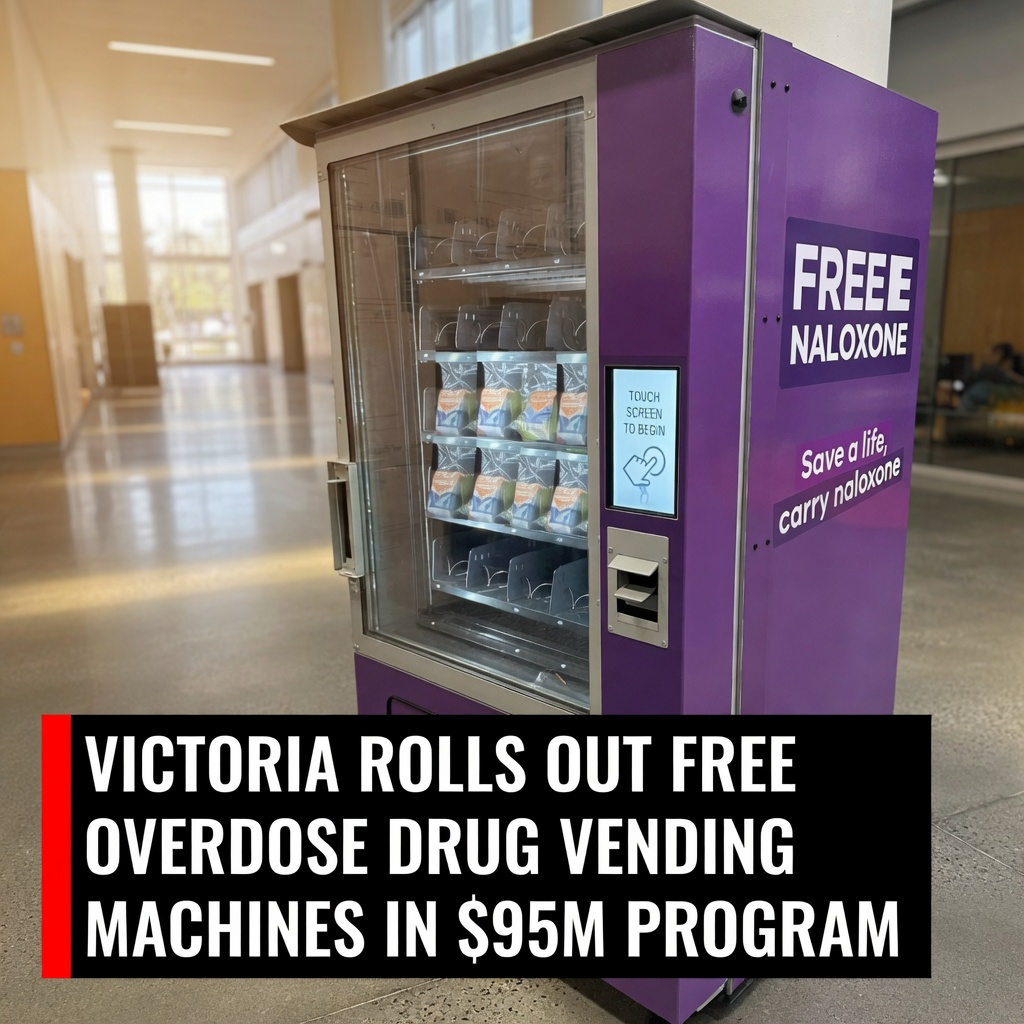
Victoria’s new overdose drug vending machine rollout has reignited debate about public health policy, taxpayer spending and the long-term direction of drug harm reduction programs.
The Victorian government confirmed 20 naloxone dispensing machines will be installed across the state as part of a broader $95.11 million program focused on reducing drug harms and expanding treatment access.
The machines provide free naloxone nasal spray doses designed to reverse opioid overdoses during emergencies.
Several machines have already been installed, with additional locations planned across metropolitan and regional Victoria.
The machines will operate around the clock.
Government officials argue faster access could help prevent overdose deaths and improve emergency response outcomes.
Health authorities point to growing concerns about potent synthetic opioids and contaminated substances appearing within the illicit drug market.
From that perspective, expanding naloxone access is viewed as a life-saving intervention.
Supporters argue overdose emergencies do not wait for office hours.
They say making naloxone available twenty-four hours a day increases the chances of survival during critical situations.
For public health advocates, the issue is relatively straightforward.
Reducing preventable deaths remains the priority.
Critics view the rollout very differently.
For them, the controversy is not simply about naloxone itself.
It is about priorities.
That is where much of the public reaction appears to be coming from.
Victoria continues facing pressure across multiple social and economic fronts.
Housing affordability remains a major concern.
Cost-of-living pressure continues affecting households.
Health services remain under strain in many areas.
Against that backdrop, large public spending programs often attract greater scrutiny.
People begin asking difficult questions.
Who receives support?
Where does taxpayer money go?
And what outcomes are being achieved?
Those questions are politically powerful because they extend beyond drug policy.
They connect directly to trust.
Many Australians increasingly judge government programs through the lens of fairness.
Not simply whether a policy works.
But whether it reflects what they believe should be prioritised.
That distinction is driving much of the debate surrounding the naloxone rollout.
Supporters argue harm reduction programs acknowledge reality.
People experiencing addiction exist regardless of political opinion.
Overdoses occur regardless of ideology.
From that perspective, refusing access to life-saving medication would only increase preventable deaths.
Critics argue governments have become too focused on managing addiction rather than preventing it.
They question whether resources should be directed more heavily toward rehabilitation, treatment pathways, education and early intervention.
That argument is increasingly appearing in public discussion.
The conflict is no longer simply about health policy.
It is becoming a debate about what governments believe success actually looks like.
Is success reducing deaths?
Is success reducing addiction?
Or is success preventing drug dependency from emerging in the first place?
Those questions do not have simple answers.
That is partly why the issue remains so politically sensitive.
Drug policy often sits at the intersection of health, crime, social services and public spending.
Different voters approach the issue from very different perspectives.
Some prioritise compassion and emergency care.
Others prioritise accountability, prevention and long-term behavioural change.
The naloxone machines have become a symbol of that broader divide.
For supporters, the machines represent practical harm reduction.
For critics, they represent a government increasingly focused on managing consequences rather than addressing underlying causes.
That symbolic battle may end up becoming more significant than the machines themselves.
Because public debate is increasingly shifting toward larger questions.
Questions about public spending.
Questions about government priorities.
Questions about how success should be measured.
And questions about whether taxpayers believe current approaches are delivering lasting results.
Those concerns are likely to remain long after the vending machines are installed.
Because the real political challenge may not be proving naloxone can save lives.
Most people accept that it can.
The larger challenge is convincing voters that governments are addressing the causes of addiction as aggressively as they are addressing the consequences.
That is where the debate becomes much bigger than a vending machine.
It becomes a debate about trust.
Trust in public health policy.
Trust in government priorities.
And trust that long-term solutions are receiving as much attention as emergency responses.
That may ultimately be the question sitting behind Victoria’s latest drug policy rollout.
Not whether naloxone should be available.
But whether Australians believe the broader strategy is solving the problem or simply managing it.






