Victoria is preparing one of Australia’s most significant expansions of online accountability laws, with Premier Jacinta Allan announcing a package of reforms designed to force social media companies to identify anonymous users accused of unlawful online vilification while making it easier for families to sue technology companies over psychological harm suffered by children.
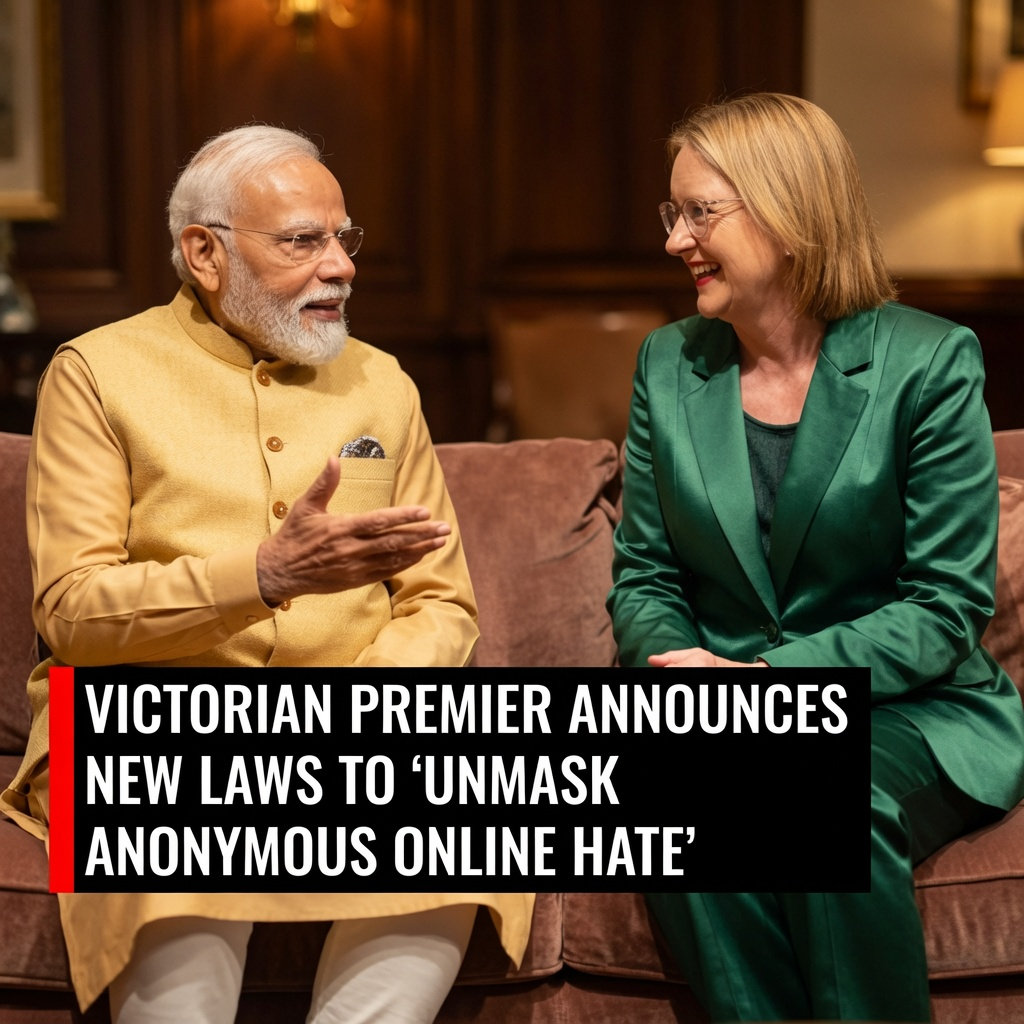
The proposed legislation, unveiled by the Allan Government on Sunday, would grant the Victorian Civil and Administrative Tribunal (VCAT) new powers to issue what the government describes as “demasking orders”. These orders would require social media platforms to reveal the identities of anonymous account holders who are alleged to have breached Victoria’s anti-vilification laws.
The reforms form part of a broader push by the Victorian Government to increase accountability for major technology companies, particularly where online abuse, hate speech and the mental health of children are concerned.
Premier Jacinta Allan said anonymity should not become a shield for people engaging in unlawful online abuse.
“Hiding behind an anonymous account online should never mean you can vilify someone and get away with it,” she said while announcing the proposal.
The government argues that victims of online hate often face an impossible situation because they cannot commence meaningful legal action against someone whose identity cannot be established.
Under the proposed changes, VCAT would be able to compel social media companies to disclose identifying information where a tribunal determines it is appropriate under Victoria’s civil anti-vilification framework. The government says this would allow victims to identify alleged offenders and pursue legal remedies where warranted.
The legislation would also significantly change the legal threshold for negligence claims involving children.
Currently, families seeking damages from social media or artificial intelligence companies over psychiatric harm must establish that a child has suffered a permanent impairment of at least 10 per cent before proceeding with a negligence action.
The Allan Government intends to remove that threshold entirely for claims involving minors, arguing that the current requirement makes it unnecessarily difficult for families to seek compensation where technology platforms have allegedly contributed to psychological injury.
Whether similar reforms should later be extended to adults will be considered during consultation as the legislation is drafted.
The Victorian Government says both measures are intended to make technology companies more accountable for the design and operation of digital platforms that increasingly influence the lives of children and young people.
According to the government’s announcement, consultation will occur with VCAT, the courts and other stakeholders before the legislation is introduced into Parliament. The government intends to bring the reforms before Parliament ahead of Victoria’s next state election.
The proposal follows a growing international debate over how governments should regulate anonymous online behaviour while balancing privacy, freedom of expression and platform responsibility.
Victoria’s announcement builds on the state’s recently expanded anti-vilification framework, which broadened protections covering characteristics including race, religion, sexual orientation, gender identity and disability. The laws created stronger civil and criminal responses to serious vilification while preserving exemptions for legitimate reporting, artistic works, academic discussion and other protected forms of expression.
The new “demasking” powers would operate within that existing legal framework rather than creating a completely new category of prohibited speech.
The Allan Government argues that anonymous accounts have increasingly been used to target individuals with racist, religious and other forms of unlawful abuse, making enforcement difficult because victims often cannot identify the person responsible.
The package also reflects increasing scrutiny of major technology companies worldwide.
Governments across Australia, Europe and North America have examined whether large digital platforms should bear greater legal responsibility for harmful content, particularly where children are involved.
Australian governments have already introduced a range of online safety measures in recent years, including stronger powers for the federal eSafety Commissioner and legislation restricting access to social media for children under 16. Victoria’s latest proposal would add another layer of regulation at the state level by focusing on civil accountability and access to legal remedies.
Premier Allan has argued that the reforms are necessary because digital platforms are deliberately designed to maximise user engagement, often encouraging prolonged use among younger Australians.
The government believes easier access to civil litigation could encourage companies to invest more heavily in safer product design, stronger moderation systems and better protection for vulnerable users.
However, the announcement immediately triggered debate across social media and within legal circles.
Critics questioned whether compelling companies to identify anonymous users could create unintended consequences for privacy, whistleblowers and legitimate anonymous political speech.
Some opponents argued the proposal risks discouraging lawful public debate if users fear their identities could eventually be disclosed.
Others expressed concern about how tribunals would determine when disclosure is appropriate, particularly where allegations of online vilification remain disputed.
Several commentators also questioned how effective the laws would be against overseas users or individuals relying on virtual private networks and other anonymity tools.
Supporters, meanwhile, argue that anonymity should not prevent victims from seeking justice where online conduct allegedly breaches established anti-vilification laws.
Legal experts have noted that similar tensions between privacy rights and accountability are emerging internationally as governments attempt to regulate increasingly influential online platforms.
The reforms also highlight the rapidly expanding role of artificial intelligence within public policy debates.
Victoria’s proposal explicitly includes AI companies alongside traditional social media providers when considering negligence claims involving psychiatric harm to children.
That reflects growing concern among policymakers that recommendation algorithms, generative AI systems and engagement-driven digital products may contribute to harmful online experiences for young users.
The Allan Government has framed the legislation as part of a broader strategy to ensure technology companies bear greater responsibility for the real-world impacts of their products.
Opposition parties have indicated they will closely examine the detail of the legislation once introduced, while some have questioned whether the reforms can pass Parliament before the state election given limited sitting weeks remaining.
The precise operation of VCAT’s proposed demasking powers, including the evidentiary threshold required before disclosure orders can be issued, is expected to become a central issue during parliamentary debate.
Technology companies may also seek clarification regarding the practical obligations they would face, particularly where user information is stored overseas or subject to different privacy laws.
As the legislation moves through consultation and drafting, the debate is likely to centre on finding an appropriate balance between protecting victims of unlawful online abuse and preserving legitimate anonymous participation in public discussion.
Regardless of where that balance ultimately lands, Victoria’s proposal represents one of the most ambitious attempts by an Australian state to increase accountability for anonymous online behaviour while expanding legal options for families seeking to hold major technology companies responsible for alleged harm caused to children.






