A Western Australian university has found itself at the centre of a growing debate after advertising a six-figure anti-racism position that is only open to Indigenous applicants.
The role, advertised by Edith Cowan University, offers a salary package exceeding $100,000 a year and is designed to help implement anti-racism, cultural inclusion and social cohesion initiatives across the institution.
While supporters argue the position is intended to address the experiences of Aboriginal and Torres Strait Islander communities, critics have questioned whether restricting applications to one group is consistent with broader principles of equality.
The discussion has quickly spread beyond university circles and into the wider national debate surrounding diversity, equity and inclusion policies.
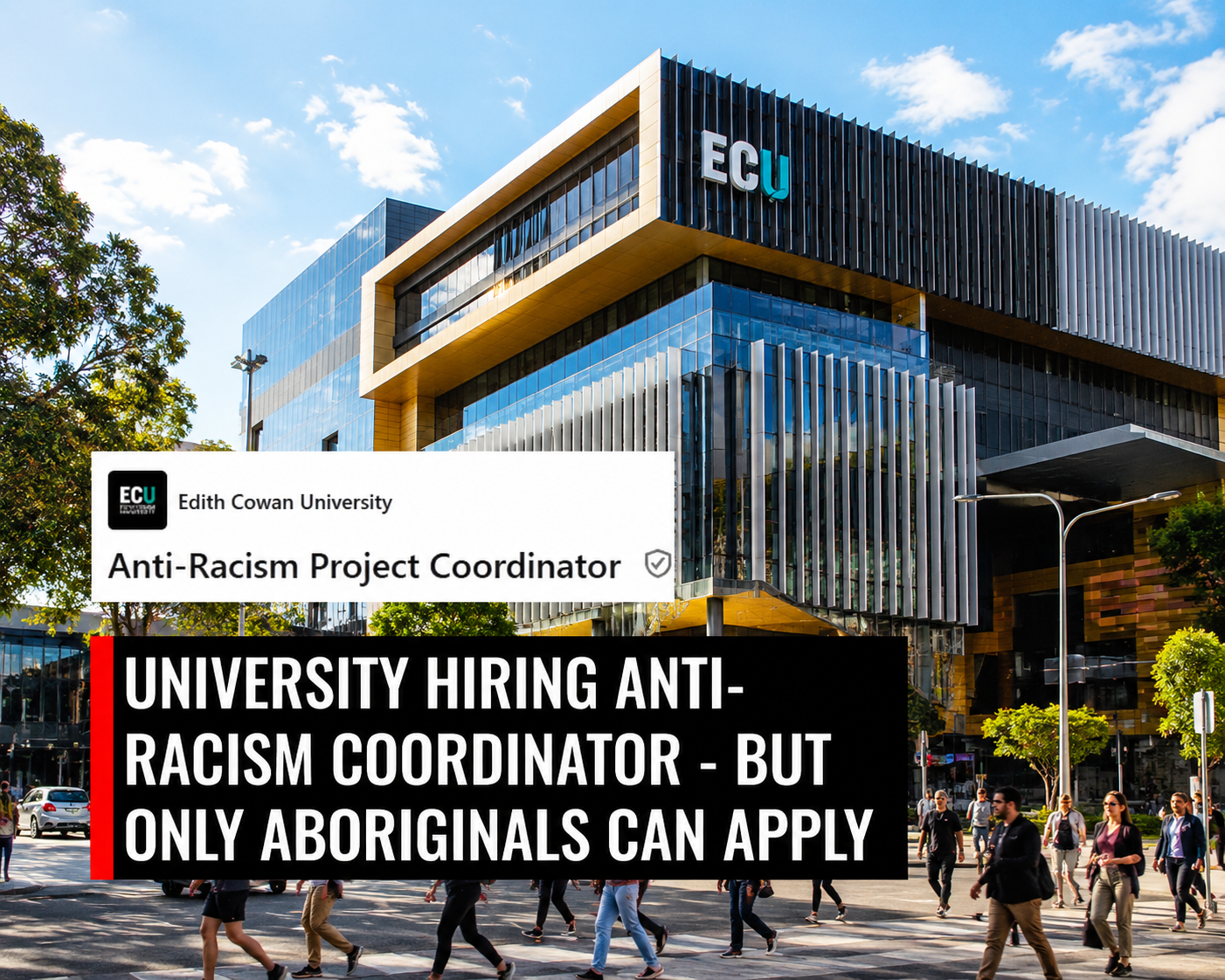
The advertised position is titled Anti-Racism Project Coordinator and sits within the university’s Aboriginal Workforce Programs team.
According to the job description, the successful applicant would help coordinate projects aimed at strengthening the university’s ability to prevent and respond to racism experienced by Aboriginal and Torres Strait Islander staff, students and communities.
The role also involves working with stakeholders across the institution, developing educational resources and supporting policy initiatives linked to cultural inclusion.
University officials describe the position as part of a broader effort to create a safer and more inclusive environment for Indigenous Australians within higher education.
The position is being offered under provisions of Western Australia’s Equal Opportunity legislation that allow designated roles to be restricted to Aboriginal and Torres Strait Islander applicants in certain circumstances.
Such provisions have existed for many years and are commonly used in Indigenous employment, community services and culturally specific support programs.
Supporters argue that targeted recruitment can help ensure programs intended to serve Indigenous communities are guided by people with lived experience and cultural knowledge.
They say these positions are designed to improve outcomes in areas where Indigenous Australians have historically experienced disadvantage.
Critics, however, see the issue differently.
Some argue that positions funded within public institutions should be open to all applicants regardless of background.
Others question whether anti-racism initiatives can be effectively promoted through roles that exclude candidates from applying based on ancestry.
The debate reflects broader tensions surrounding diversity, equity and inclusion programs that have become increasingly controversial across Australia, the United States and Europe.
Universities have been among the strongest supporters of DEI policies, arguing they help improve representation, participation and educational outcomes for underrepresented groups.
At the same time, opponents claim some initiatives risk creating new forms of division or preferential treatment.
The controversy surrounding the ECU role arrives during a period when universities are facing growing scrutiny over governance, spending priorities and social policy initiatives.
Questions about how institutions balance inclusion objectives with merit-based recruitment have become increasingly prominent.
For ECU, the position forms part of a wider strategy focused on Indigenous engagement.
The university publicly states that it is committed to advancing Indigenous leadership, cultural safety and anti-racism initiatives across its campuses.
The institution also maintains a range of programs specifically designed to support Aboriginal and Torres Strait Islander students and staff.
Supporters argue the anti-racism coordinator position should be viewed within that broader context rather than as a standalone hiring decision.
They contend that Indigenous-specific roles play an important part in ensuring universities understand and respond to the experiences of Indigenous communities.
Others remain unconvinced.
For critics, the debate raises questions about whether universities are moving too far toward identity-based employment practices.
The issue is likely to continue generating discussion as higher education institutions expand programs focused on diversity, inclusion and cultural representation.
Regardless of where Australians stand on the issue, the reaction demonstrates that questions surrounding DEI policies remain among the most contested topics in public life.
As universities continue developing strategies aimed at improving inclusion and representation, debates over who should be eligible for specific roles are unlikely to disappear anytime soon.
The ECU position may be only one job advertisement, but it has become part of a much larger national conversation about fairness, opportunity and the role of identity in modern institutions.
That conversation is expected to continue long after applications for the position close.






