Australia’s economic performance has become the centre of a fierce public debate after one of the country’s best-known investment managers described the nation’s economic position as a “disaster”, prompting a robust response from the Federal Treasury.
The exchange has reignited discussion about one of the most closely watched indicators of household prosperity — real GDP per capita — and whether headline economic growth is accurately reflecting how Australians are experiencing everyday life amid persistent cost-of-living pressures.
Roger Montgomery, founder and chief investment officer of Montgomery Investment Management, argued that Australia’s prolonged period of weak real GDP per capita demonstrates why many households feel they are becoming financially worse off despite the economy continuing to expand overall.
In response, Treasury rejected the characterisation of the economy as being in crisis, pointing instead to Australia’s comparatively strong performance against other advanced economies during a period marked by global inflation, supply chain disruption and geopolitical instability.
A Treasury spokesperson said Australia had weathered an exceptionally difficult international environment better than many comparable nations.
According to Treasury, Australia has recorded faster annual economic growth than every major advanced economy except the United States while avoiding a negative quarterly GDP result that many other developed economies experienced.
The government also highlighted measures announced in the Federal Budget that it says are designed to strengthen long-term productivity, including reforms under National Competition Policy that it estimates could add $13 billion to GDP, regulatory savings worth $10.2 billion and additional annual investment in research and development by emerging businesses.
The debate over GDP per capita
At the centre of the disagreement is real GDP per capita, a measure that adjusts economic output for both inflation and population growth.
Unlike headline GDP, which measures the size of the economy as a whole, GDP per capita attempts to show how much economic output exists for each individual Australian. Economists often regard it as a useful indicator of changes in average living standards because rapid population growth can lift total GDP even if economic gains are not being shared across individuals.
Montgomery argued that this measure reflects what Australians are already experiencing in their day-to-day lives.
He said many households feel they are working harder while receiving less financial benefit, pointing to what he described as the longest continuous period of negative quarterly real GDP per capita in modern Australian history.
According to his assessment, that prolonged weakness helps explain widespread concerns about higher living costs, declining purchasing power and growing financial pressure.
A chart that sparked fresh political debate
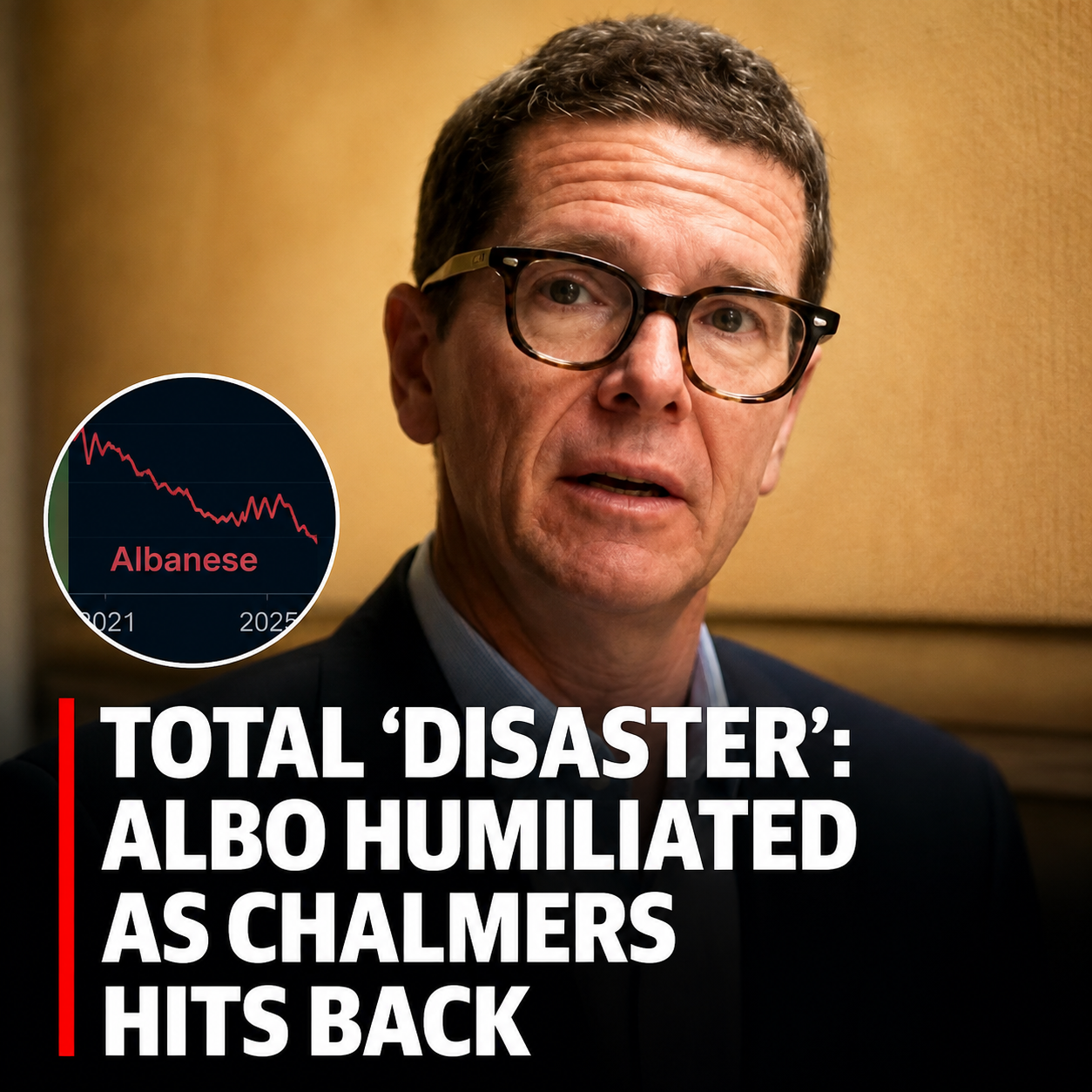
Montgomery referenced a chart published by The Spectator comparing real GDP per capita performance under successive Australian governments dating back to the 1970s.
The chart highlighted the substantial increase recorded during the Hawke and Keating governments following sweeping economic reforms that opened Australia’s economy to greater international competition.
By comparison, the data presented more modest gains under later governments before showing a marked weakening during the Albanese Government.
Supporters of using GDP per capita argue that rising population alone should not be mistaken for improving prosperity if productivity fails to keep pace.
When additional workers are added without corresponding improvements in efficiency or output, total GDP may continue rising while average living standards stagnate.
Housing, wealth and consumer confidence
Montgomery also linked Australia’s economic challenges to the country’s housing market.
He argued that residential property has historically been the principal source of household wealth for most Australians and warned that slowing or falling property values can reduce consumer confidence through what economists describe as the “wealth effect”.
When homeowners perceive themselves to be wealthier because property prices are rising, they are generally more willing to spend, renovate, borrow or invest.
Conversely, when housing prices soften, discretionary spending often slows as households become more cautious.
Montgomery suggested that this behavioural shift is contributing to weaker retail activity and reduced demand for home renovations and residential construction, sectors that employ large numbers of Australians.
Concerns over productivity
Another major criticism raised by Montgomery centred on productivity.
He argued that increasing government employment without corresponding growth in productive private-sector activity risks reducing overall economic efficiency.
His view is that excessive reliance on government spending may crowd out private investment by drawing labour towards publicly funded projects while increasing costs for businesses competing for skilled workers.
He pointed to infrastructure construction as an example, arguing that higher government demand for labour can contribute to labour shortages and increased costs for private residential builders.
Montgomery warned that unless productivity improves, Australia’s current per capita weakness could eventually broaden into a more significant economic slowdown.
Treasury disputes the pessimistic assessment
The Federal Government strongly disagrees with that conclusion.
Treasury argues Australia’s economy has remained remarkably resilient despite facing numerous international shocks, including the global inflation surge that followed Russia’s invasion of Ukraine.
Officials also note that quarterly declines in GDP per capita are not unprecedented.
Treasury says such declines have occurred dozens of times since official records began in the early 1970s and point out that similar periods also occurred under previous governments.
The government further argues that economic momentum strengthened throughout 2025 and into early 2026, with annual GDP growth reaching 2.5 per cent through the March quarter — one of the strongest growth rates recorded in recent years.
From Treasury’s perspective, Australia’s economic performance compares favourably with many developed nations that experienced outright economic contractions during the same period.
Why productivity matters
Although Treasury and Montgomery disagree sharply over the overall state of the economy, both perspectives highlight productivity as a critical issue for Australia’s long-term prosperity.
Productivity refers to how efficiently labour and capital produce goods and services. Higher productivity allows businesses to pay higher wages, governments to collect more revenue without increasing tax rates and households to enjoy rising living standards.
For many economists, sustained improvements in productivity are ultimately more important than temporary increases in government spending or population growth.
Australia has experienced relatively weak productivity growth in recent years, prompting repeated calls from business groups, economists and policymakers for reforms aimed at improving investment, innovation, infrastructure and workforce skills.
Dependence on commodities remains a challenge
Montgomery also argued Australia’s heavy reliance on commodity exports leaves the economy particularly vulnerable to global demand, especially from China, Australia’s largest trading partner.
Iron ore, liquefied natural gas and other resource exports continue to generate significant national income, but commodity prices can fluctuate sharply depending on global economic conditions.
He believes Australia should place greater emphasis on developing industries that add value domestically through advanced manufacturing, technology and innovation rather than relying predominantly on raw material exports.
Among the policy changes he advocates are lower corporate taxation, stronger incentives for start-up businesses, reduced government debt and the establishment of free trade zones designed to encourage investment.
The political dimension
The economic debate also carries political significance as Australians continue to rank cost-of-living pressures among their most important concerns.
Treasurer Jim Chalmers has consistently argued that Australia has navigated global economic headwinds more successfully than many comparable countries while inflation has eased without triggering a deep recession.
Critics, however, argue that international comparisons provide little comfort for households whose purchasing power has weakened after several years of elevated inflation and higher borrowing costs.
The disagreement reflects a broader question facing policymakers: should economic success be measured primarily through headline GDP growth, or should greater emphasis be placed on indicators that more directly reflect individual living standards?
An argument likely to continue
As Australia prepares for future economic challenges, the discussion surrounding GDP per capita, productivity and household prosperity is unlikely to disappear.
Treasury maintains that the country’s underlying economic performance remains comparatively strong and that reforms announced in recent budgets will help lift long-term growth.
Meanwhile, Montgomery argues that stronger productivity, greater private-sector investment and structural reform are essential if Australians are to experience meaningful improvements in living standards rather than simply seeing the economy expand in aggregate.
While both sides present sharply different interpretations of Australia’s economic trajectory, the debate underscores a common reality: sustaining higher living standards over the long term will depend not only on economic growth itself, but on how effectively that growth translates into greater prosperity for individual Australians.