What began as a decision about a podcast has quickly evolved into a much larger national argument.
The ABC’s decision to appoint former Australian of the Year Grace Tame to host a new podcast focused on autism has triggered a fierce reaction across Australia’s political and media landscape. Critics have questioned the broadcaster’s judgement, while supporters argue the backlash says more about Australia’s political divisions than it does about the podcast itself.
At the centre of the controversy sits a question that extends far beyond one presenter or one program.
What role should a taxpayer-funded broadcaster play in an increasingly polarised political environment?
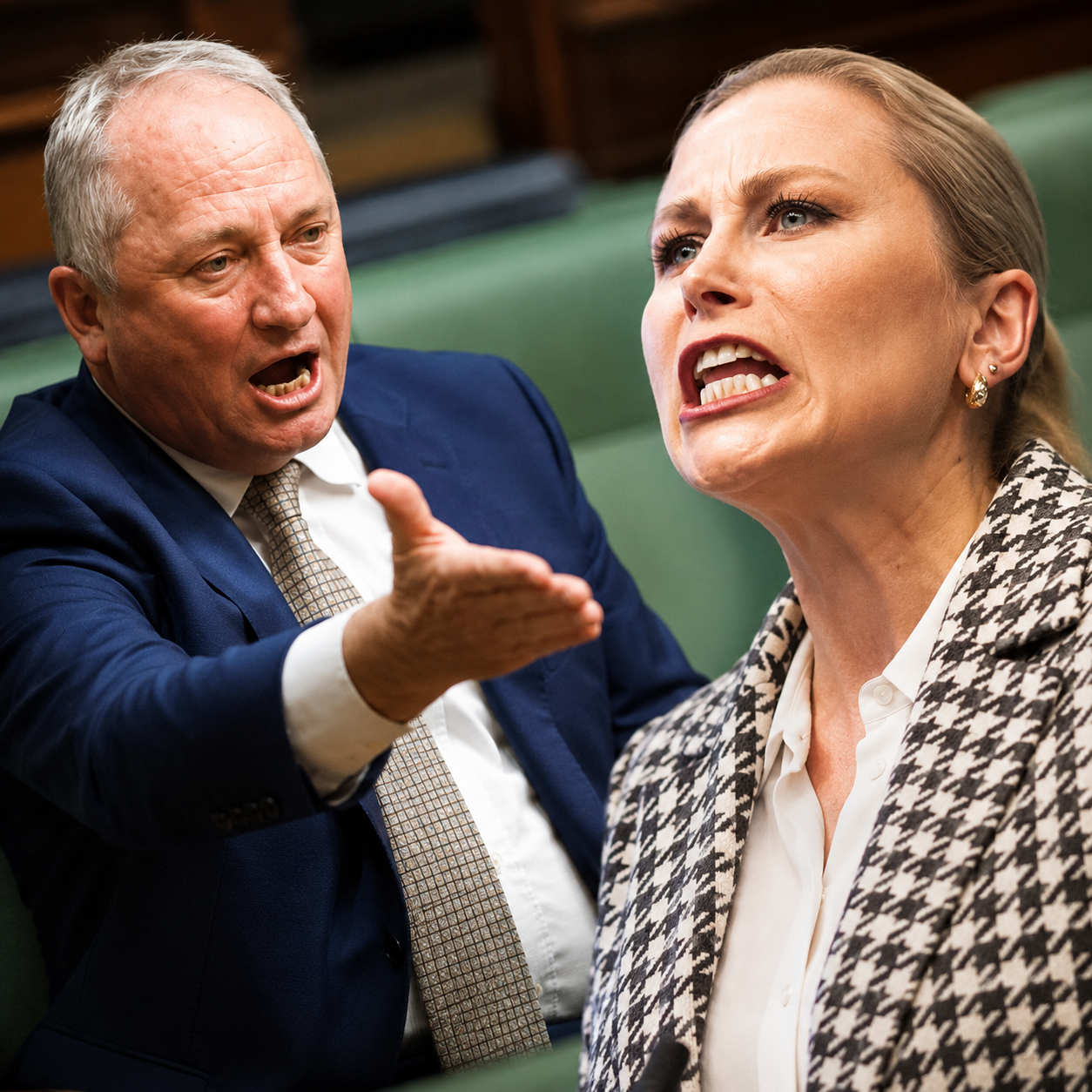
Grace Tame remains one of Australia’s most recognisable public figures. Her advocacy on behalf of child sexual abuse survivors helped drive significant legal reforms and contributed to her being named Australian of the Year in 2021.
Since then, however, she has increasingly become a polarising figure. Supporters view her as a fearless advocate willing to challenge powerful institutions. Critics argue her public commentary on a range of political and international issues has moved her into overtly partisan territory.
That debate intensified following several controversial comments and public appearances connected to the conflict in the Middle East.
For opponents of the ABC’s decision, those controversies raise legitimate questions about whether a publicly funded broadcaster should be elevating someone they regard as politically divisive. Some politicians and commentators have argued the appointment reinforces long-standing concerns about ideological bias within the organisation.
Others strongly reject that argument.
Supporters of the appointment point out that the podcast is focused on autism and lived experience rather than party politics. They argue that Tame’s personal experience as an autistic woman provides valuable insight into a subject that remains poorly understood by much of the public.
That difference in perspective helps explain why the dispute has escalated so quickly.
For some Australians, the issue is fundamentally about editorial judgement. For others, it is about broader questions of free expression and who gets to participate in public conversations.
The ABC occupies a unique position in Australian society.
Unlike commercial media organisations, it receives public funding and is expected to operate in the interests of all Australians. That creates expectations that are often far higher than those applied to privately owned media outlets.
Whenever the broadcaster makes a controversial decision, critics are quick to remind audiences that taxpayers ultimately help fund its operations.
This dynamic has fuelled debate about the ABC for decades.
Conservative critics have frequently accused the organisation of ideological bias. Progressive critics, meanwhile, have often argued that the broadcaster faces political pressure from governments and opposition parties alike.
The result is a situation where the ABC can find itself under attack from multiple directions simultaneously.
The Grace Tame controversy fits neatly into that long-running pattern.
Calls to reduce funding or restructure the broadcaster are not new. Similar arguments have surfaced repeatedly over appointments, editorial decisions and programming choices. What changes are the specific personalities and controversies involved.
The broader question remains remarkably consistent.
How should a public broadcaster reflect a diverse society without appearing to endorse particular political viewpoints?
There is no simple answer.
Modern audiences increasingly consume media through highly personalised digital platforms. Trust in institutions has become fragmented. Political identities have become more pronounced. Against that backdrop, maintaining broad public confidence becomes considerably more difficult.
The ABC is not alone in facing these challenges. Public broadcasters around the world have encountered similar debates as political divisions deepen and audiences become more polarised.
What makes the Australian situation particularly interesting is that the broadcaster remains one of the country’s most influential media institutions.
Its decisions continue to attract attention because they carry symbolic weight. Supporters often view the ABC as a vital public service. Critics frequently see it as an institution requiring greater accountability.
The dispute surrounding Grace Tame has therefore become a proxy for larger frustrations that already existed.
For some, the appointment reinforces concerns about editorial culture and institutional priorities. For others, the backlash represents an attempt to silence voices that challenge mainstream political narratives.
Neither side appears likely to change its position soon.
That reality helps explain why a podcast announcement generated headlines far beyond the media industry itself.
The controversy is no longer simply about Grace Tame. Nor is it solely about the ABC.
It has become part of a broader conversation about public institutions, political trust, free expression and the responsibilities that come with taxpayer funding.
As Australia becomes more politically fragmented, similar debates are likely to become increasingly common. Public broadcasters, universities, cultural organisations and major corporations all face growing pressure from competing groups demanding accountability according to different standards.
What happens next is unlikely to be determined by one podcast.
The more significant question is whether institutions such as the ABC can maintain public confidence across an electorate that is becoming more divided on politics, culture and national identity.
That challenge may prove far more consequential than the controversy that sparked the latest debate.






