For years, Pauline Hanson’s One Nation was viewed as a protest movement.
Voters frustrated with the major parties could support the party without seriously expecting it to form government.
That political reality is now changing.
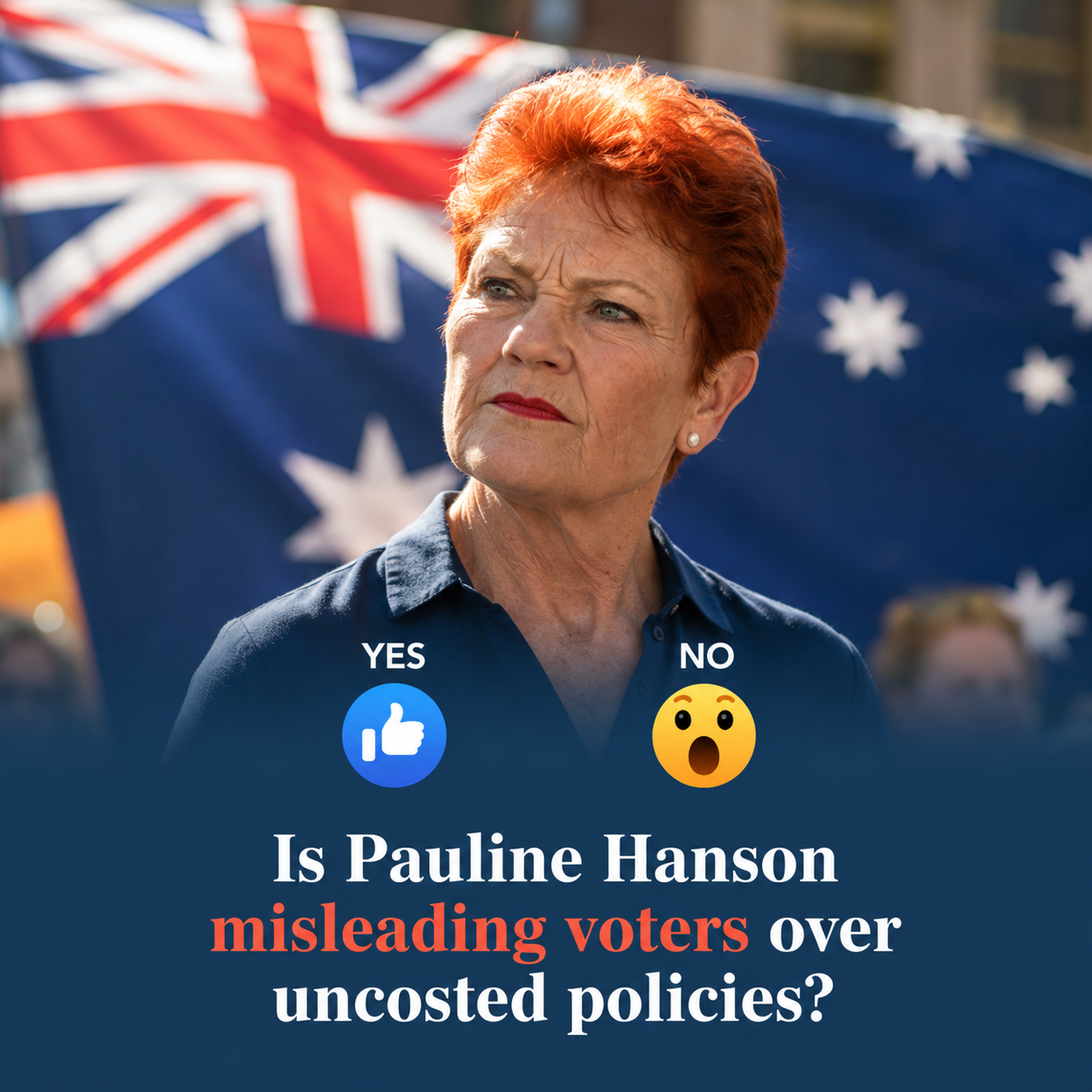
Recent polling has shown One Nation reaching unprecedented levels of support, with some surveys placing the party ahead of both Labor and the Coalition on primary vote. The rise reflects growing voter frustration over housing affordability, cost-of-living pressures and dissatisfaction with the political establishment.
Success, however, creates a new problem.
Once a party begins presenting itself as a genuine alternative government, voters start asking different questions.
It is no longer enough to identify problems.
People want to know how those problems will be solved.
They want details.
They want numbers.
And they want confidence that promises can survive scrutiny.
That is why recent debate surrounding One Nation’s housing policy has attracted so much attention.
Confusion emerged after multiple party representatives provided different explanations regarding how the proposal would operate and who would be affected. Party leader Pauline Hanson later issued clarifications after public uncertainty grew around the policy’s implementation.
The episode may seem like a routine political stumble.
In reality, it highlights a much larger challenge.
Every party seeking government eventually reaches a point where slogans must become policy.
Broad principles must become legislation.
Campaign messaging must become administration.
And every assumption becomes subject to examination.
Housing is particularly sensitive because it sits at the centre of Australia’s economic anxiety.
Millions of Australians are struggling with mortgage repayments.
Renters face fierce competition for available properties.
First-home buyers increasingly feel locked out of the market.
Any proposal claiming to improve affordability immediately attracts public attention.
It also attracts intense scrutiny.
Voters want certainty because housing decisions often represent the largest financial commitments of their lives.
The same principle applies to economic policy more broadly.
Australians may support a political movement because they agree with its diagnosis of national problems.
That does not automatically mean they trust it to implement solutions.
Political history is filled with parties that excelled at opposition but struggled when confronted with the realities of governing.
Running a country requires more than identifying public frustration.
It requires detailed planning.
It requires fiscal discipline.
And it requires the ability to explain complex decisions under pressure.
That reality becomes even more important when economic uncertainty remains high.
Households continue to face elevated living costs.
Businesses are dealing with rising expenses.
Investors are closely watching tax and regulatory changes.
Every major policy proposal carries potential consequences across the broader economy.
This is why policy costings matter so much in modern politics.
Whether voters ultimately agree or disagree with a proposal, they generally expect to see evidence that the numbers have been carefully examined.
They want to understand how policies will be funded.
They want to know what trade-offs are involved.
And they want confidence that unexpected consequences have been considered.
The challenge is not unique to One Nation.
Labor and the Coalition face the same expectations.
Any party seeking public support must convince voters it possesses both vision and competence.
Without both, political momentum can become difficult to sustain.
At the same time, One Nation’s rise reflects a genuine shift in the electorate.
Large numbers of Australians clearly believe the major parties have failed to address concerns around affordability, migration, energy costs and economic opportunity. That dissatisfaction has helped fuel growing support for alternatives outside the traditional two-party structure.
That frustration should not be dismissed.
History shows that political movements grow strongest when voters feel ignored.
The challenge for emerging parties is converting that frustration into a credible governing agenda.
As One Nation’s polling numbers rise, expectations will continue rising alongside them.
The questions facing the party are becoming more demanding.
How would its policies work in practice?
How would they affect housing markets?
How would they impact government finances?
And how would they be implemented if given the opportunity?
Those questions are unlikely to disappear.
In fact, they will become more frequent.
Because once a political movement begins talking about governing, voters stop judging it as a protest party.
They start judging it as a potential government.
And that is where the next stage of Australia’s political debate is likely to be fought.






