Immigration Minister Tony Burke has officially declared that mass migration is the “solution, not the problem” for Australia’s crippling housing crisis.
In a fair dinkum shocker for many struggling renters, Burke claimed that without these arrivals, the country simply cannot build the homes it desperately needs.
Speaking on a niche podcast, the Minister revealed his standard welcome to new Indian-Australian citizens is a simple, “Welcome home”.
This comes as fresh data from the Australian Bureau of Statistics (ABS) confirms a historic shift in the nation’s demographic backbone.
For the first time in history, India has overtaken England as the largest source of overseas-born migrants living in Australia.
Indian-born residents now number a massive 971,020, narrowly edging out those born in the UK at 970,950.
The growth has been nothing short of a migration tsunami, with the Indian-born population adding over 500,000 people in just the last decade.
Burke used the interview to brush off “angry” critics who slammed his decision to hold massive citizenship ceremonies right before the last election.
He defended these events as “patriotic,” despite the Liberal Party accusing the government of using them for political gain.
The Minister vowed to end the cycle of “permanently temporary” visa holders, suggesting more should become full participants in Australia’s democracy.
However, the sheer scale of the numbers has left many Aussie battlers wondering how the infrastructure will ever keep pace.
In the year ending February 2026, net permanent and long-term arrivals hit close to half a million at 478,910 people.
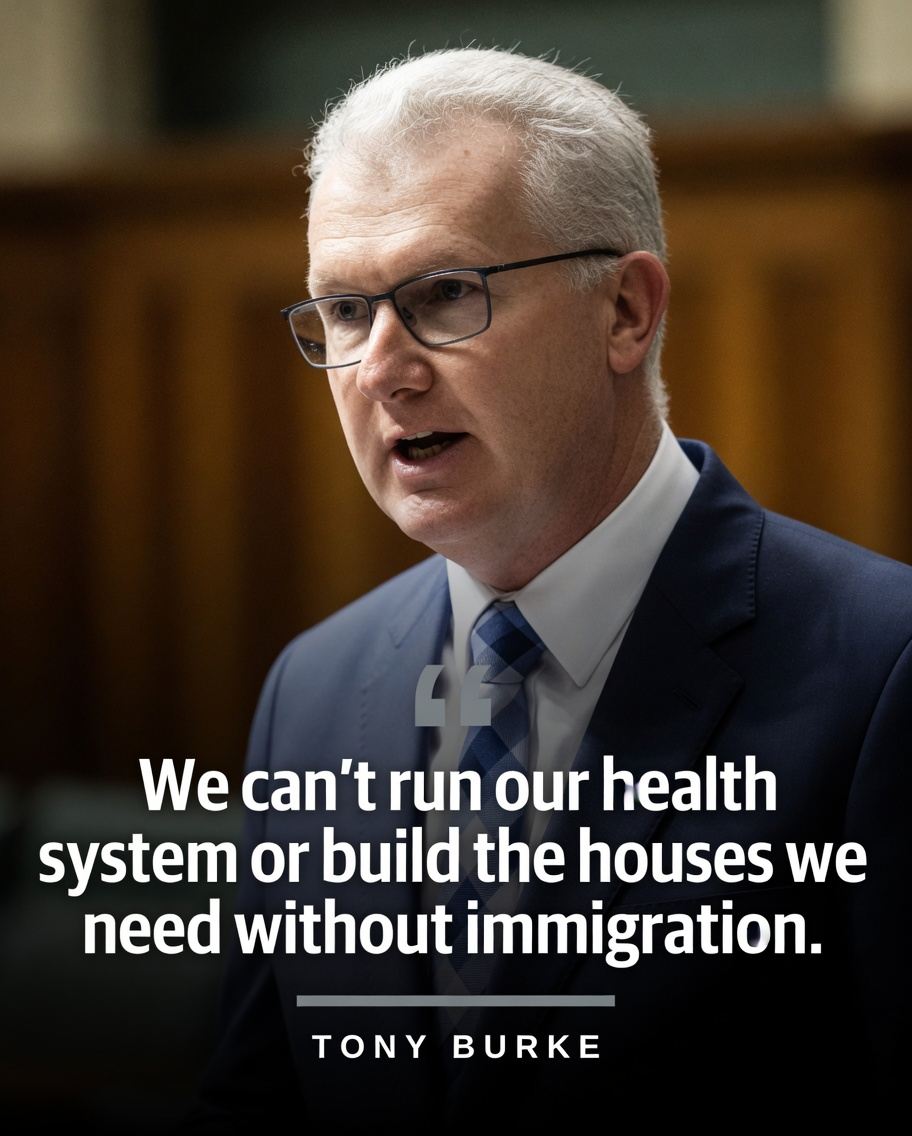
Political Strategy: Minister Tony Burke has doubled down on his support for record migration levels despite the ongoing housing crunch.
Three quarters of Australia’s population growth is now driven entirely by immigration, with natural births adding a measly 112,600 people.
While Burke claims we need migrants to build houses, the statistics tell a much more shonky story about the actual skills entering the country.
Over the past 20 years, a tiny 1.8 per cent of “skilled” migrants were actually qualified in a construction trade.
This massive gap between rhetoric and reality is a total gut-punch to those waiting years for social housing or a fair crack at the property market.
AMP chief economist Dr. Shane Oliver has warned that net migration needs to drop to at least 200,000 just to let housing catch up.
The current shortfall is estimated to be between 200,000 and 300,000 homes, yet the government keeps the floodgates wide open.
Despite earlier forecasts, this month’s budget is expected to show net overseas migration still hovering at over 300,000 people.
Burke accused the Liberal Party and its new leader, Angus Taylor, of “weaponising” immigration to chase votes from One Nation.

He slammed Taylor for bringing Senator Jacinta Nampijinpa Price back to the front bench, calling her previous comments about Indian voters “ugly”.
The Minister also took a swipe at the focus on the Bondi tragedy, claiming it was being used to unfairly judge the Indian-Australian community.
In his view, the Liberal Party is simply trying to get Australians to blame each other for the failures of the Canberra bubble.
But for many locals, it’s not about blame—it’s about the hard yakka of finding a place to live in a city that’s bursting at the seams.
The number of temporary visa holders in Australia has hit another record high of 2,615,947 in the year to March 2026.
Indian nationals have been the primary drivers of this growth, particularly through student and bridging visa pathways.
Burke remains adamant that these numbers are necessary to run our hospitals and aged care facilities.
He pointed out that half of our doctors and registered nurses were born overseas, highlighting a reliance on foreign talent.
However, the government is now telling universities they must provide housing if they want to increase student numbers.
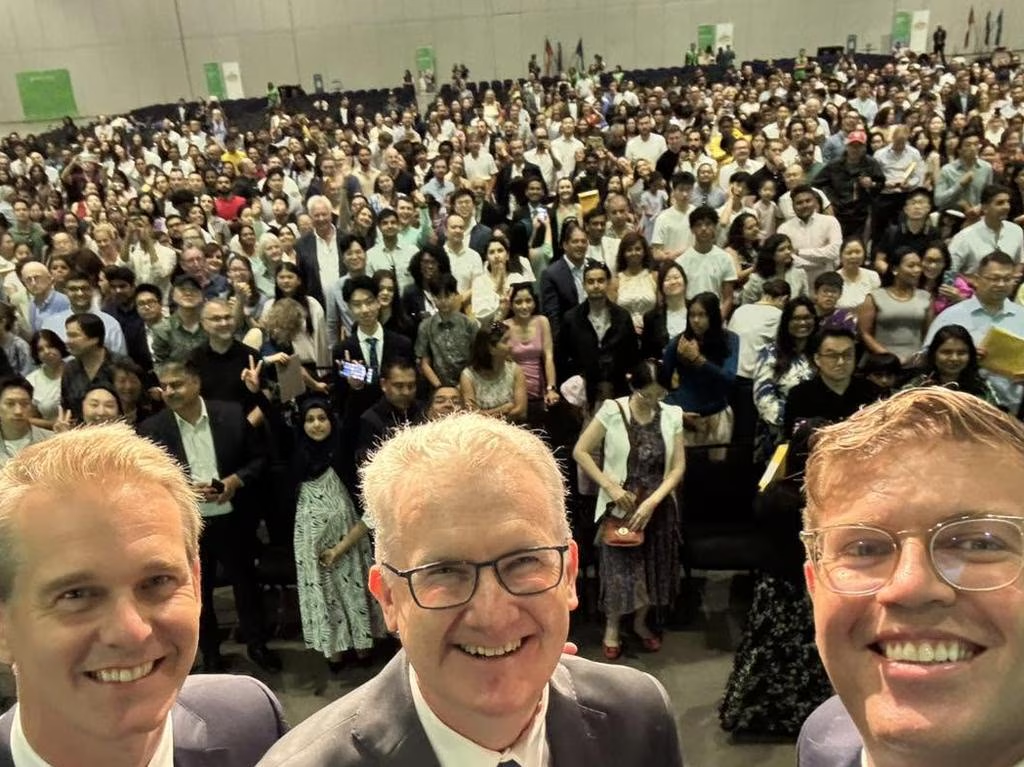
This “no house, no student” rule is an attempt to quiet the growing anger in the suburbs over the rental crisis.
Still, the Minister admits that net migration is currently 45 per cent lower than its absolute peak, claiming it’s a “measured” approach.
To many salt-of-the-earth Australians, a measured approach would mean prioritizing those who can actually swing a hammer and lay a brick.
The fact that only 1.8% of skilled migrants are in construction is an absolute whopper of a policy failure.
Instead of addressing this gap, the government seems focused on the cultural strength and the loudly cheered citizenship ceremonies.
Burke’s “special memory” of the loudest cheers coming when India is mentioned at ceremonies highlights where his political focus lies.
The opposition’s new migration policy aims to slash the annual intake by 100,000 and focus on “Australian values”.
Meanwhile, One Nation is soaring in the polls by calling for a hard cap of 130,000 visas per year and the deportation of overstayers.
The battle for the soul of Australia’s migration program is becoming a bloody outrage of accusations and counter-accusations.
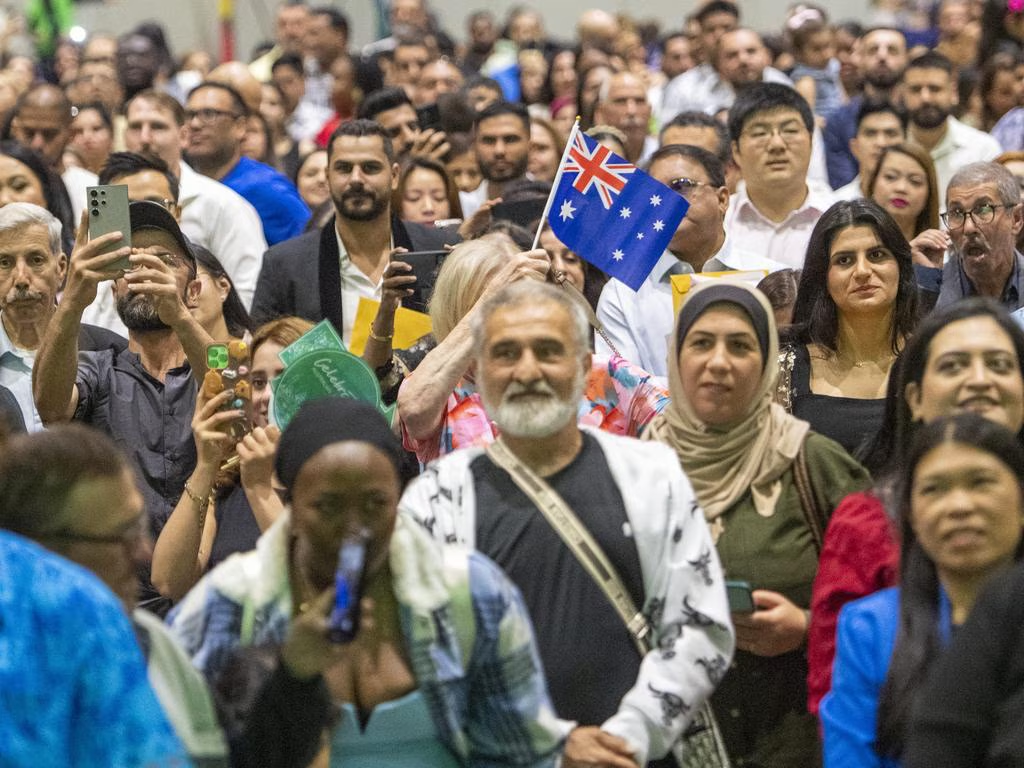
Burke insists that “singling out” the Indian community will only hurt the economy and destroy social cohesion.
He believes that migration is part of the answer to infrastructure woes, provided the targeting is done “really carefully”.
Yet, the targeting over the last two decades has clearly missed the mark on housing construction.
The grit of the Australian people is being tested as they are told that the solution to a lack of houses is to bring in more people who don’t build them.
This is a fair dinkum stitch-up for the young Aussies who can’t even afford to dream of owning their own home.
The Minister claims he is here to restore the “social license” for migration by explaining how strict the security checks are.
But the real check Australians are looking for is the one that says their rent isn’t going up by another $100 a week.
The cold steel of economic reality is clashing with the idealistic rhetoric coming out of the Immigration Minister’s office.
As the UK-born population declines and the Indian-born population surges, the cultural landscape of the nation is shifting faster than ever.
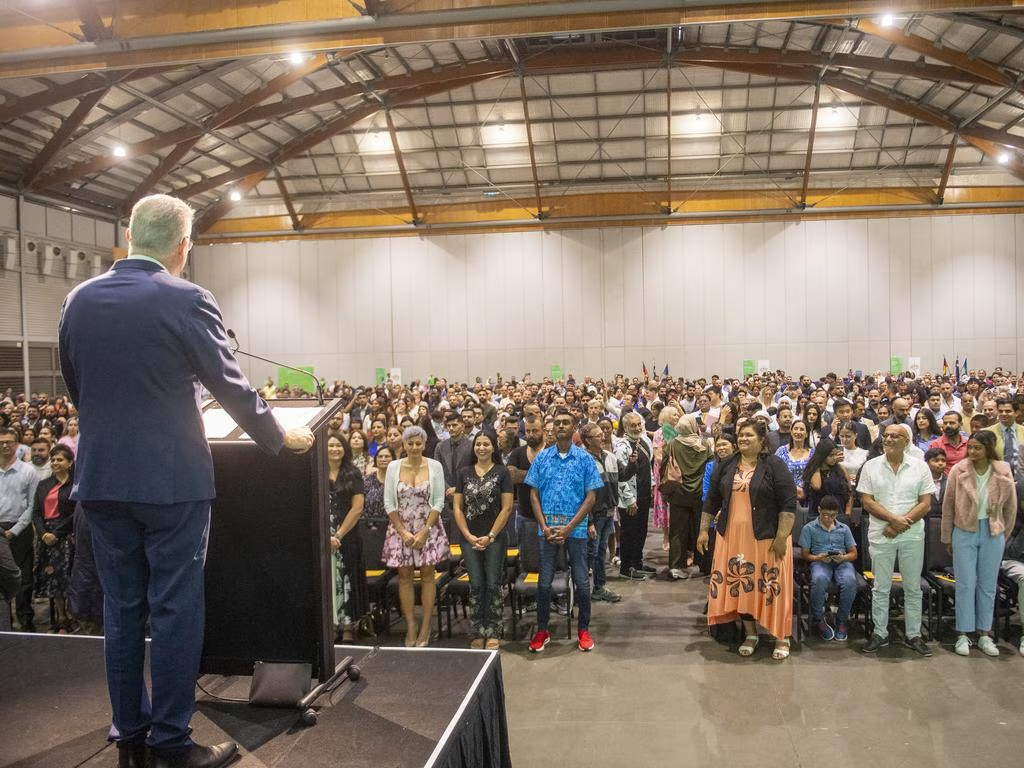
The 2023 Census and subsequent ABS data show a country transformed in a single generation.
Whether this transformation is the “solution” or the “problem” will likely be the deciding factor in the next federal election.
Burke’s “Welcome home” might be music to the ears of new citizens, but it’s a haunting indictment for those feeling like strangers in their own land.
Pulling a swiftie on the public by claiming migrants are building the houses they occupy is a bold move that might backfire.
The hard yakka of fixing the housing crisis requires more than just high-level targeting; it requires a reality check on the numbers.
With 2.6 million temporary visa holders in the country, the pressure on services and infrastructure is beyond the pale.
Tony Burke might see a celebration at his ceremonies, but in the suburbs, people see a struggle for survival.
The judge’s gavel of history will eventually decide if this era of mass migration saved Australia or simply broke it.
Until then, the Canberra bubble will continue to insist that more is better, even when the foundations are cracking.
The willpower of the Australian voter will be the ultimate test of whether the “solution” is actually working for them.
We need straight talk, not political weaponization of the very real concerns held by ordinary families.
Justice for the Aussie battler means a housing market that works for those already here, not just those arriving tomorrow.
The absolute shocker of the construction trade stats should be the starting point for any fair dinkum debate on our future.






