The Australian community is currently witnessing a disgraceful display of online aggression that has turned a simple family moment at a football game into a national conversation about digital safety.
Dean Clifford, a well-known and highly respected motivational speaker, recently attended an NRL match at Suncorp Stadium with his mother to watch the Dolphins take on the Storm.
What should have been a fair dinkum celebration of a mother-son bond quickly spiraled into a total nightmare as a wave of vile abuse flooded his social media profile.
The situation reached a significant level of absurdity when Meta’s automated AI system labeled Mr. Clifford a “zombie,” prompting strangers to mock his appearance instead of celebrating his resilience.
For a man who has spent 46 years defying every medical prediction ever made about his life, this digital assault was a severe blow to his family’s peace of mind.
Mr. Clifford was diagnosed as a baby with Epidermolysis Bullosa, a rare and extremely painful genetic skin condition often referred to as “butterfly skin.”
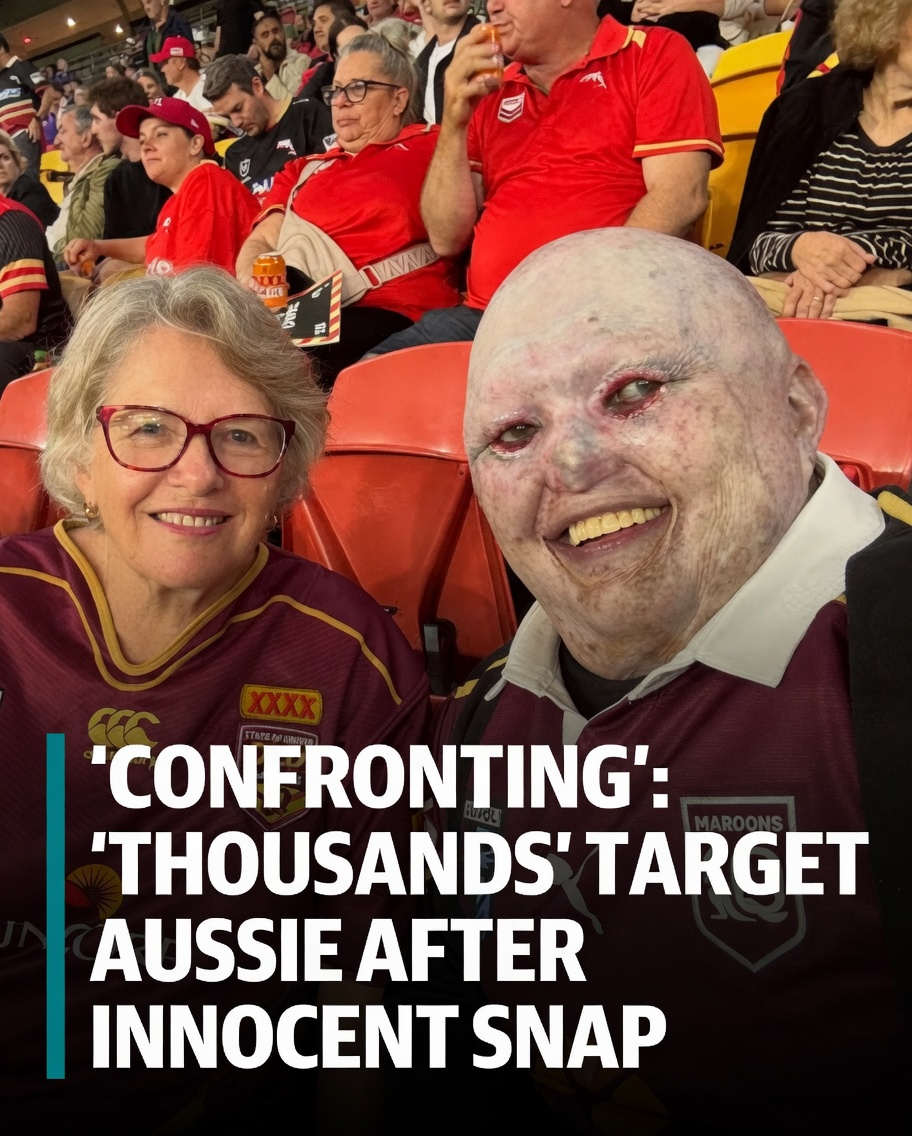
Dean Clifford and his smiling mother were simply enjoying a night at the footy before trolls and faulty AI tech intervened.
The condition is so severe that his skin blisters and peels at the slightest touch, a reality that has been likened to living with permanent third-degree burns.
Despite being told he wouldn’t live past the age of five, Dean has become one of the oldest survivors of EB in the world through sheer hard yakka and an unbreakable spirit.
The recent surge of online hate has left his elderly parents considering a total withdrawal from all social media platforms to escape the relentless negativity.
The Severe Impact of Algorithmic Bias on Marginalized Australians
The failure of Meta’s AI to recognize a human being with a disability, instead categorizing him as a “costume,” is a significant concern for every Aussie battler living with visible differences.
This questionable technological oversight provided a platform for thousands of trolls to launch a coordinated campaign of death threats and disgusting commentary.
According to recent data from the Australian Bureau of Statistics, nearly one in five Australians living with a disability has reported experiencing some form of discrimination in the last year.
When global tech giants allow their systems to dehumanize individuals, they are effectively undermining the “Fair Go” principle that is central to our national identity.
From an economic perspective, the digital safety of citizens is now a major priority for the federal government as they attempt to reign in the power of the Canberra bubble’s tech lobbyists.
The gánh nặng of cyberbullying on the national mental health system is estimated to cost the economy millions of dollars in lost productivity and healthcare expenses annually.
For Mr. Clifford, social media has always been a way to share his positive story with friends and family, but this incident has exposed the dark underbelly of the digital age.
The ABS reveals that more Australians than ever are using social media for connection, yet the lack of effective moderation remains a fair dinkum threat to social cohesion.
Meta has since issued a formal apology, stating that these prompts are generated automatically and “may not always produce the results intended.”
However, for the victims of these “intended results,” an apology does little to mend the psychological distress caused by thousands of strangers suggesting self-harm.
The Daily Hard Yakka Of Living With Butterfly Skin In Australia
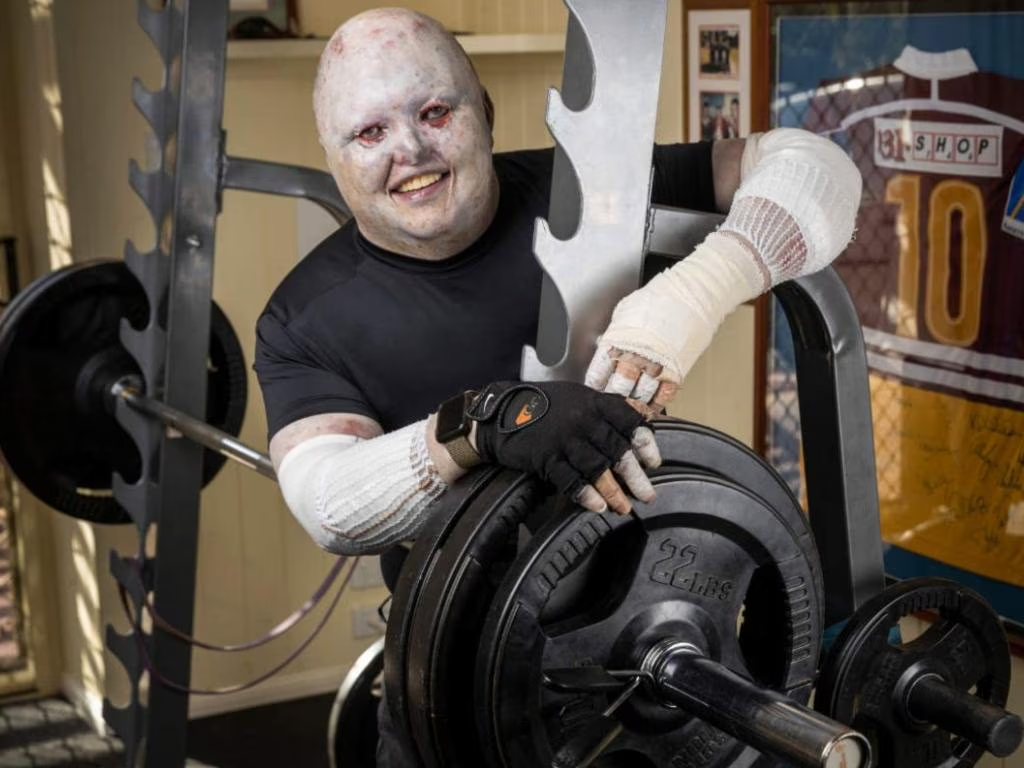
To understand the depth of Dean Clifford’s resilience, one must look at the grueling medical routine he undergoes every single day just to maintain his health.
Dean’s day begins at 3:30 am, long before the rest of the country wakes up, as he starts a five-hour process of tending to his fragile skin.
This meticulous routine involves performing minor medical procedures on himself, using scalpels and needles to cut away dead skin and drain painful blisters.
The financial cost of the ointments, specialized dressings, and medical tools required for EB care is a significant gánh nặng on families, often running into thousands of dollars per month.
While the National Disability Insurance Scheme provides vital support for many, the administrative hard yakka required to secure funding for rare conditions is a constant struggle.
The ABS data on healthcare spending shows that Australians with chronic genetic conditions face much higher out-of-pocket expenses than the general population.
For Dean, the physical pain is a constant companion, as even opening a soft drink bottle or holding a tool the wrong way can result in his skin tearing away.
Despite this, he has refused to sit back and wait for medical science to find a cure, instead taking full responsibility for changing his own life.
His determination was most evident in the lead-up to the 2000 Sydney Olympics, where he taught himself to walk again in just six months to carry the torch.
This fair dinkum Aussie hero has since become a successful international speaker, an ambassador for the Brisbane Broncos, and a competitive powerlifter.
Why The Aussie Dream Must Include Digital Protection For Everyone
The “Aussie Dream” of an inclusive and safe society is under direct assault when individuals are targeted for their physical appearance in digital spaces.
The silence from some sectors of the Canberra bubble regarding the accountability of social media platforms for AI-generated harassment is a questionable policy failure.
We need a robust framework that ensures tech giants are held to the same standards as traditional media when it comes to defamation and harmful content.
The gánh nặng of moderating these platforms should not fall solely on the shoulders of the victims, who are forced to spend their days blocking and reporting thousands of trolls.
Taxpayers fund the eSafety Commissioner to provide a level of protection, but incidents like the one involving Mr. Clifford show that much more hard yakka is needed.
The ABS reveals that regional and suburban Australians are increasingly concerned about the impact of online bullying on the younger generation and the vulnerable.
Dean’s response to the trolls was a masterpiece of straight talk, informing them that he has dealt with stares and whispers since he was two years old.
“I do not care what you think of me,” he wrote, a powerful statement that serves as a beacon of hope for others facing similar digital rorts.
The fact that he plans to attend another NRL game in two weeks and will take another selfie is a testament to the resilience of the quiet Australians.
However, we must ask why a man who has contributed so much to our nation through his motivational work should have to defend his very existence to an AI bot.
The economic value of Dean’s work as a keynote speaker and ambassador is immense, providing inspiration to thousands and promoting disability employment across the country.
Every time a shonky algorithm misidentifies a person with a disability, it creates a barrier to their full participation in the economy and society.
We need a fair dinkum audit of how AI models are trained to ensure they recognize the diversity of the human experience without resorting to offensive labels.
The resilience of the Clifford family is legendary in their local community, but they should not have to face this battle alone against the global giants of Silicon Valley.
As the federal budget approaches, there is a clear opportunity for the government to invest in digital literacy and stronger enforcement of our online safety laws.
Protecting the Aussie battler means ensuring they can enjoy a night at the footy without being subjected to a global campaign of vile abuse.
Dean Clifford’s story is not one of tragedy, but one of triumph over a “bad hand” that was dealt to him by nature and then made worse by technology.
He has turned his pain into a positive story that continues to resonate far beyond the stands of Suncorp Stadium.
The total rort of the digital world must be addressed before more innocent families are forced to consider deleting their social footprints for their own safety.
Wait until you see the next public campaign from Debra Australia, where Dean will no doubt continue to educate the public on the reality of living with EB.
The hard yakka of advocacy is never finished, especially when new technologies create new ways for the “keyboard warriors” to target the vulnerable.
Let’s make sure that the next time an Aussie hero posts a selfie with their mum, the only comments they see are ones of support and respect.
The Aussie Dream belongs to everyone, including those who have to fight every single day just to keep their skin intact.
It’s time to stop the spin, fix the shonky AI, and start putting the safety of real Australians first.
Dean Clifford is a fair dinkum legend, and he deserves a digital world that is as brave and resilient as he is.
The resilience of our nation is found in people like Dean, not in the algorithms that fail to see his humanity.
Stay tuned as we continue to follow Dean’s journey and his ongoing fight for awareness and respect in both the physical and digital worlds.
Because out here in the real world, your character is what matters—not a tag generated by a bot in a bubble halfway across the world.
The battle for a fairer digital Australia is just beginning, and we are right behind the battlers like Dean.
Let’s hope Meta and the rest of the tech giants take this as a massive wake-up call to do the hard yakka required to fix their systems.
Our national identity depends on a fair go for all, whether it’s at the local park or on the global internet.






