Indian Prime Minister Narendra Modi’s arrival in Melbourne has attracted both enthusiastic supporters and vocal critics, highlighting the complex mix of diplomacy, migration debates and domestic politics surrounding one of the most closely watched international visits to Australia this year.
Mr Modi is visiting Australia from July 8 to July 10 for the Australia–India Annual Leaders’ Summit, where he is scheduled to hold formal talks with Prime Minister Anthony Albanese on trade, defence, investment, education, critical minerals and broader strategic cooperation between the two countries.
However, shortly after arriving at his Melbourne hotel, attention shifted from the diplomatic agenda to a confrontation outside the venue.
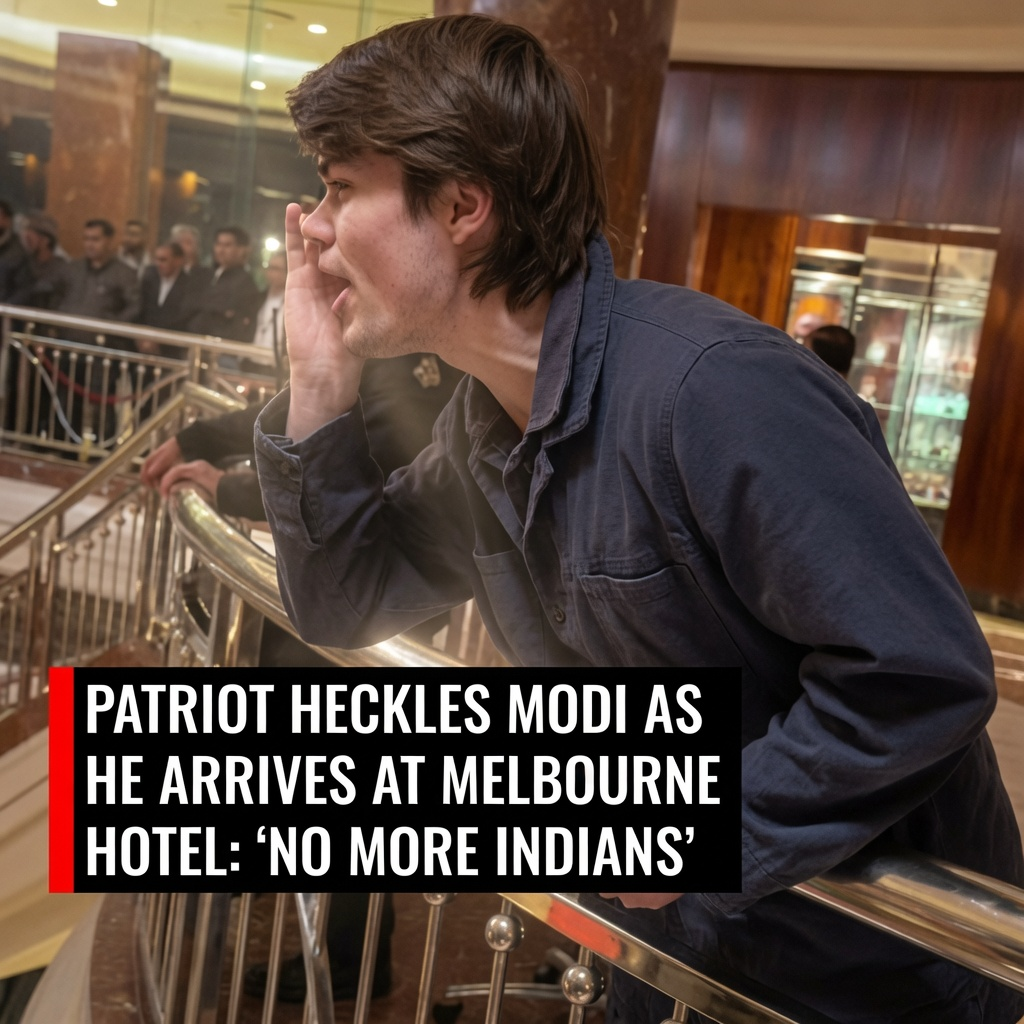
Video published online showed a right-wing anti-migration activist approaching the hotel precinct while Mr Modi was greeting supporters. The activist shouted criticism of Australia’s migration program and directed remarks towards the visiting Indian leader.
Among the statements heard in the footage were claims that Australia had accepted too much migration and that “this country is for Australians”. Security personnel quickly intervened as the individual continued shouting from outside the hotel.
There is no indication that the protester breached the protected security perimeter surrounding the visiting head of government, and the incident did not interrupt Mr Modi’s official schedule.
The confrontation occurred as hundreds of supporters gathered nearby to welcome the Indian Prime Minister. Many waved Indian and Australian flags while chanting his name as he greeted members of Melbourne’s Indian community.
For supporters, the visit represents another milestone in the rapidly expanding relationship between Australia and India.
Australia now regards India as one of its most significant strategic and economic partners in the Indo-Pacific. Successive governments from both major political parties have invested heavily in strengthening bilateral ties across defence, trade, education, technology and supply chains.
Ahead of the visit, Prime Minister Anthony Albanese described India as a critical economic partner and said cooperation between the two countries continues to expand across multiple sectors.
The leaders are expected to discuss:
- trade and investment opportunities;
- critical minerals cooperation;
- clean energy partnerships;
- education and student mobility;
- defence and regional security; and
- people-to-people links between Australia and India.
The official program also includes meetings with business leaders and major community events involving Australia’s large Indian diaspora.
One of the centrepieces of the visit is the “Melbourne Meets Modi” event at Marvel Stadium, where tens of thousands of attendees are expected to hear the Indian Prime Minister speak alongside Australian leaders. Demand for tickets has been exceptionally high, with organisers describing the event as one of the largest gatherings of the Indian-Australian community in recent years. :contentReference[oaicite:0]{index=0}
While many supporters view the visit as a celebration of Australia’s multicultural society and the contribution made by Indian Australians, others have used the occasion to express concerns about migration policy, foreign influence and human rights.
The anti-migration activist involved in the hotel confrontation has previously expressed opposition to Australia’s current migration levels and has argued that the country should significantly reduce immigration.
Those views form part of a broader political debate that has become increasingly prominent in Australia.
Migration has emerged as one of the defining policy issues in federal politics, with discussion focusing on housing affordability, infrastructure pressures, rental shortages, population growth and labour market needs.
Different political parties have proposed varying approaches, ranging from reducing migration numbers to maintaining skilled migration programs that businesses argue are necessary to address workforce shortages.
The issue has also become more visible on social media, where activists from across the political spectrum regularly stage protests aimed at attracting online audiences as much as those physically attending events.
Mr Modi’s visit was already expected to attract demonstrations before he landed in Melbourne.
Several organisations announced plans to protest during the visit for very different reasons.
Some groups oppose Australia’s migration settings and growing relationship with India, while others have called on Australian leaders to raise concerns about human rights, religious freedoms and press freedom during bilateral discussions with the Indian government. :contentReference[oaicite:1]{index=1}
Human rights organisations have argued that Australia’s expanding strategic partnership should be accompanied by frank discussions on democratic institutions and civil liberties.
At the same time, many members of Australia’s Indian community strongly support Mr Modi and regard his visit as an important recognition of India’s growing international influence.
These contrasting perspectives have produced a highly visible public debate throughout the visit, with supporters and critics holding separate events across Melbourne.
Security arrangements have also been extensive.
In the days leading up to Mr Modi’s arrival, the Australian Federal Police investigated an online threat directed at the Indian Prime Minister.
Authorities later confirmed that a young person had been formally warned after the investigation and said there was no ongoing threat to the public or to scheduled events. Security planning nevertheless remained significant given the status of the visiting foreign leader. :contentReference[oaicite:2]{index=2}
The Melbourne hotel confrontation did not alter the official itinerary.
Mr Modi is expected to continue participating in summit meetings with Mr Albanese, attend business forums and engage with community events before travelling onward as part of his broader international tour.
The visit reflects the growing importance both governments place on the Australia–India relationship.
India has become one of Australia’s fastest-growing export markets, while cooperation has expanded in areas including renewable energy, critical minerals, defence technology, maritime security and higher education.
Australian universities educate large numbers of Indian students each year, while migration has contributed to making the Indian-born population one of Australia’s largest overseas-born communities.
That growing relationship has delivered economic opportunities for both countries but has also prompted domestic political discussion about migration, social cohesion and Australia’s long-term population strategy.
The protest outside Mr Modi’s Melbourne hotel illustrated how international diplomatic visits can become focal points for broader domestic debates.
Although the incident itself was brief and quickly contained by security personnel, it attracted attention because it occurred during one of Australia’s most significant diplomatic engagements of the year and reflected wider disagreements over migration policy that continue to shape political discussion across the country.
As the Australia–India summit proceeds, the focus for both governments is expected to remain on strengthening bilateral cooperation, even as demonstrations from different groups continue to underscore the diverse range of opinions surrounding the relationship and Australia’s future migration policies.






