Victorian Premier Jacinta Allan is facing renewed internal pressure as reports emerge that a number of Labor MPs and influential party figures are discussing whether a leadership change is needed before November’s state election.
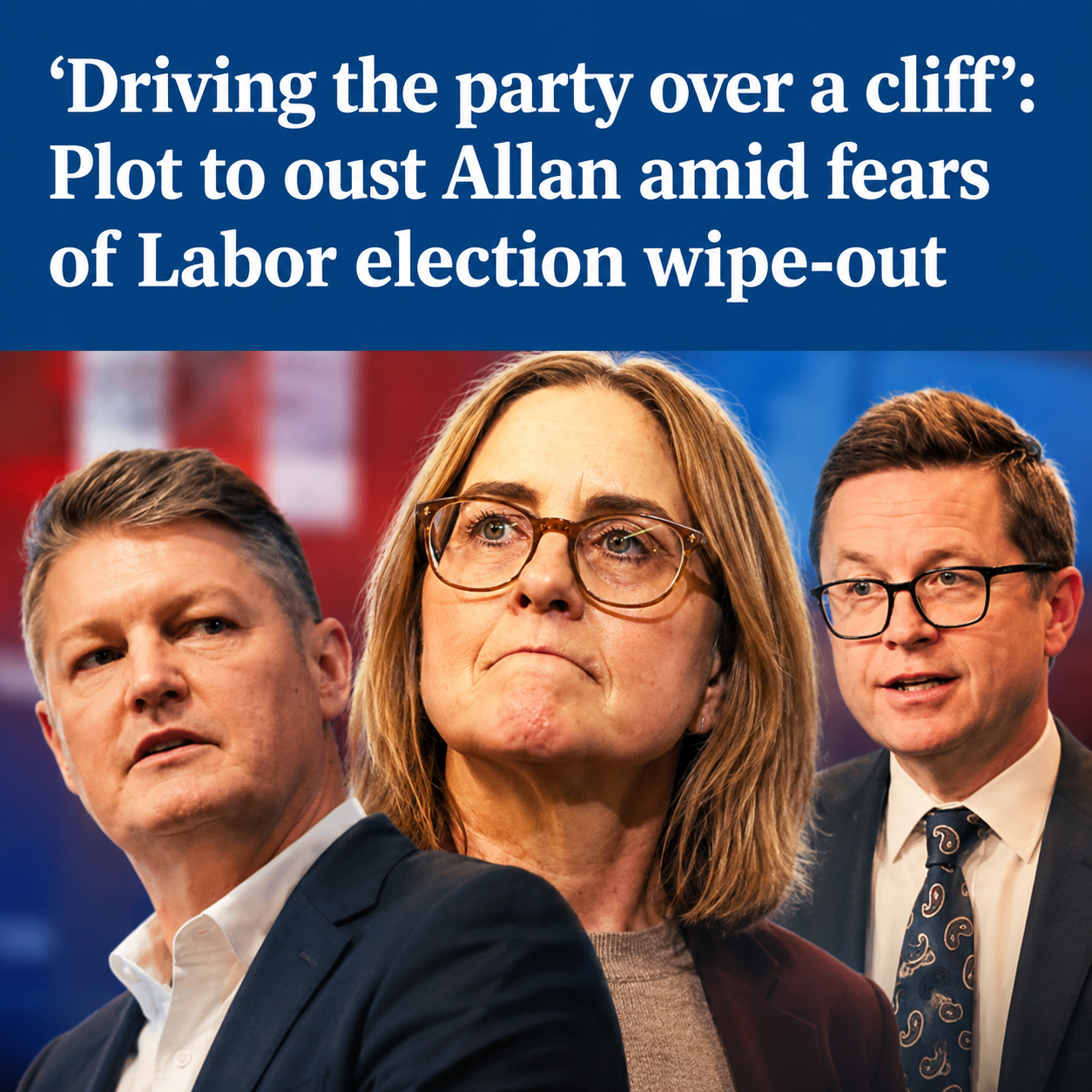
The latest speculation follows new polling indicating the Coalition has moved ahead of Labor, intensifying concerns within the governing party that it could be heading towards a significant electoral defeat after more than a decade in office.
According to reports, some Labor insiders have privately argued the government is losing public confidence and that the current political trajectory risks leaving the party in an increasingly difficult position as the election campaign approaches.
Several anonymous party figures were quoted as expressing frustration with the government’s direction, with one describing the Premier as “driving the party over a cliff” while another reportedly warned Labor had reached a “hopeless” position.
Although no formal leadership challenge has been announced, the comments illustrate growing unease within sections of the Victorian Labor organisation about the government’s electoral prospects.
Leadership speculation has periodically surrounded Ms Allan since she succeeded Daniel Andrews as Premier in September 2023.
Taking over after the resignation of Australia’s longest-serving Victorian premier presented immediate political challenges, including managing major infrastructure projects, addressing cost-of-living pressures and rebuilding public confidence after years dominated by the COVID-19 pandemic.
Since assuming office, Ms Allan has defended her government’s focus on delivering transport infrastructure, expanding housing supply, investing in healthcare and supporting economic growth.
However, the government has also faced sustained criticism from the opposition over rising state debt, taxation, housing affordability, crime, public transport performance and budget management.
Opinion polling released in recent months has suggested the political contest in Victoria has become increasingly competitive.
While individual surveys vary in methodology and results, several have indicated Labor’s primary vote has softened compared with previous elections, while support for the Liberal-National Coalition has strengthened.
For many Labor MPs, the concern extends beyond statewide polling.
Attention is increasingly focused on marginal electorates where relatively modest swings could determine the outcome of the election.
If those trends continue, seats that have traditionally been considered relatively secure could become highly competitive during the campaign.
Political strategists within both major parties are closely monitoring voter sentiment on issues dominating public debate across Victoria.
Cost-of-living pressures remain among the most significant concerns for many households, with mortgage repayments, rental costs, electricity prices and grocery bills continuing to influence political attitudes.
Housing affordability has similarly emerged as one of the defining issues facing younger voters and families attempting to enter the property market.
Crime and community safety have also become increasingly prominent political issues.
The Coalition has consistently argued Labor has failed to respond effectively to concerns regarding youth offending, repeat offenders and community confidence in the justice system.
Labor has defended its record, pointing to investments in policing, community safety initiatives and legislative reforms aimed at strengthening public protection.
Another issue influencing political debate has been Victoria’s financial position.
The government argues substantial borrowing has funded major infrastructure projects designed to support long-term economic growth, improve transport capacity and accommodate population growth.
Opposition parties contend rising debt levels will place increasing pressure on future budgets and taxpayers.
Against that backdrop, speculation regarding Labor’s leadership has intensified whenever polling has suggested declining electoral support.
Political observers note, however, that leadership changes close to elections carry considerable risks.
Replacing a premier only months before voters head to the polls can project instability and internal division, potentially reinforcing criticism already directed at the governing party.
At the same time, supporters of leadership renewal sometimes argue a new leader can reset public perceptions, introduce fresh priorities and provide momentum heading into an election campaign.
Whether such a strategy succeeds depends heavily on timing, party unity and the public’s willingness to embrace change.
For now, there is no indication that Ms Allan intends to step aside.
The Premier has repeatedly stated she remains focused on governing, delivering Labor’s policy agenda and preparing for the upcoming election rather than responding to internal political speculation.
Senior ministers have also publicly backed her leadership, emphasising that governments are ultimately judged by voters at elections rather than by anonymous commentary from within political organisations.
Despite those expressions of support, the reported concerns highlight the pressure confronting governments approaching the end of long periods in office.
Political history demonstrates that administrations governing for multiple terms often face increasing expectations from voters while simultaneously confronting accumulated criticism over policy decisions made across many years.
For Victorian Labor, the coming months are expected to prove decisive as the party seeks to convince voters it remains the best placed to govern the state beyond the November election.
Whether the reported dissatisfaction develops into a genuine leadership challenge will largely depend on two factors: the trajectory of public opinion polls over the coming months and Labor MPs’ confidence that the party can still retain government under Ms Allan’s leadership.
Political analysts note that internal unrest often intensifies when elections draw closer and polling consistently points towards a possible change of government.
In such circumstances, MPs holding marginal seats frequently become increasingly focused on local electoral prospects, particularly if they believe broader statewide trends could threaten their chances of re-election.
Supporters of Ms Allan argue changing leaders so close to polling day would do little to address the underlying issues confronting the government.
They contend voters are more interested in policies addressing housing affordability, healthcare access, infrastructure, cost-of-living pressures and community safety than another period of political instability within Labor.
Those backing the Premier also point to the practical difficulties of introducing a new leader only months before an election, arguing that any successor would have limited time to establish public recognition, reshape policy priorities and unite the parliamentary party.
Others inside Labor, however, reportedly fear that maintaining the current course could leave the government facing a far larger electoral defeat if public dissatisfaction continues to grow.
For those MPs, recent polling has reinforced concerns that the government’s message is failing to resonate with voters confronting rising household expenses, housing pressures and broader economic uncertainty.
The Coalition has sought to capitalise on those concerns by presenting itself as an alternative capable of restoring confidence in Victoria’s economic management, public finances and law-and-order policies.
Opposition Leader Brad Battin has repeatedly argued the state requires a change of government after more than a decade of Labor administration, promising a stronger focus on community safety, fiscal discipline and reducing pressure on households and businesses.
Labor rejects those criticisms, maintaining that its long-term investments in transport infrastructure, hospitals, schools and housing will continue delivering benefits well beyond the current parliamentary term.
The government has also argued that many of Victoria’s financial challenges reflect unprecedented spending required during the COVID-19 pandemic as well as continued investment to support one of Australia’s fastest-growing populations.
As campaigning gradually intensifies, both major parties are expected to place greater emphasis on everyday issues that polling consistently identifies as priorities for Victorian voters.
Housing affordability, healthcare services, transport reliability, education, taxation, economic management and crime are likely to dominate debate throughout the election campaign.
Leadership, however, may remain an equally important consideration.
Political campaigns increasingly focus not only on competing policy agendas but also on voters’ confidence in the individuals seeking to lead government.
For Ms Allan, the months ahead will provide an opportunity to demonstrate that Labor remains united despite ongoing speculation and that her government retains a clear plan for Victoria’s future.
For critics within her own party, the same period may determine whether calls for change gather momentum or gradually fade if Labor’s electoral position improves.
History shows that leadership speculation can either dissipate quickly when polling stabilises or escalate rapidly if concerns about electoral performance persist.
At present, there is no publicly declared leadership contest, and senior members of the government continue to express confidence in Ms Allan’s leadership.
Nevertheless, reports of frustration among sections of the parliamentary party highlight the political pressures confronting long-serving governments as they approach a difficult election.
With Victorians due to vote in November, every opinion poll, campaign announcement and political development is likely to be examined closely for signs of whether Labor can recover ground or whether the Coalition’s apparent momentum will continue through to election day.
The outcome will not only determine who forms Victoria’s next government but will also shape the future direction of the state’s major political parties as they respond to changing voter expectations in an increasingly competitive political environment.






