A politically themed installation that appeared without authorisation outside Victoria’s Parliament House has prompted a police investigation after council workers removed the display only hours after it was discovered.
The installation was erected in Gordon Reserve, opposite Parliament House in Melbourne, early on Friday morning. It featured satirical representations of Prime Minister Anthony Albanese and former United States President Donald Trump and was intended as a political protest rather than an official public artwork.
City of Melbourne officers removed the structure shortly after becoming aware of its presence, confirming that it had been installed on public land without approval. Council officials also began reviewing security camera footage and said relevant material would be made available to Victoria Police as part of the investigation.
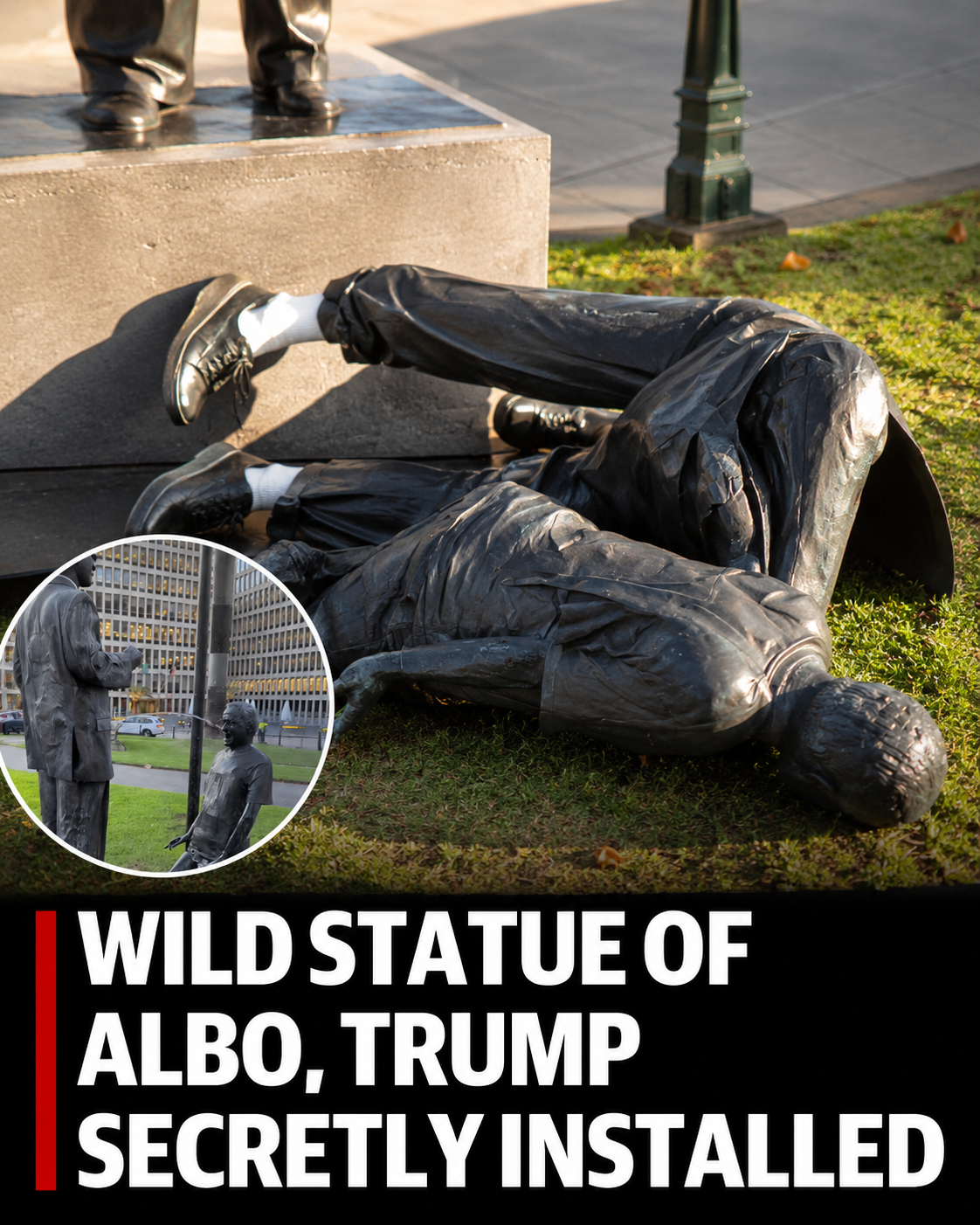
Victoria Police confirmed officers attended the site after receiving reports of the unauthorised installation. Investigators are now examining the circumstances surrounding the display and whether any offences may have been committed. At the time of publication, no charges had been announced.
An activist collective known as The New Radicals publicly claimed responsibility for creating the installation. The group has previously staged a number of unauthorised political displays targeting prominent Australian political figures, using provocative visual satire to attract public attention and encourage debate about government policy.
While the installation generated widespread discussion online, reactions were mixed. Some people viewed it as an example of legitimate political satire and artistic expression, while others criticised both its presentation and the decision to place it in a public space without permission.
Australia has a long history of political satire expressed through cartoons, theatre, public art and demonstrations. However, legal experts note that freedom of political communication does not automatically exempt individuals from laws governing public property, planning requirements or the unauthorised installation of structures on public land.
Local councils are generally responsible for managing public spaces and ensuring they remain safe and accessible. Temporary structures installed without approval may be removed regardless of the political message they convey, particularly where there are concerns about public safety or compliance with local regulations.
The incident also highlights how activist groups increasingly use visual public displays to gain attention in an era where images can spread rapidly across social media. Even installations that remain in place for only a short period can generate significant public discussion once photographs and videos circulate online.
For now, the installation has been dismantled and removed, while police inquiries continue. Any legal consequences will depend on the outcome of the investigation, whereas the broader debate over political protest, artistic expression and the use of public spaces is likely to continue well beyond the incident itself.






