The Australian political landscape is bracing for a fair dinkum earthquake following revelations that One Nation leader Pauline Hanson is considering a high-stakes move to the House of Representatives.
Chief of staff James Ashby dropped the bombshell on Sky News, suggesting the firebrand Senator might step down from the upper house to contest the very seat she lives in at the next federal election.
This potential strategic pivot comes as the “orange wave” continues to swell across the nation, emboldened by recent polling that shows One Nation now commanding a significant share of the primary vote.
The news follows hard on the heels of reports that former Nationals leader Barnaby Joyce is also looking to recontest his old stomping ground of New England, potentially under the One Nation banner.
If these two political heavyweights join forces in the lower house, it could represent a massive challenge to the major party duopoly that has dominated the Canberra bubble for decades.
Senator Hanson confirmed the rumors on Tuesday, stating that while no final decisions have been made, a tilt at a lower house seat like Wright or Blair is firmly “under consideration.”
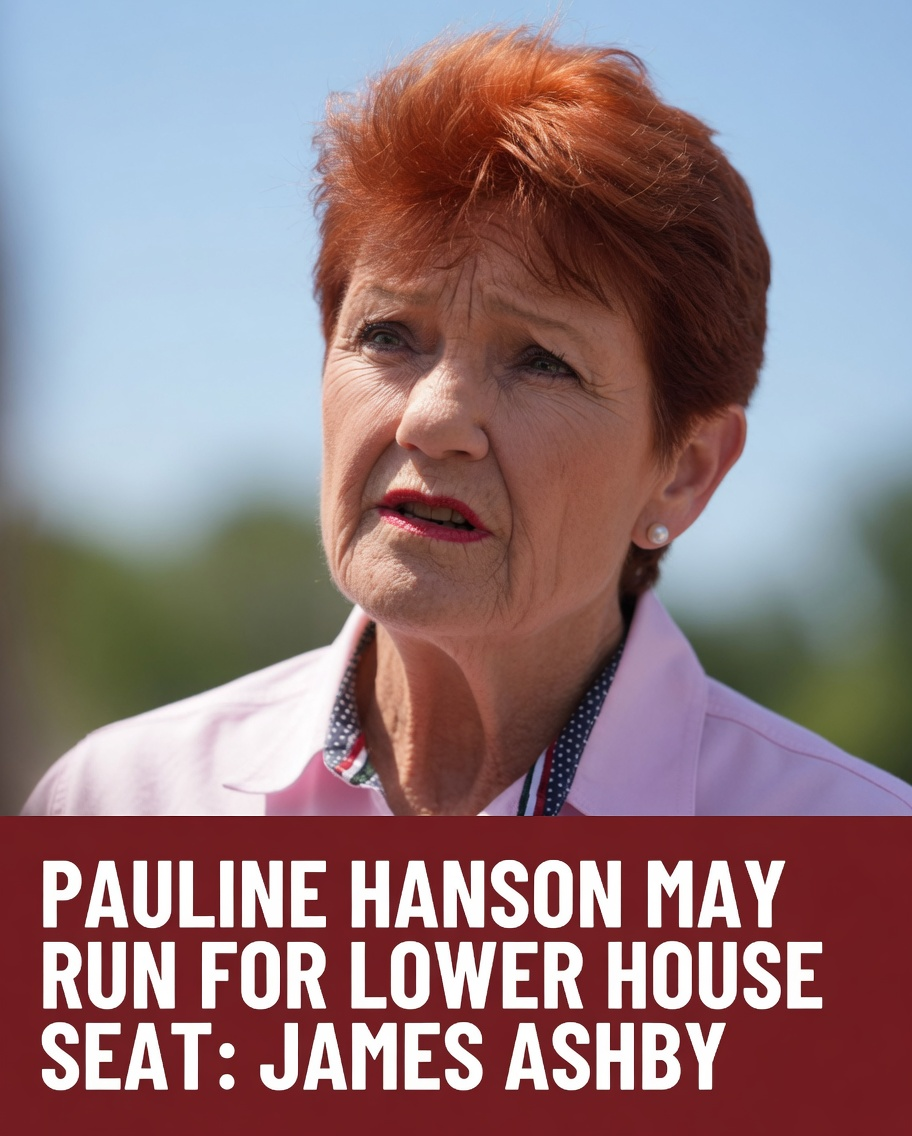
One Nation Leader Pauline Hanson is weighing up a historic return to the House of Representatives as her party surges in national polls.
The timing of this move is no accident, as the latest Sky News Pulse / YouGov polling shows One Nation sitting on a staggering 27 per cent of the primary vote, drawing level with Labor for the first time in history.
For the average Aussie battler, this surge represents a growing frustration with a system that many feel has ignored the quiet Australians in the outer suburbs and regional hubs.
The prospect of Hanson and Joyce leading a conservative charge in the lower house is a fair dinkum nightmare for the major parties who are already struggling to manage a cost-of-living crisis.
The Economic Reality Fueling One Nation’s Meteoric Rise
The meteoric rise of One Nation is being driven by a severe sense of economic pessimism that is currently gripping many Australian households.
According to the latest data from the Australian Bureau of Statistics (ABS), inflation and the skyrocketing cost of essentials have put unprecedented pressure on the family budget.
From a fiscal perspective, voters are increasingly viewing the major parties as being more interested in the Canberra rot than in fixing the price of fuel or the housing hell facing young families.
One Nation has capitalized on this anger, positioning itself as the only party willing to engage in straight talk regarding migration levels and their impact on infrastructure and services.
The gánh nặng of high energy costs is another significant factor, with many regional businesses doing the hard yakka to survive while ideological net-zero policies drive prices higher.
Taxpayers are rightfully asking why their hard-earned dollars are being spent on questionable international commitments while their own “Aussie Dream” is slipping out of reach.
The ABS reveals that while the official unemployment rate remains low, underemployment and wage stagnation are a massive concern for those in the bottom two tax brackets.
By moving into the lower house, Hanson and Joyce aim to directly challenge the policy-making process that occurs in the House of Representatives, where governments are formed.
It is a significant gamble for Hanson, who has built a formidable base in the Senate over the last decade, but one that reflects the party’s newfound confidence.
If she can successfully snatch a seat like Wright or Blair from the Liberals or Labor, it would be an absolute shocker that could fundamentally reshape the national agenda.
Why Barnaby Joyce’s New England Tilt Is A Fair Dinkum Game Changer
The potential return of Barnaby Joyce to New England as a One Nation candidate adds another layer of complexity to an already volatile political landscape.
Joyce, who has a long and colorful history in the region, remains a popular figure among those who feel abandoned by the modern National Party’s leadership.
The quiet Australians in the bush see Barnaby as a politician who is willing to take on the Canberra bubble, regardless of the personal or political cost.
His decision to potentially run alongside Hanson is a significant move that signals a total realignment of the conservative vote in regional Australia.
The ABS data on regional development highlights a growing divide between the wealth of the inner cities and the economic struggles of the farming heartlands.
For a farmer in Tamworth or Armidale, the rorts of the water market and the burden of red tape are much more pressing issues than the latest social trends discussed in the city.
If Joyce can hold New England for One Nation, he would provide the party with a much-needed bridge between the grassroots battlers and the levers of power in Parliament.
Many political analysts are warning that the Coalition’s “One Nation problem” has now become existential, as voters shift toward parties that speak their language.
The hard yakka of winning over these disaffected voters will require the major parties to do more than just offer shonky promises during the final weeks of an election campaign.
With James Ashby hinting at even more “well-seasoned politicians” joining the fold, the orange wave is looking less like a protest and more like a permanent shift.
Protecting The Aussie Dream In A Post-Two-Party World
The “Aussie Dream” has always been centered on the idea of a fair go, a stable job, and a home to call your own—all of which are currently under threat.
The surge in support for minor parties is a direct result of a public that feels the two-party system is no longer fit for purpose in a 21st-century economy.
Wait until the federal budget is handed down on May 12 to see if the government provides any real relief or if it’s just another exercise in shonky accounting.
The gánh nặng of government debt and the questionable efficiency of the federal bureaucracy are key talking points that Hanson and Joyce will likely hammer home.
The ABS reveals that household savings are at a record low, making every policy decision that affects the cost of living a life-or-death issue for many families.
One Nation’s focus on “putting Australians first” resonates because it offers a simple, relatable solution to a series of complex and interconnected problems.
The Canberra elite may mock the party’s cartoons and movies, but these mediums have successfully framed everyday concerns as issues that only One Nation can handle.
A move to the lower house is the ultimate test of whether this populism can be translated into actual seats and real influence over the national budget.
The resilience of our democracy depends on the ability of our institutions to adapt to the changing will of the people, no matter how disruptive that might be.
If the quiet Australians decide that the orange wave is their best hope for a fair go, then the major parties will have to learn some hard lessons very quickly.
The next federal election is shaping up to be a total game-changer for the future of the lucky country and the integrity of the Aussie Dream.
No more spin, no more rorts, and no more ignoring the battlers who build this country—it’s time for some fair dinkum results.
Stay tuned as we continue to follow the hard yakka and the political rorts that will define the battle for the House of Representatives.
Because at the end of the day, your vote is the only thing that can pop the Canberra bubble and bring common sense back to the hallowed halls of Parliament.
The battle for Australia’s future is officially on, and the Aussie battler is ready to have their say.
Let’s hope our leaders are finally listening before the dream of a fair go is gone for good.
The Farrer by-election this weekend will be the first major indicator of just how strong the orange wave really is.
If One Nation can secure a lower house seat outside of Queensland, it will send a shockwave through the system that no one can ignore.
The hard yakka starts now, and the future of the nation hangs in the balance.
Make sure you’re ready for what comes next—because Australian politics is about to get a whole lot more interesting.
It’s time to stop the rot and put the Aussie battler first, once and for all.






