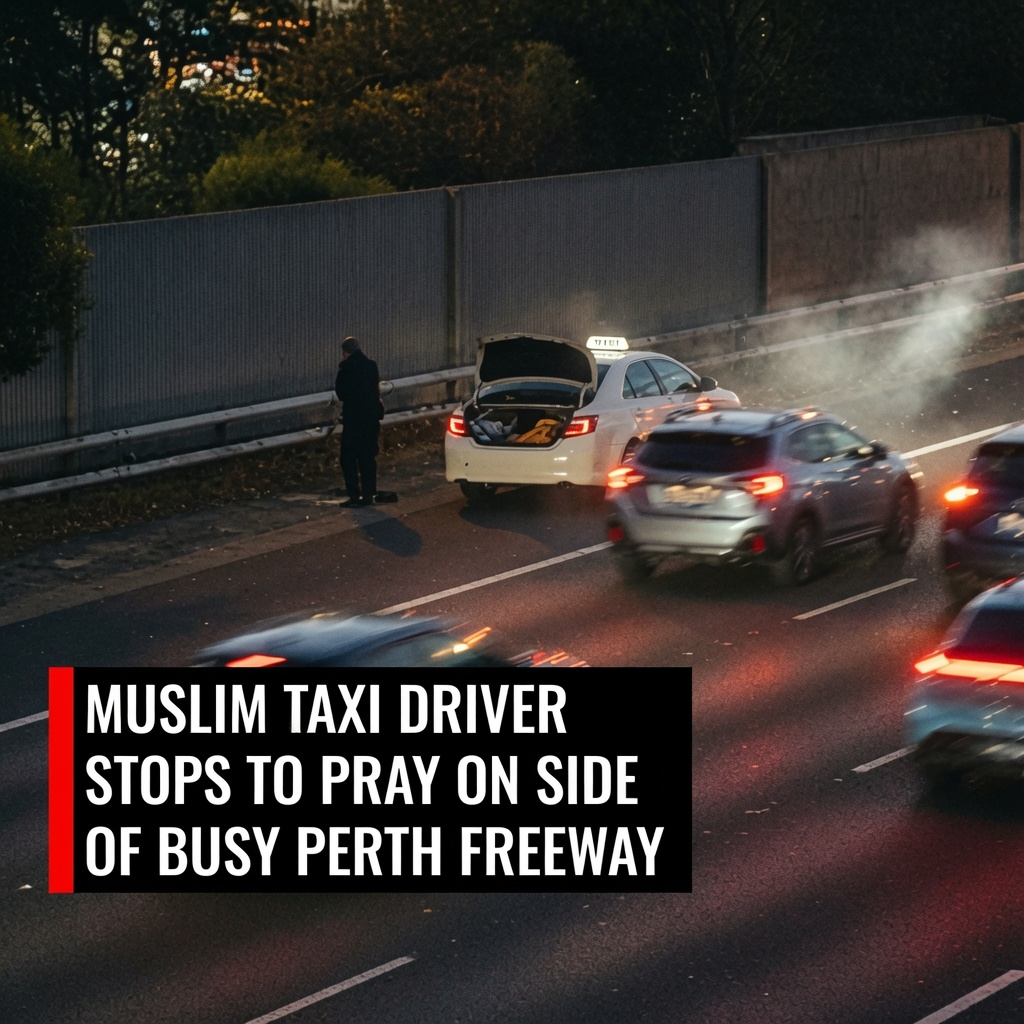
A video showing a taxi driver stopped in an emergency lane on a Perth freeway during peak hour has triggered a broader debate about road safety, professional responsibility and the expectations placed on commercial drivers.
The incident attracted attention after footage circulated online appearing to show the driver outside the vehicle while traffic continued moving through one of the city’s busiest transport corridors.
While public discussion quickly became heated, many Australians have focused on a more practical concern.
Safety.
Emergency lanes exist for a reason.
They provide a refuge for broken-down vehicles, emergency responders and motorists facing genuine emergencies.
When those lanes are occupied unnecessarily, safety experts often warn that risks can increase for both drivers and emergency services attempting to reach incidents quickly.
The controversy has therefore generated discussion well beyond the actions of one individual.
Many Australians are asking whether penalties and enforcement measures are sufficient to discourage dangerous behaviour on major roads.
Road safety remains a significant public concern across the country.
State governments spend millions of dollars each year on enforcement campaigns, public awareness programs and infrastructure upgrades designed to reduce crashes and fatalities.
Despite these efforts, dangerous driving behaviours continue to place motorists at risk.
Transport authorities have repeatedly warned that small decisions made on busy roads can have serious consequences.
A vehicle stopped in an unexpected location can create confusion, sudden braking and secondary hazards for other road users.
On high-speed roads, even minor disruptions can escalate rapidly.
That is why commercial drivers are often held to particularly high standards.
Taxi operators, rideshare drivers, truck drivers and bus operators spend long hours on the road and carry additional responsibilities because they transport passengers or operate larger vehicles.
The public generally expects professional drivers to demonstrate strong awareness of road rules and safety obligations.
For passengers, trust is a critical part of the service.
People entering a taxi expect the driver to prioritise safety above all other considerations.
That expectation extends beyond driving behaviour to decisions about where vehicles stop, park and operate.
The issue also has an insurance dimension.
Roadside incidents can create complex liability questions if accidents occur.
Insurance providers often assess whether drivers complied with road rules and safety requirements when determining responsibility.
Any behaviour that increases risk can potentially have financial consequences for drivers, operators and insurers.
The wider conversation has highlighted the challenge of balancing personal needs with public responsibilities.
Australia is a diverse society where people from many backgrounds, cultures and faiths participate in everyday community life.
Most Australians support the freedom of individuals to practise their beliefs.
At the same time, there is a broad expectation that public safety rules apply equally to everyone.
This is where much of the current debate has centred.
For many observers, the question is not about religion.
It is about location and timing.
Would the same behaviour be acceptable if it involved any other activity conducted in an emergency lane during peak traffic?
Many road users believe the answer is no.
Authorities across Australia have consistently encouraged motorists to plan ahead when undertaking long journeys or professional driving shifts.
Rest stops, service stations and designated parking areas are intended to provide safe locations where drivers can attend to personal needs without creating hazards for others.
Professional transport operators often have additional policies governing vehicle use and roadside conduct.
Companies understand that public confidence can be affected by the actions of individual drivers.
In an age of smartphones and social media, incidents can attract national attention within hours.
The public reaction to the Perth incident demonstrates how quickly local events can become broader conversations about standards and accountability.
Many Australians are increasingly focused on community safety issues and expect authorities to enforce rules consistently.
That sentiment extends beyond transport policy.
People want confidence that public spaces, roads and essential services operate according to clear standards that prioritise safety for everyone.
The incident also serves as a reminder that emergency lanes are not merely spare road space.
They are a critical safety feature designed to protect motorists during unexpected situations.
Keeping those lanes available can be the difference between a manageable incident and a dangerous one.
Whether the Perth case results in penalties or further investigation, the broader lesson remains clear.
Road safety rules exist to reduce risk.
Professional drivers carry additional responsibilities because their decisions can affect passengers, other motorists and emergency responders alike.
For many Australians, that principle matters more than the identity of the individual involved.
It is about maintaining safe roads, protecting the public and ensuring that everyone who uses the transport network can do so with confidence.






