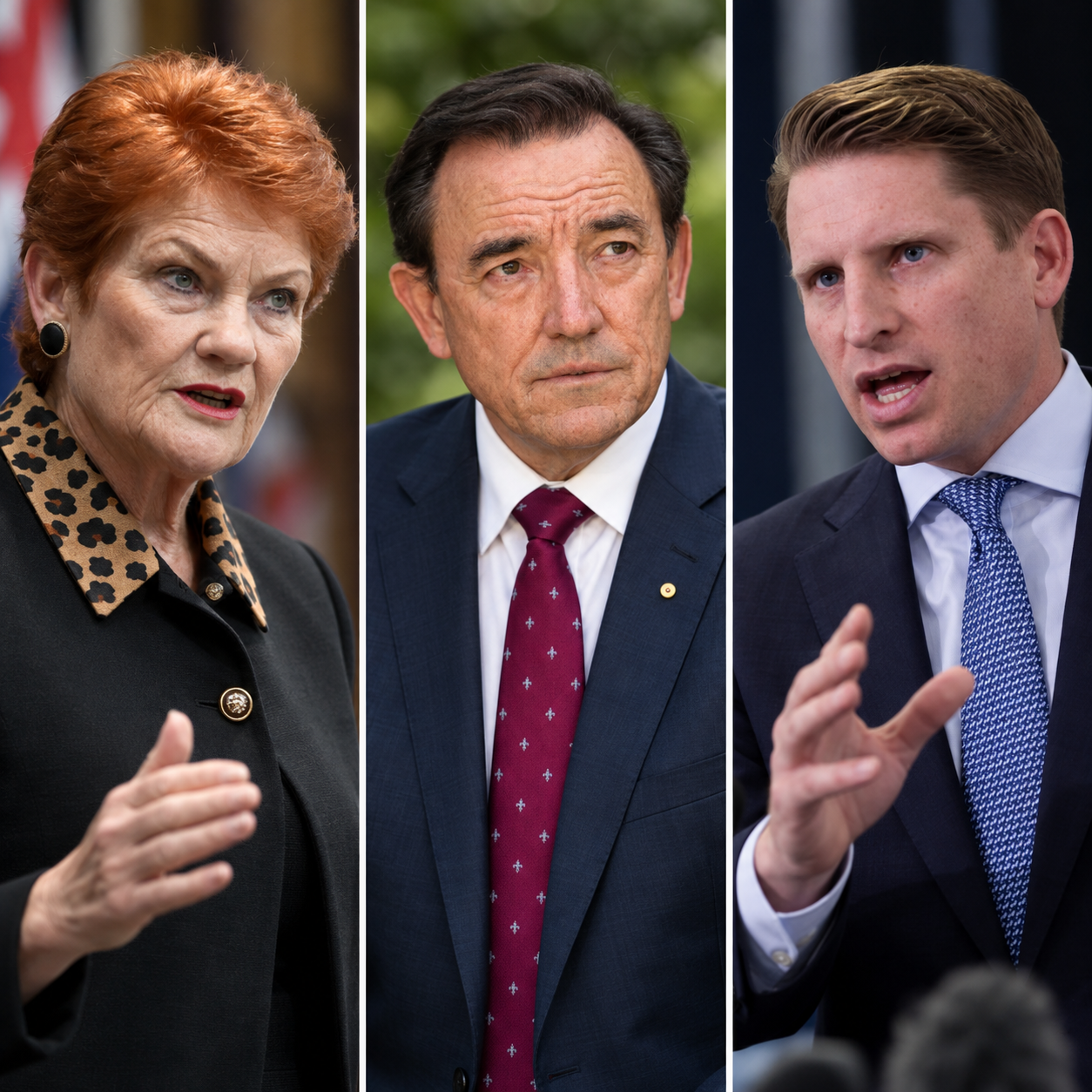
Pauline Hanson says One Nation is preparing to mount its most ambitious Victorian election campaign since the party was founded, announcing that candidates have already been locked in for almost every electorate ahead of the November state poll.
The One Nation leader revealed the party has secured candidates for between 74 and 76 of Victoria’s 88 Legislative Assembly seats, positioning the party to contest almost the entire state as it seeks to capitalise on growing voter dissatisfaction with the major parties.
The announcement represents a significant expansion of One Nation’s Victorian ambitions and comes during one of the most turbulent periods in recent Victorian political history, following the resignation of former Premier Jacinta Allan and the elevation of Ben Carroll to the state’s top job.
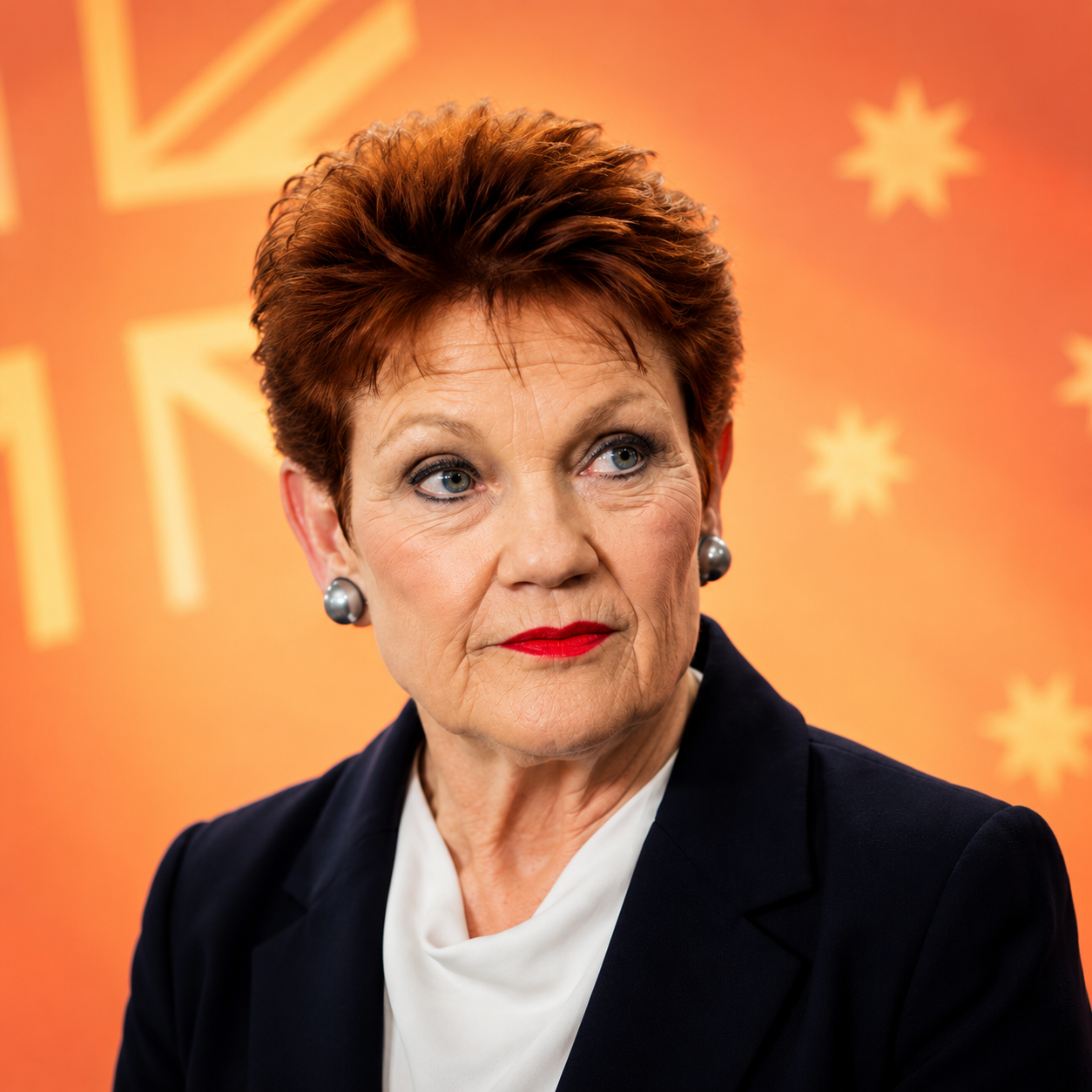
Speaking during the News24 special event Paul Murray Live: Pauline Hanson, Please Explain, Hanson confirmed that the party was finalising preparations before publicly unveiling its Victorian team.
“We have locked in about 74-76 seats at the moment of the 88. So we have got our candidates,” Hanson said.
She indicated the official announcement of candidates would occur within days, accompanied by a package of election policies designed specifically for Victorian voters.
“We are going to be announcing the candidates and we’ll have a suite of policies to go with that. So you will have a One Nation representative that you can vote for in Victoria,” she said.
The scale of the recruitment campaign illustrates how dramatically the party believes its electoral prospects have changed.
According to Hanson, approximately 1,200 people expressed interest in standing for One Nation in the Victorian election, allowing the party to select candidates across almost every electorate rather than concentrating on only a handful of winnable seats.
The announcement comes at a time when Victoria’s political landscape is undergoing rapid change.
Labor has entered the election campaign under new leadership after Jacinta Allan stepped down as Premier following mounting internal pressure over the government’s standing with voters. Deputy Premier Ben Carroll has since assumed the premiership, inheriting a government facing significant electoral challenges after more than a decade in office.
For opposition parties, the leadership transition has created an opportunity to argue that voters are looking for alternatives beyond both Labor and the Liberal-National Coalition.
Hanson was blunt in her assessment of Victoria’s current political environment, describing the state as a “basket case” and arguing that public frustration has reached a level that could reshape the election.
She believes dissatisfaction over issues including the cost of living, housing affordability, crime, government debt and public services has created conditions favourable for smaller parties seeking to expand their parliamentary representation.
Recent polling suggests One Nation has strengthened its position compared with previous Victorian campaigns.
According to the latest Newspoll published by The Australian, Labor was sitting on 28 per cent of the primary vote, trailing the Coalition on 31 per cent, while One Nation had climbed to 19 per cent.
Although Australia’s preferential voting system means primary vote figures do not directly determine election outcomes, Hanson argues the polling demonstrates that more Victorians are prepared to consider alternatives outside the traditional two-party contest.
The Victorian campaign also forms part of a much broader national strategy.
Hanson revealed that One Nation has already begun identifying candidates for the 2028 federal election despite the next national poll still being years away.
She said approximately 1,500 applications had already been received from people interested in contesting one of Australia’s 150 House of Representatives electorates, reflecting what she described as growing confidence in the party’s future.
“This time around, there’s a real chance that we can actually win seats in the Lower House and the Senate,” Hanson said.
Her comments mark one of the strongest indications yet that One Nation intends to move beyond its traditional focus on Senate representation and pursue a larger presence in the House of Representatives.
Since its establishment in the late 1990s, the party has often enjoyed strong Senate support while finding it considerably more difficult to secure lower house victories under Australia’s preferential voting system.
Winning seats in the Legislative Assembly in Victoria would therefore represent an important milestone in the party’s long-term political strategy.
Hanson said lessons learned from previous campaigns had prompted significant reforms to One Nation’s candidate selection process.
In earlier elections, the party occasionally faced criticism after candidates attracted controversy over past comments, financial issues or personal conduct that emerged during campaigns.
Determined to avoid similar problems, Hanson said One Nation had invested in far more comprehensive background screening for prospective candidates.
“The process that we’ve got now is a system that we’ve put in place that it really has a thorough look at the candidates,” she said.
According to Hanson, the system is designed to identify potential issues ranging from criminal convictions and financial problems to inappropriate social media activity before candidates receive party endorsement.
She suggested the screening process extended well beyond Australia’s borders, claiming international criminal records, bankruptcies, taxation issues and online conduct could all be identified during the vetting process.
The stricter approach reflects a broader effort to present One Nation as a more disciplined political organisation capable of attracting voters who may previously have questioned the calibre of some candidates.
Hanson also made clear that Senate candidates would face an additional level of personal scrutiny.
“If you stand for the Senate, you will come before me. I’ll be the judge in that,” she said.
She argued that because senators are elected for six-year terms, candidate quality is particularly important.
Hanson said successful candidates must bring professional experience, practical knowledge and the ability to contribute meaningfully within a relatively small parliamentary team.
Unlike Australia’s major parties, which often have dozens of MPs across both houses of Parliament, One Nation operates with far fewer representatives, meaning each elected member carries greater responsibility.
“We have to work twice or three times as hard as the others to get our point across and working for the people,” Hanson said.
That philosophy has become central to the party’s recruitment strategy as it attempts to broaden its electoral appeal.
Rather than simply increasing candidate numbers, Hanson argues the objective is to build a team capable of developing policy, scrutinising legislation and representing constituents over multiple parliamentary terms.
The Victorian election will provide an important test of whether that strategy resonates with voters.
Victoria has traditionally been a difficult electoral environment for minor conservative parties compared with states such as Queensland, where One Nation has historically performed more strongly.
However, political analysts have noted that periods of economic pressure and dissatisfaction with incumbent governments can create opportunities for minor parties to increase their vote, particularly when voters are seeking alternatives to the established political parties.
Whether One Nation can translate growing support into parliamentary seats will ultimately depend not only on its primary vote but also on preference flows, local candidate performance and the dynamics of individual electorates across metropolitan Melbourne and regional Victoria.
The party currently holds four upper house seats and two lower house seats nationally, but Hanson has made little secret of her ambition to significantly expand that footprint over coming election cycles.
For Victorian voters, the coming weeks are expected to bring the formal announcement of One Nation’s near-complete statewide ticket together with a policy platform focused on issues Hanson believes are driving public dissatisfaction.
As campaigning intensifies ahead of November’s election, the party’s ability to convert unprecedented candidate interest into electoral success will be closely watched. With Labor navigating a leadership transition, the Coalition seeking to regain government and minor parties aiming to broaden their influence, Victoria is shaping up for one of its most unpredictable state elections in recent memory.The significance of One Nation’s Victorian campaign extends beyond the November election itself. A strong result would reinforce the party’s argument that voter dissatisfaction with the major parties is no longer confined to regional Queensland or isolated protest votes but is becoming a broader national trend. Hanson has repeatedly argued that Australians are increasingly willing to consider alternatives as concerns about inflation, housing affordability, government spending and public confidence continue to dominate political debate.
Political observers note that Victoria has experienced significant electoral shifts over the past decade. Independent candidates, the Greens and several minor parties have all expanded their presence in different parts of the state, reflecting a gradual fragmentation of the traditional two-party system. While Labor and the Coalition remain the dominant political forces, support for smaller parties has steadily increased as voters seek greater choice.
That changing landscape presents both opportunities and challenges for One Nation. Contesting almost every electorate allows the party to build statewide recognition and establish local campaign networks, but it also requires significant financial resources, volunteers and organisational discipline. Running candidates in more than 70 electorates means maintaining campaign consistency across metropolitan Melbourne, regional centres and rural communities, each with very different local priorities.
In Melbourne’s outer suburbs, issues such as housing affordability, infrastructure, transport congestion and the rising cost of living are expected to dominate election campaigning. In regional Victoria, concerns surrounding agriculture, regional healthcare, local employment opportunities, energy costs and access to essential services are likely to receive greater attention. Hanson has indicated that One Nation’s policy platform will seek to address both metropolitan and regional concerns rather than relying on a single statewide message.
The party also faces the practical challenge of introducing many first-time candidates to voters who may know little about them. Hanson acknowledged this reality by placing significant emphasis on candidate quality, arguing that strong local representatives are essential if the party hopes to convert growing polling numbers into actual parliamentary seats.
One Nation’s strengthened screening process reflects lessons learned from earlier elections. In previous campaigns, several Australian political parties—including One Nation, Labor, the Coalition and the Greens—have faced unwanted attention after candidates were forced to resign or apologise over historical social media posts, financial matters or controversial public comments. Hanson said her party intends to minimise that risk by conducting more comprehensive background checks before candidates are endorsed.
She argued that modern political campaigns leave little room for mistakes, with historical online activity capable of becoming a major campaign issue within hours. As a result, prospective candidates now undergo far more detailed assessments than in earlier election cycles, including reviews of financial history, legal matters and publicly available digital content.
The recruitment campaign itself also highlights how much the party has grown organisationally. Receiving around 1,200 expressions of interest for Victoria and approximately 1,500 for future federal campaigns provides One Nation with a considerably larger talent pool than it has enjoyed during previous elections. Hanson believes that larger pool allows the party to be more selective, focusing on candidates with professional experience, community involvement and the ability to communicate effectively with voters.
Whether that strategy delivers electoral success will become clear when Victorians head to the polls in November. Australia’s preferential voting system means smaller parties often require not only a strong primary vote but also favourable preference flows to convert support into seats. In closely contested electorates, even relatively modest shifts in voter sentiment can determine the final outcome.
The election will also provide an early indication of whether Victoria’s recent political upheaval has altered the state’s electoral landscape. Labor enters the campaign under new Premier Ben Carroll after Jacinta Allan’s resignation, while the Coalition is attempting to regain government after more than a decade in opposition. At the same time, parties such as One Nation hope voter frustration with the established political order will translate into increased parliamentary representation.
For Hanson, the campaign represents more than another state election. It is part of a broader effort to position One Nation as a permanent force across Australian politics rather than a party associated primarily with protest votes or isolated electoral successes. By fielding candidates across almost every Victorian electorate and preparing years in advance for the next federal election, the party is signalling its intention to compete consistently at every level of government.
As candidate announcements begin and policy details are released, attention will turn to whether One Nation can convert heightened public visibility into votes on election day. Regardless of the final result, the scale of the campaign demonstrates the party’s confidence that Australia’s political landscape is continuing to evolve, creating opportunities for minor parties prepared to challenge the dominance of Labor and the Coalition.