One Nation leader Pauline Hanson has doubled down on her call for significantly lower migration levels, declaring she is unconcerned if reducing migrant numbers makes life harder for Australian businesses.
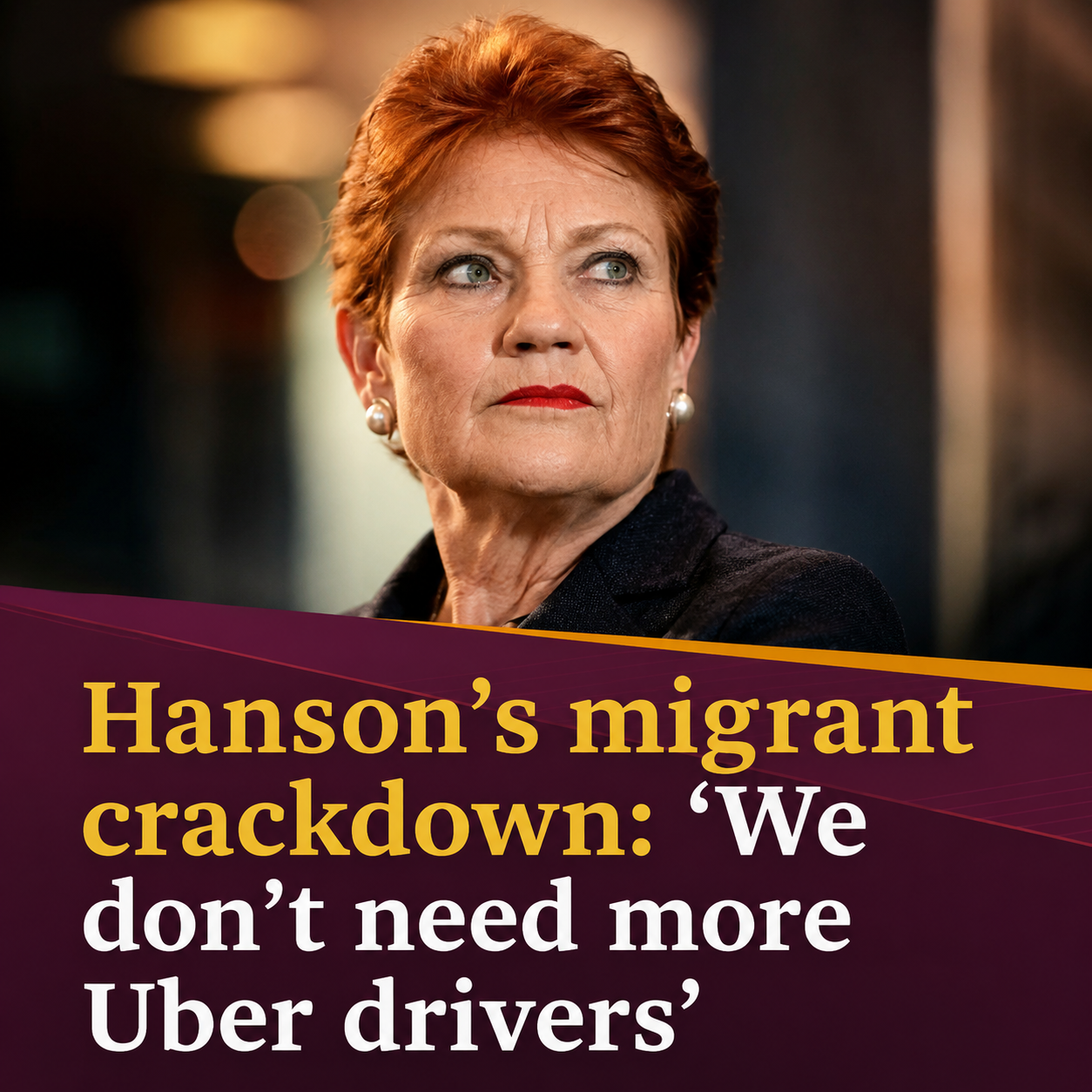
Speaking as debate intensified over the federal government’s migration reforms, Senator Hanson argued Australia should prioritise easing pressure on housing, infrastructure and the cost of living rather than maintaining high migration levels to satisfy business demand.
“I don’t care,” Hanson said when asked whether businesses could suffer if migration was reduced, insisting Australians should come before commercial interests.
Hanson said Australia did not need to continue bringing in migrants to fill jobs she believes do not address critical workforce shortages.
“We don’t need any more Uber drivers, nail technicians or dog walkers,” she said, arguing migration should instead focus on occupations experiencing genuine skill shortages, including healthcare and other essential professions.
The comments form part of One Nation’s broader proposal to reduce Australia’s permanent migration program to approximately 130,000 places per year, substantially below the Albanese Government’s planned permanent migration intake of 185,000 places for the 2026–27 program year.
Hanson has indicated that while 130,000 should be the immediate target, the annual intake could be reviewed depending on Australia’s economic circumstances and labour market needs.
According to Hanson, Australia’s migration system has increasingly been used to supply workers for lower-skilled service industries rather than addressing the country’s most pressing workforce shortages.
She argues this has contributed to growing demand for housing, rising rents and increased pressure on public infrastructure at a time when many Australians are already struggling with affordability.
“Why bring in so many people that don’t meet the needs that we want in Australia?” Hanson asked while outlining her proposed migration reforms.
Housing has become a central theme of One Nation’s migration policy.
Hanson argues that reducing migration would help slow demand for rental accommodation and residential property, giving Australia time to increase housing supply before population growth accelerates again.
Australia continues to experience historically low rental vacancy rates across many major cities, while home prices remain close to record highs despite increased housing construction programs.
Business groups, however, have strongly challenged the proposal.
The Australian Chamber of Commerce and Industry has warned that sharp reductions in migration could make it more difficult for employers to recruit workers across numerous industries already experiencing labour shortages.
Business leaders argue migration remains an important source of skilled employees for sectors including healthcare, engineering, hospitality, construction, information technology and aged care.
Australian Industry Group and other employer organisations have similarly argued that migration supports economic growth while helping businesses respond to demographic challenges created by Australia’s ageing population.
They caution that reducing migration too aggressively risks slowing investment and limiting Australia’s international competitiveness.
Hanson rejects those arguments.
She contends businesses have become overly dependent on importing labour instead of investing in training Australians or improving wages to attract domestic workers.
In her view, employers should adapt to a smaller migration program rather than expecting governments to maintain high migration levels indefinitely.
The debate comes as Home Affairs and Immigration Minister Tony Burke prepares to outline further reforms to Australia’s migration system.
A major speech expected this week was postponed while additional policy measures were finalised, although the Albanese Government has repeatedly stated it remains committed to bringing net overseas migration down from the unusually high levels recorded following the reopening of Australia’s international borders after the COVID-19 pandemic.
The government has maintained that its migration strategy seeks to balance economic growth with housing capacity, infrastructure pressures and workforce needs.
It has also introduced changes to visa processing, international student settings and skilled migration pathways as part of broader efforts to reduce net overseas migration over coming years.
Migration has emerged as one of Australia’s defining political issues in 2026.
Alongside concerns over inflation and housing affordability, immigration has become a major point of difference between Labor, the Coalition and One Nation.
Recent opinion polling showing increased support for One Nation has intensified political focus on the issue, with both major parties facing pressure to explain how their policies will address housing shortages while maintaining economic growth.
Economists remain divided over the long-term impact of lower migration.
Many acknowledge that rapid population growth increases pressure on housing and infrastructure in the short term.
At the same time, they note migration also expands the labour force, supports consumer demand and helps offset Australia’s ageing population.
As a result, many policy experts argue the challenge lies in balancing migration levels with housing construction, infrastructure investment and workforce planning rather than relying on a single policy lever.
Hanson’s remarks about Uber drivers, nail technicians and other service-sector occupations have nevertheless become one of the most widely discussed aspects of the current migration debate.
Supporters argue her comments reflect growing public frustration over housing affordability and population growth.
Critics, meanwhile, contend they oversimplify the complex contribution migrants make across Australia’s economy and overlook the labour shortages still reported by many employers.
With Parliament preparing to resume and migration reforms expected to dominate political discussion in coming weeks, the issue is likely to remain at the centre of Australia’s national policy debate.
Whether the government proceeds with more substantial reductions or maintains its existing migration settings, the competing priorities of economic growth, labour supply, housing affordability and population planning are expected to shape Australia’s immigration policy well beyond the current parliamentary term.






