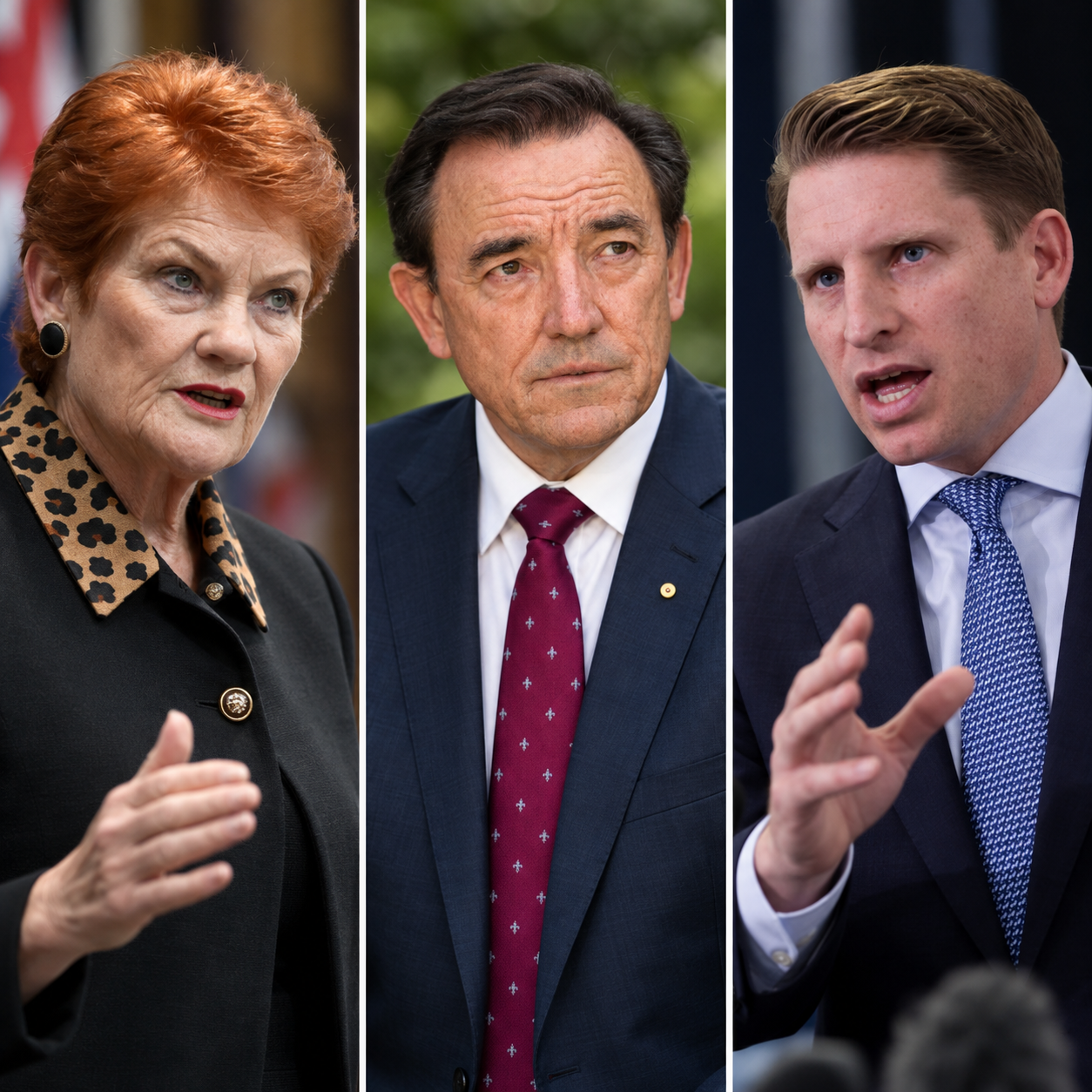
Pauline Hanson has launched a fresh attack on the Albanese government, demanding a major reduction in Australia’s tobacco excise and arguing that soaring cigarette taxes have handed billions of dollars to organised crime.
The One Nation leader says the current approach is failing.
Rather than reducing smoking, she argues it has fuelled an enormous black market that is now enriching criminal syndicates while costing taxpayers billions in lost revenue.
Her comments come as pressure continues to build on the federal government over the rapid growth of Australia’s illicit tobacco trade.
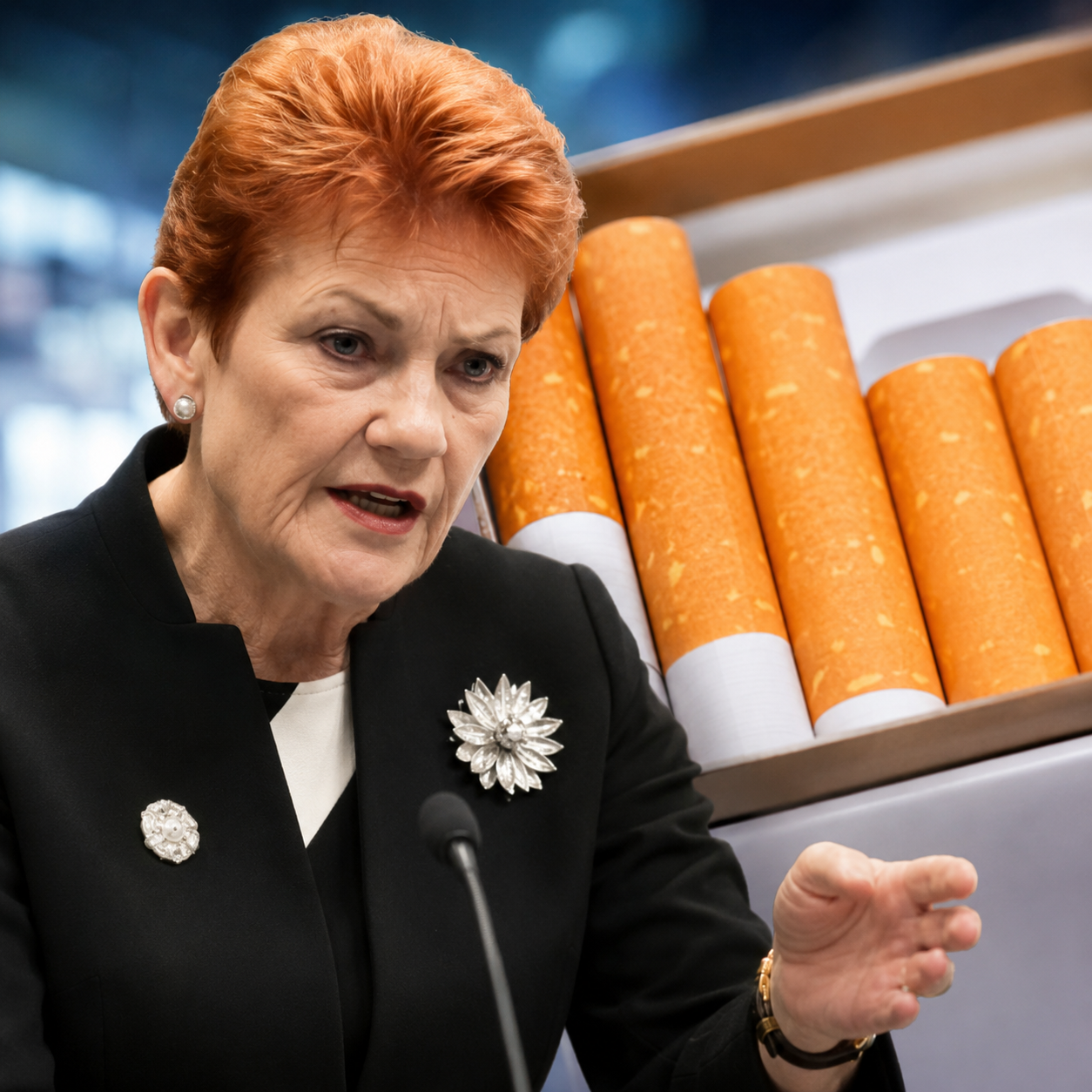
Hanson’s position is straightforward.
She believes legal cigarettes have become so expensive that many smokers have simply abandoned the legal market and moved to cheaper illicit products.
According to Hanson, the result is that criminal groups are now making enormous profits while governments collect less revenue than expected. She has called on the Albanese government to scrap the current strategy and dramatically reduce tobacco excise.
In recent interviews, Hanson argued that reducing the tax would weaken criminal organisations by shrinking the price gap between legal and illegal cigarettes. She said the government should focus on destroying the black market rather than continuing to increase taxes.
The issue has become one of the most politically sensitive law-and-order debates in Australia.
Over the past several years, authorities have reported an explosion in illegal tobacco sales, with organised crime groups increasingly competing for control of the market.
Police investigations have linked the illicit tobacco trade to extortion, firebombings, shootings and gang violence in both Sydney and Melbourne.
Recent figures have added weight to concerns that the legal market is rapidly shrinking.
Data reported this month suggested illegal products now account for approximately 80 per cent of nicotine consumption in Australia.
At the same time, government tobacco excise revenue has fallen sharply despite repeated tax increases.
Supporters of Hanson’s proposal argue these figures demonstrate that the current policy is no longer achieving its intended purpose.
They point to the widening price gap between legal and illegal cigarettes.
In many cases, a legal pack can cost three times as much as an illicit equivalent, creating a powerful incentive for consumers to switch to black market suppliers.
The debate has expanded beyond One Nation.
NSW Premier Chris Minns has also publicly raised concerns about the impact of high tobacco taxes on organised crime.
While not advocating the same approach as Hanson, Minns has argued that police intelligence increasingly links violent gang activity to the booming illicit tobacco trade.
That convergence has created an unusual political dynamic.
Politicians from different parts of the political spectrum are now questioning whether Australia’s tobacco taxation model is producing unintended consequences.
The issue is no longer confined to smoking policy.
It has become a debate about crime, public safety and government revenue.
Critics of Hanson’s proposal strongly disagree.
Public health organisations maintain that tobacco excise remains one of the most effective tools available to reduce smoking rates.
They argue that lowering cigarette prices would almost certainly encourage greater tobacco consumption and create long-term health costs for the community.
Health advocates also reject suggestions that tax reductions are the best response to illicit tobacco.
Instead, they argue governments should focus on stronger enforcement, improved border controls and tougher penalties for organised crime groups involved in smuggling operations.
That disagreement sits at the heart of the current political battle.
One side argues that excessive taxation has created a black market crisis.
The other argues that reducing taxes would simply increase smoking and worsen public health outcomes.
Both sides claim the evidence supports their position.
Meanwhile, the numbers involved continue to attract attention.
Recent reports suggest billions of dollars in excise revenue may be lost over coming years as more consumers purchase illicit products rather than legal cigarettes. Criminal groups have been among the biggest beneficiaries of that shift.
For Pauline Hanson, the issue fits neatly into One Nation’s broader political message.
The party argues that government policies are often creating unintended consequences while ordinary Australians pay the price.
By targeting tobacco excise, Hanson is attempting to connect cost-of-living concerns with crime, taxation and government decision-making.
Whether voters agree remains to be seen.
What is clear is that the tobacco debate is no longer just about smoking.
It has become a national conversation about organised crime, public finances and the effectiveness of government policy.
And as the illicit market continues to grow, pressure on Canberra to respond is only likely to increase.