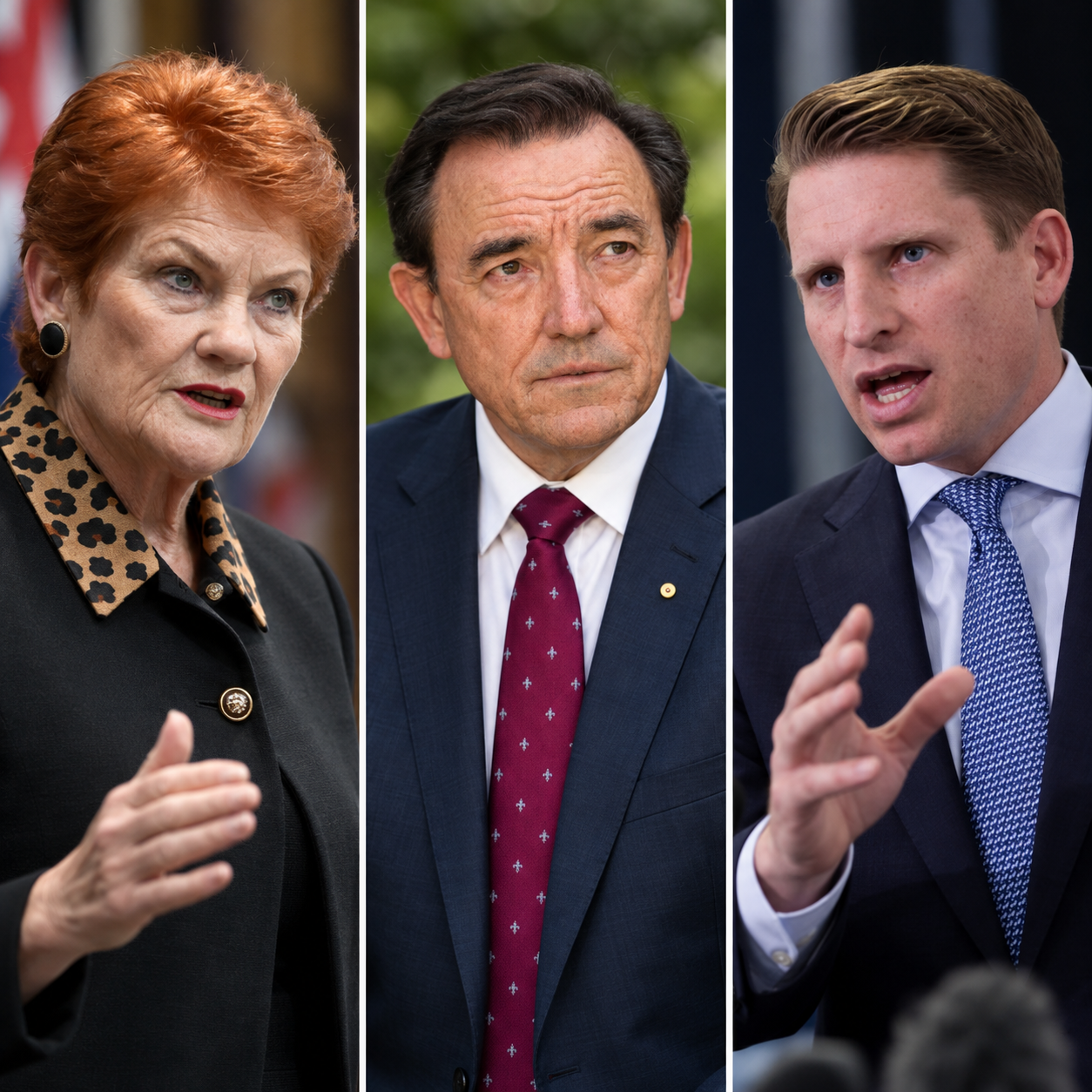
One Nation leader Pauline Hanson has defended controversial comments describing domestic violence as “a two-way street”, insisting critics have misrepresented what she said during a Brisbane radio interview as political opponents and domestic violence advocates continue to condemn her remarks.
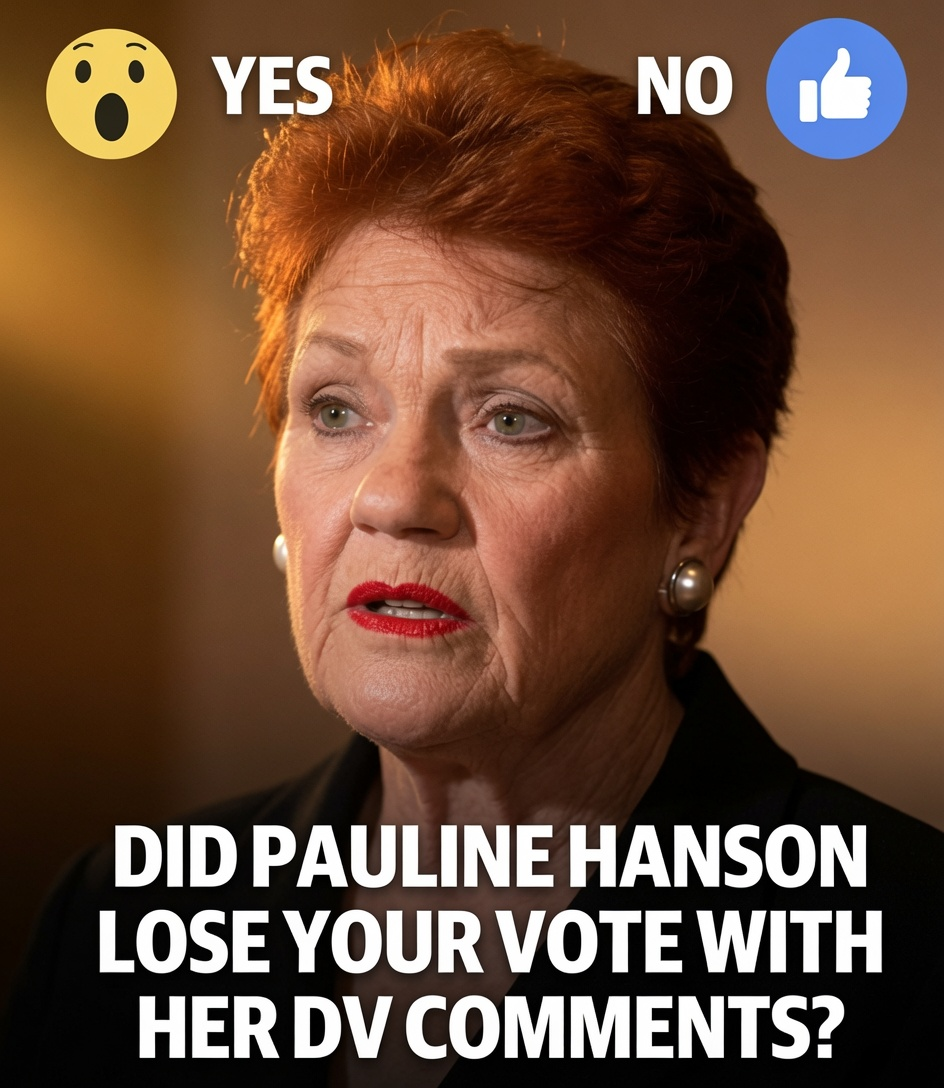
The debate erupted after Hanson appeared on Brisbane radio station 4BC, where she was asked about domestic violence and what message she had for Australians concerned about violence against women.
During the interview, Hanson said domestic violence was “wrong” but added that it was “also a two-way street”, arguing that women could also lose their temper and that many Australians were living under significant financial and social pressures.
After widespread criticism followed, Hanson published the full section of the interview on social media, accusing sections of the media and the Labor Party of twisting her words.
“Here’s exactly what I said on 4BC about domestic violence, so you don’t get it twisted by the media or the Labor Party,” Hanson wrote before reposting the interview transcript.
In the transcript, Hanson said:
“Domestic violence is wrong, but it’s also a two-way street. I’m not saying that it’s just men, women can lose their cool as well… Everyone is under so much pressure and it’s really hard. I don’t think we communicate enough with each other.”
She continued by referring to her own personal experience.
“Domestic violence is a scourge but look … I’ve been through it myself in my life. And I just feel if you’re not in a house where you feel safe … then you shouldn’t put up with it. If these women are getting abused by men out there, then don’t put up with it.”
Those comments immediately sparked criticism from domestic violence advocates, politicians and campaigners, many of whom argued the remarks oversimplified abusive relationships and risked placing responsibility on victims rather than perpetrators.
Among the strongest critics was Brittany Higgins, who accused Hanson of promoting harmful narratives around family violence.
Responding publicly, Higgins wrote:
“‘Mutual abuse’, ‘two-way street’, ‘just leave’ – normalising this victim blaming rhetoric in relation to domestic violence when 38 Australian women have already been lost to femicide is atrocious.”
Women’s and Girls’ Emergency Centre (WAGEC) chief executive Nicole Yade also criticised the comments, saying they reflected a victim-blaming narrative that ignored decades of research into domestic and family violence.
Yade argued that while violence can affect anyone, evidence consistently shows that women and children remain disproportionately affected by serious domestic violence committed by male partners.
She also rejected the suggestion that victims can simply leave abusive relationships, saying that advice overlooked the complex emotional, financial and safety barriers many victim-survivors face.
According to domestic violence specialists, the period immediately before and after leaving an abusive partner is often considered among the highest-risk stages for serious assault or homicide, making simplistic advice potentially dangerous.
Australia’s Sex Discrimination Commissioner Anna Cody and National Children’s Commissioner Deb Tsorbaris similarly rejected Hanson’s characterisation of domestic violence.
In a joint statement, the commissioners said women and children frequently face complex obstacles when trying to escape abusive situations and stressed that responsibility for violence always rests with perpetrators rather than victims.
Labor ministers also criticised Hanson’s comments, arguing public figures should avoid language that could minimise the dynamics of coercive control or imply victims share responsibility for abuse. Opposition figures likewise said domestic violence requires careful public discussion given its significant human cost.
Hanson, however, has maintained that critics ignored important parts of her interview.
She emphasised that she explicitly described domestic violence as “a scourge” and referred to her own experiences as someone who had lived through family violence.
The One Nation leader has spoken previously about abusive relationships in her personal life.
In earlier autobiographical accounts, Hanson described experiencing domestic violence after becoming a young mother and later leaving another relationship marked by alcohol-fuelled violence.
She has recounted eventually fleeing after an incident in which her partner punched a hole through a wall, before rebuilding her life while supporting her children through low-paid work.
Hanson has regularly cited those experiences when discussing domestic violence policy.
Her comments this week also echoed positions she has expressed for several years regarding family law and domestic violence.
In previous interviews and parliamentary speeches, Hanson has argued that both men and women can experience domestic violence and has questioned whether existing government responses sufficiently recognise male victims.
She has also argued that some domestic violence allegations made during Family Court proceedings are false, saying knowingly false claims should carry consequences.
Those views have long attracted criticism from women’s advocacy organisations, which argue false allegations remain relatively uncommon compared with the prevalence of family violence.
Supporters of Hanson, meanwhile, argue male victims receive comparatively little public attention and that acknowledging their experiences should not diminish support for female victim-survivors.
The renewed controversy has again highlighted the broader national debate over how domestic violence should be discussed in public life.
Australian Bureau of Statistics data and research consistently show women are significantly more likely than men to experience severe physical violence, sexual violence and coercive control from current or former intimate partners. At the same time, researchers also acknowledge that men can be victims of domestic violence and require access to appropriate support services.
Specialists generally distinguish between isolated incidents of relationship conflict and patterns of coercive control, intimidation and repeated abuse that characterise many domestic violence cases.
They argue that describing domestic violence simply as a dispute involving both parties can overlook the power imbalances often present in abusive relationships and may discourage victims from seeking help.
The latest political dispute has unfolded during heightened public concern over violence against women in Australia, with several high-profile killings and ongoing national discussions about prevention strategies placing domestic violence at the centre of political debate.
For Hanson, the controversy also comes as One Nation continues attracting significant media attention over a series of outspoken positions on social policy, migration and law-and-order issues.
Despite the criticism, Hanson has shown no indication she intends to retract her comments.
Instead, she continues to argue that her full interview demonstrates she condemned domestic violence, acknowledged her own experiences as a survivor and sought to encourage people living in unsafe homes to remove themselves from abusive situations.
Critics remain unconvinced, arguing that regardless of intention, phrases such as “two-way street” and advice suggesting victims should “just leave” fail to reflect the realities many victim-survivors face and risk reinforcing misconceptions about domestic and family violence.
The disagreement has become another flashpoint in Australia’s ongoing conversation over family violence, victim protection, gender equality and the responsibilities of political leaders when discussing issues that affect thousands of Australians each year.