Australia’s national debate over multiculturalism has taken another turn after film icon Paul Hogan publicly distanced himself from comments made by One Nation leader Pauline Hanson, who had cited him as an example of the country’s traditional “monocultural” identity.
The exchange has attracted widespread attention because it moves the discussion beyond political parties and into Australia’s broader cultural landscape. Rather than remaining a debate between elected representatives, the issue now involves one of the country’s best-known entertainers, whose work has long been associated with Australia’s international image.
Speaking after Hanson’s comments received extensive media coverage, Hogan rejected the suggestion that he represented the type of Australia she was describing. He said the country had changed over time and described Hanson as “living in the past”, making clear that he did not share her vision of Australia’s future.
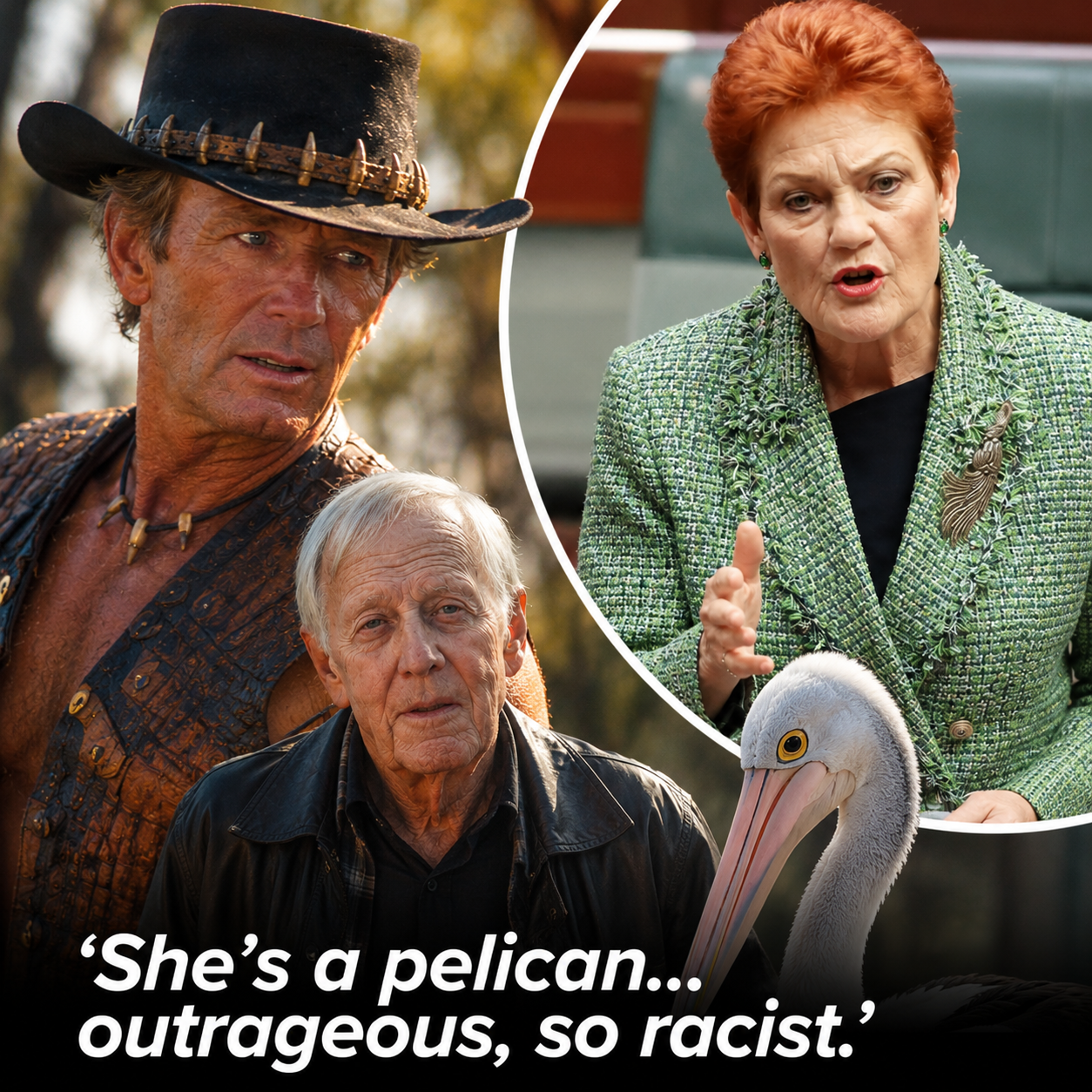
The dispute began after Hanson used Hogan alongside the fictional satirical character Norman Gunston during a speech outlining her view that Australia should return to what she described as a monocultural society built around shared national values. Hanson argued that her use of the term referred to common civic principles, language and institutions rather than ethnicity alone, although the speech generated significant criticism from political opponents and community groups.
Hogan’s response has become one of the most prominent reactions because of his longstanding place in Australian popular culture. Through films such as Crocodile Dundee, he helped shape how many people overseas viewed Australia during the 1980s and 1990s. His public image has often been associated with humour, informality and the stereotypical “larrikin” character that many Australians recognise as part of the country’s cultural history.
In responding to Hanson’s remarks, Hogan also reflected on his own experiences working with Australians from many different backgrounds throughout his career. He suggested that cultural diversity has become a normal part of modern Australian life and questioned attempts to frame the country primarily through memories of an earlier era.
The exchange highlights a broader discussion that has continued for decades in Australia: how national identity should be understood in a society shaped by successive waves of migration. While Australia’s institutions, legal system and democratic traditions provide common civic foundations, views differ on the role multiculturalism has played in shaping contemporary Australian culture.
Supporters of Hanson’s position argue that successful immigration depends on newcomers embracing Australia’s laws, democratic institutions and shared civic values. They contend that a strong national identity encourages social cohesion and helps maintain public confidence in the immigration system. Hanson has said her concept of “monoculture” is based on common values rather than racial identity.
Critics, however, argue that modern Australia has been strengthened by cultural diversity and that multiculturalism can coexist with a shared commitment to democratic institutions and the rule of law. They say Australia’s national identity has evolved through contributions from people of many backgrounds while maintaining common civic responsibilities.
Political analysts note that debates over national identity often become more visible during periods of heightened discussion about immigration, social cohesion and cultural change. Although these issues frequently generate strong opinions, they also involve complex questions that extend beyond party politics into history, culture and public policy.
The discussion has also demonstrated how cultural figures can become part of political debates without actively seeking that role. When well-known Australians are referenced in support of political arguments, they may choose either to endorse those views or publicly distance themselves, as Hogan has done in this instance.
Whether the controversy has any lasting political impact remains uncertain. However, it has reinforced that conversations about multiculturalism, assimilation and national identity continue to resonate across Australian society. The immediate issue may have begun with a political speech, but the wider debate now encompasses questions about history, culture and how Australians understand the country’s identity in the twenty-first century.






