Australia’s political landscape is undergoing a significant shift, and the growing support for One Nation appears to be driven by forces far deeper than the popularity of its long-time leader Pauline Hanson.
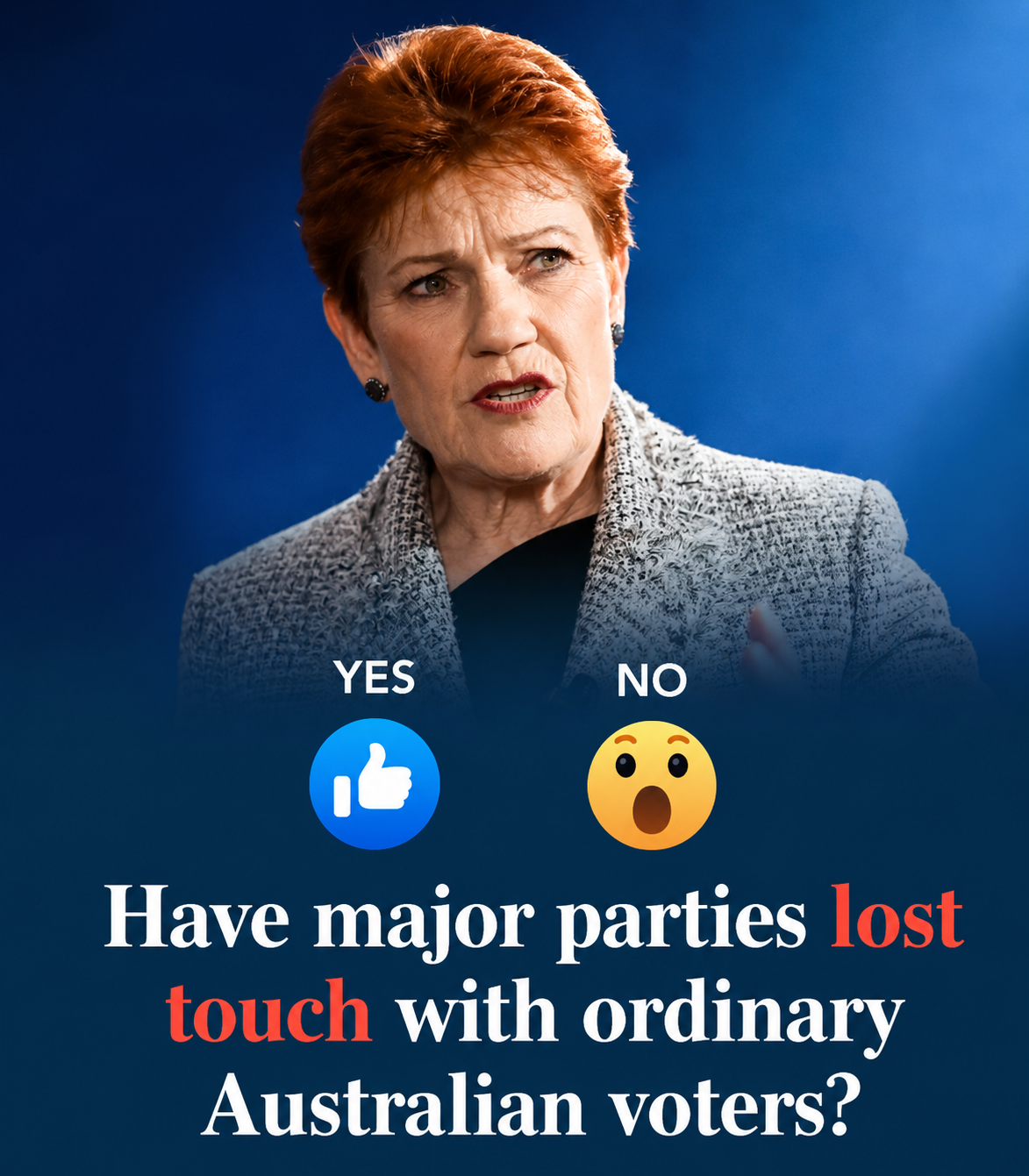
Recent polling and political commentary suggest that an increasing number of Australians are turning towards One Nation not because they necessarily identify with every policy promoted by the party, but because they believe the major political parties have failed to respond to issues they consider most important.
For political analysts, the trend represents more than a temporary protest vote. It reflects growing frustration over the direction of the country and a widening disconnect between many voters and Australia’s traditional political establishment.
Pauline Hanson has remained one of Australia’s most recognisable political figures for nearly three decades. Since founding One Nation in the late 1990s, she has built a reputation for challenging mainstream political consensus on issues including immigration, national identity, regional Australia and government spending.
While her outspoken style has attracted both loyal supporters and strong critics, observers argue that today’s political environment differs significantly from the circumstances that originally fuelled One Nation’s rise.
Instead of being driven primarily by Hanson’s personality, increasing support appears to reflect broader dissatisfaction with economic conditions and declining confidence in major political institutions.
Cost-of-living pressures remain at the centre of those concerns.
Australian households continue facing elevated mortgage repayments, higher rents, increasing insurance premiums, rising electricity prices and persistent pressure on everyday grocery bills.
Although inflation has eased from its peak, many families say their household budgets remain under considerable strain after several years of rapidly rising living costs.
Housing affordability has become another defining political issue.
Home ownership, once viewed as an achievable goal for many Australians, is increasingly beyond reach for younger buyers as property prices continue to outpace wage growth in many parts of the country.
At the same time, rental markets remain exceptionally tight, with low vacancy rates contributing to rising rents across both metropolitan and regional Australia.
For many voters, these economic pressures have contributed to a growing perception that successive governments have struggled to deliver meaningful long-term solutions.
Immigration has also emerged as a prominent issue within public debate.
Supporters of higher migration argue it helps address labour shortages, supports economic growth and offsets Australia’s ageing population.
Critics, however, contend that rapid population growth is placing additional pressure on housing supply, transport infrastructure, hospitals and other essential public services.
One Nation has consistently argued for lower migration levels, making the issue a central component of its political platform for many years.
Whether or not voters agree with every aspect of the party’s policies, opinion surveys suggest immigration has become an increasingly important consideration for sections of the electorate.
Regional communities have also played an important role in One Nation’s electoral support.
Many residents outside Australia’s major capital cities argue they have experienced declining access to healthcare, education, banking services and infrastructure while feeling overlooked by governments increasingly focused on metropolitan priorities.
That perception has strengthened support for parties presenting themselves as alternatives to the established political system.
Crime, community safety and social cohesion have similarly become more prominent political issues in recent years.
Although crime trends vary considerably between jurisdictions, public concern about violent offending, youth crime and repeat offenders has become increasingly visible across political debate.
One Nation has frequently positioned itself as advocating tougher law-and-order policies, appealing to voters seeking stronger responses from government.
The party has also attracted support from voters who believe freedom of speech and open political debate have become increasingly constrained.
Some supporters argue mainstream political discussion no longer reflects concerns held by ordinary Australians, particularly on culturally sensitive topics including national identity, multiculturalism and government priorities.
Political scientists note that these sentiments are not unique to Australia.
Across many Western democracies, established political parties have faced growing competition from minor parties and independents as voters seek alternatives to traditional political alignments.
The trend reflects broader changes in media consumption, declining party loyalty and increasing political fragmentation.
In Australia, preferential voting means support for smaller parties does not always translate directly into parliamentary representation.
However, rising primary votes can still significantly influence election outcomes through preference flows and Senate representation.
For both Labor and the Coalition, the growth of One Nation presents strategic challenges extending beyond individual electorates.
If substantial numbers of voters continue shifting towards minor parties, the major parties may find it increasingly difficult to secure the broad national support that historically underpinned majority governments.
Political commentators argue that dismissing these voters as simply supporting Pauline Hanson personally risks misunderstanding the broader forces driving electoral change.
Many people backing One Nation describe their vote as an expression of dissatisfaction with existing political choices rather than unconditional support for any single political leader.
Whether those frustrations ultimately remain with One Nation or shift towards other parties in future elections will depend largely on whether voters believe mainstream governments can effectively address the issues dominating household conversations.
For now, the party’s growing support serves as a reminder that electoral change is often driven less by individual personalities than by the concerns, expectations and lived experiences of the communities casting their votes.
Political historians point out that One Nation has experienced periods of both rapid growth and decline since it first entered Australian politics in 1997. Yet unlike previous election cycles, today’s support is emerging against a backdrop of prolonged economic uncertainty rather than a single dominant political issue.
That distinction is significant because economic pressures tend to affect voters across a much broader section of society.
Households managing higher mortgage repayments, renters facing escalating housing costs, retirees coping with rising living expenses and small business owners dealing with increasing operating costs may not share identical political views, but many express similar frustrations about affordability and economic security.
Polling conducted over recent years has consistently identified cost of living as one of the issues Australians rank above almost every other policy concern.
Political analysts argue that when voters feel their personal financial circumstances are deteriorating, they become more willing to consider alternatives outside the traditional two-party system.
That does not necessarily indicate ideological alignment with every position advanced by a minor party. Instead, it often reflects a desire to send a message that existing policy settings are not meeting public expectations.
One Nation has also benefited from presenting itself as a party willing to address subjects that supporters believe receive insufficient attention from the political mainstream.
Whether discussing immigration levels, energy policy, regional investment, manufacturing, agricultural industries or national sovereignty, the party has consistently positioned itself as speaking for Australians who feel disconnected from decision-makers in Canberra.
Critics dispute many of One Nation’s policies and argue some proposals are either impractical or divisive. They contend complex issues such as housing affordability, migration, productivity and inflation require balanced, evidence-based policy rather than simple political slogans.
Supporters, however, argue the party’s willingness to raise uncomfortable questions is precisely why it continues attracting voters dissatisfied with the responses offered by Labor and the Coalition.
The rise of independent candidates in recent federal elections also illustrates the broader decline in traditional party loyalty.
Australian voters are increasingly prepared to split their support among major parties, independents and smaller political movements depending on local issues, leadership and confidence in individual candidates.
This fragmentation has produced one of the most diverse federal parliaments in decades and has forced both major parties to reconsider how they engage with communities that believe they have been overlooked.
Political strategists often warn against dismissing protest voting as temporary anger.
History demonstrates that once voters abandon long-held political loyalties, regaining their trust can require years of sustained policy delivery rather than short-term election commitments.
For the major parties, that challenge extends beyond responding to opinion polls. It requires understanding why many Australians believe government institutions are becoming less responsive to their everyday concerns.
Issues including healthcare access, infrastructure, regional services, energy affordability, taxation, crime and housing increasingly intersect with broader questions about trust in government and confidence in public institutions.
Some voters believe political leaders spend too much time debating ideological issues while insufficient attention is given to practical problems affecting family budgets and local communities.
Others argue Australia’s political system remains capable of addressing these challenges but requires longer-term reforms that cannot be delivered within a single electoral cycle.
Whatever the explanation, the continued growth of support for parties such as One Nation indicates that a significant section of the electorate is actively searching for alternatives.
Whether that support ultimately translates into additional parliamentary seats or simply influences the policy direction of larger parties, its impact on Australian politics is already becoming increasingly difficult to ignore.
The broader lesson for Australia’s political establishment may therefore be less about Pauline Hanson herself and more about the voters choosing to support her party.
For many of those Australians, their vote is not primarily an endorsement of one individual. Instead, it reflects a belief that the issues shaping their daily lives deserve greater attention than they believe they are currently receiving.
As the next federal election cycle approaches, both Labor and the Coalition are likely to face increasing pressure to demonstrate they understand those concerns and can offer credible solutions.
If they fail to convince disillusioned voters that meaningful change is possible within the political mainstream, support for minor parties such as One Nation may continue expanding—not because Australians have fundamentally changed their political values, but because an increasing number believe the established parties are no longer listening.






