Australian politics is undergoing one of its most unpredictable periods in decades.
Support for traditional major parties appears increasingly fragile.
Voter frustration is becoming more visible.
And smaller parties are attracting attention that would have seemed unlikely only a few years ago.
Against that backdrop, One Nation believes growing numbers of Australians are turning away from Labor and looking elsewhere for representation.
Whether that momentum lasts remains uncertain.
But the political shift itself is becoming harder to ignore.
The biggest story may no longer be about one political party gaining support.
It may be about why so many voters are searching for alternatives in the first place.
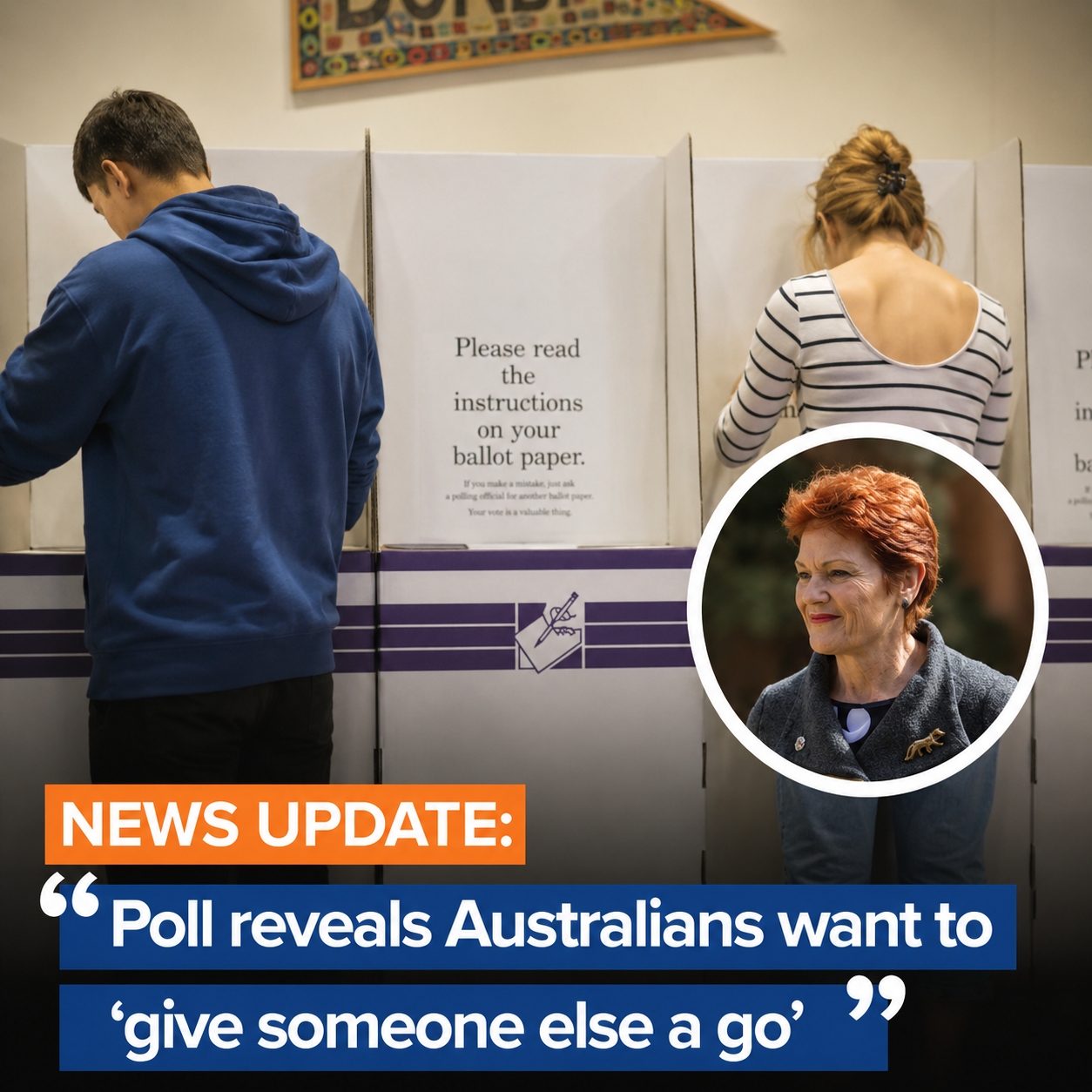
Growing support for minor parties has reignited debate about trust, representation and the future direction of Australian politics.
Recent polling has shown significant movement across the political landscape.
One Nation has recorded some of its strongest national polling figures in years, while both Labor and the Coalition have faced growing challenges holding traditional voter bases together.
That trend has surprised many observers.
Historically, periods of dissatisfaction with one major party often benefited the other.
This time appears different.
In many cases, frustrated voters are not moving directly between Labor and the Coalition.
Instead, they are increasingly exploring alternatives outside the traditional political structure.
That shift is what makes the current moment politically significant.
Because it suggests dissatisfaction may be directed at the broader political system rather than any single party.
Cost-of-living pressure remains a major concern.
Housing affordability continues dominating household conversations.
Energy prices, migration levels and economic uncertainty have also become recurring themes throughout public debate.
Those concerns have created fertile ground for parties presenting themselves as challengers to the political establishment.
That is where One Nation has found new opportunities.
Many voters who feel ignored by traditional politics appear increasingly willing to consider alternatives.
Some believe the major parties no longer understand the pressures affecting ordinary households.
Others feel promises are being made without delivering meaningful change.
That frustration is becoming a powerful political force.
The debate is no longer only about policies.
It is increasingly about representation.
People want to know who is listening.
They want to know who understands their concerns.
And they want to know whether anyone is willing to challenge a system they believe is no longer working as intended.
That is why polling shifts often tell a larger story.
Polling does not simply measure support.
It measures sentiment.
It measures confidence.
And sometimes it reveals frustrations building beneath the surface long before elections arrive.
Recent surveys suggest many Australians believe the country is heading in the wrong direction.
That perception matters.
Because political trust is difficult to rebuild once it begins eroding.
People who lose confidence in traditional institutions often become more willing to experiment with different political options.
That process can accelerate quickly.
Especially when economic pressure remains high.
The major parties face a difficult challenge.
They must not only defend their own records.
They must also convince voters they understand why dissatisfaction is growing.
Ignoring those concerns carries risks.
Because frustration rarely disappears on its own.
It usually finds an outlet.
That outlet may come through independents.
It may come through minor parties.
Or it may come through entirely new political movements.
That uncertainty is shaping the current political environment.
The question is no longer simply whether One Nation can maintain its polling strength.
The larger question is what happens if voter dissatisfaction continues growing across the country.
If that trend continues, both Labor and the Coalition may face increasing pressure to rethink how they connect with voters.
Because the challenge extends beyond winning the next election.
It involves rebuilding confidence that the political system is capable of responding to the concerns people are raising.
That may ultimately be the most important issue behind the latest polling shifts.
Not whether one party rises or falls.
But whether Australians still believe the major parties are capable of representing the people they were elected to serve.
And if growing numbers of voters conclude the answer is no, the political landscape could continue changing in ways few expected only a few years ago.






