Public outrage is growing after nine teenagers found guilty over a series of horrific attacks on a 14-year-old girl in Belgium avoided detention, with most receiving only community service despite the severity of the case.
The decision has triggered intense reactions across social media and international news platforms.
Many people are not only focusing on the crimes themselves.
They are focusing on the punishment.
And that is where the controversy is rapidly expanding.
Because the biggest question emerging from the case may not be what happened in the forest.
It may be whether people still believe the justice system is delivering consequences that match the seriousness of the crimes being committed.
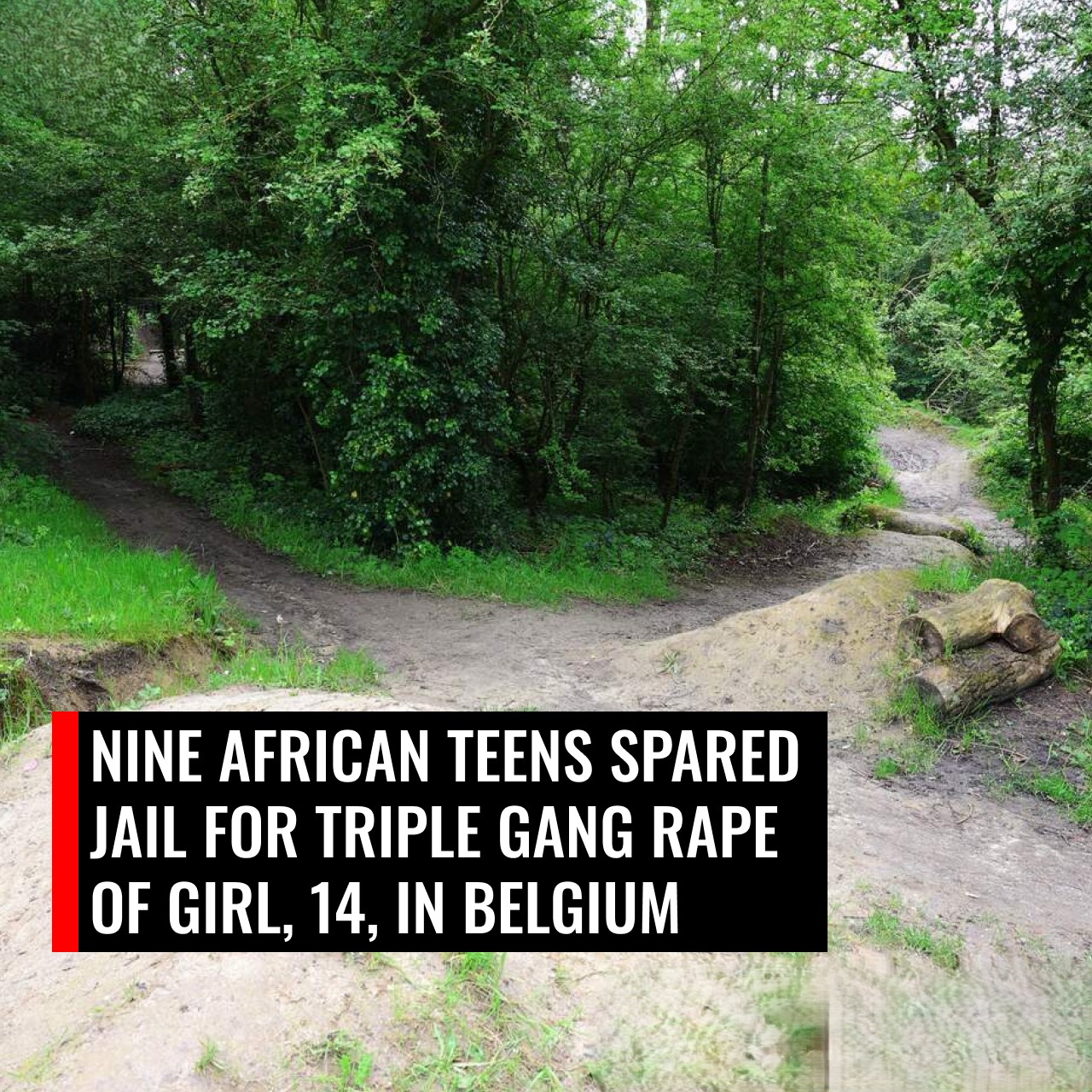
A controversial youth court ruling in Belgium has reignited debate about justice, accountability and whether public confidence in legal institutions is being tested.
The case centred on a 14-year-old girl who was attacked on multiple occasions in a forest area near Kortrijk in Belgium.
According to court findings, the victim was lured into the location and subjected to repeated assaults involving multiple teenage offenders over several days.
The attacks were also reportedly recorded and shared online.
Eleven teenagers were investigated during the case.
One was considered too young to face charges.
Another was investigated but not prosecuted.
The remaining nine were found guilty by a youth court.
What has generated the strongest public reaction is the sentencing outcome.
Two teenagers received conditional release orders and guidance programs.
The remaining seven were ordered to complete only 30 hours of community service.
For many observers, that is where the case transformed from a criminal proceeding into a broader debate about justice.
Because public reactions to legal cases are often driven by one question.
Is this fair?
That question appears repeatedly whenever high-profile sentencing decisions generate controversy.
People do not only judge whether defendants were found guilty.
They judge whether the consequences feel proportionate.
That distinction is crucial.
Because trust in legal institutions often depends as much on public confidence as on legal procedure.
Courts operate according to laws, sentencing frameworks and judicial principles.
But public opinion often operates according to something much simpler.
A sense of justice.
When those two things appear disconnected, backlash frequently follows.
That appears to be exactly what is happening now.
The victim’s lawyer said the teenager had been deeply traumatised by both the attacks and the court process itself, arguing her life had been permanently changed by the events.
Those comments intensified emotional reactions surrounding the case.
Because many people instinctively compare two outcomes.
The damage suffered by the victim.
And the penalties imposed on the offenders.
Whether that comparison is legally accurate is often secondary.
Emotionally, it becomes powerful.
That is why cases involving youth offenders frequently become politically sensitive.
Youth justice systems are often designed differently from adult systems.
Many focus heavily on rehabilitation rather than punishment.
The goal is often to reduce future offending rather than maximise immediate penalties.
Supporters argue younger offenders should have opportunities to change direction before entering adulthood.
Critics argue some crimes are so serious that rehabilitation alone cannot satisfy public expectations of accountability.
That tension sits at the centre of many modern justice debates.
The Belgium case has now become another example of that conflict.
One side sees a youth justice system applying its intended principles.
The other sees a system failing to reflect the severity of the crimes involved.
That disagreement goes far beyond Belgium.
Across many Western countries, debates surrounding youth crime, sentencing and public safety have become increasingly heated.
Questions about accountability, rehabilitation and community protection continue shaping political discussions.
Those debates often intensify when cases involve particularly disturbing allegations.
Because people begin asking larger questions.
What message does the sentence send?
Who is being protected?
And what should justice actually look like?
Those questions rarely disappear once a verdict is delivered.
In many cases, they become even louder afterward.
The Belgium ruling is now generating exactly that kind of reaction.
The legal case may be over.
The public argument is not.
Because the controversy is no longer only about the teenagers involved.
It is about confidence.
Confidence that legal systems can balance rehabilitation with accountability.
Confidence that victims are receiving justice.
And confidence that institutions still reflect the expectations of the communities they serve.
Those concerns help explain why the story is attracting such strong attention internationally.
Most people will never read sentencing frameworks.
Most people will never study youth justice legislation.
But they do understand one simple idea.
If a crime feels horrific, many expect the punishment to feel serious as well.
When that expectation is not met, trust can come under pressure.
That may ultimately be the biggest issue emerging from the Belgium case.
Not only what happened to the victim.
But whether the public still believes justice systems are producing outcomes that match society’s expectations.
Because once confidence in that balance begins to weaken, debates about crime quickly become debates about institutions themselves.
And those debates rarely end with a single court ruling.






