New Zealand authorities have temporarily suspended the firearms licence of Destiny Church leader Brian Tamaki and seized his registered firearms while officials continue assessing recent public comments that prompted widespread concern.
The development follows a series of statements made by Tamaki on social media in which he criticised mass immigration and made comments about several religious communities. Those remarks attracted criticism from politicians, community leaders and advocacy organisations, leading police to examine whether any further action was required under New Zealand law.
According to Tamaki, police officers arrived at his Auckland property and informed him that his firearms licence had been temporarily suspended before taking possession of his registered hunting firearms. He said he had held a firearms licence for decades and believed the action was linked to his recent public statements on immigration.
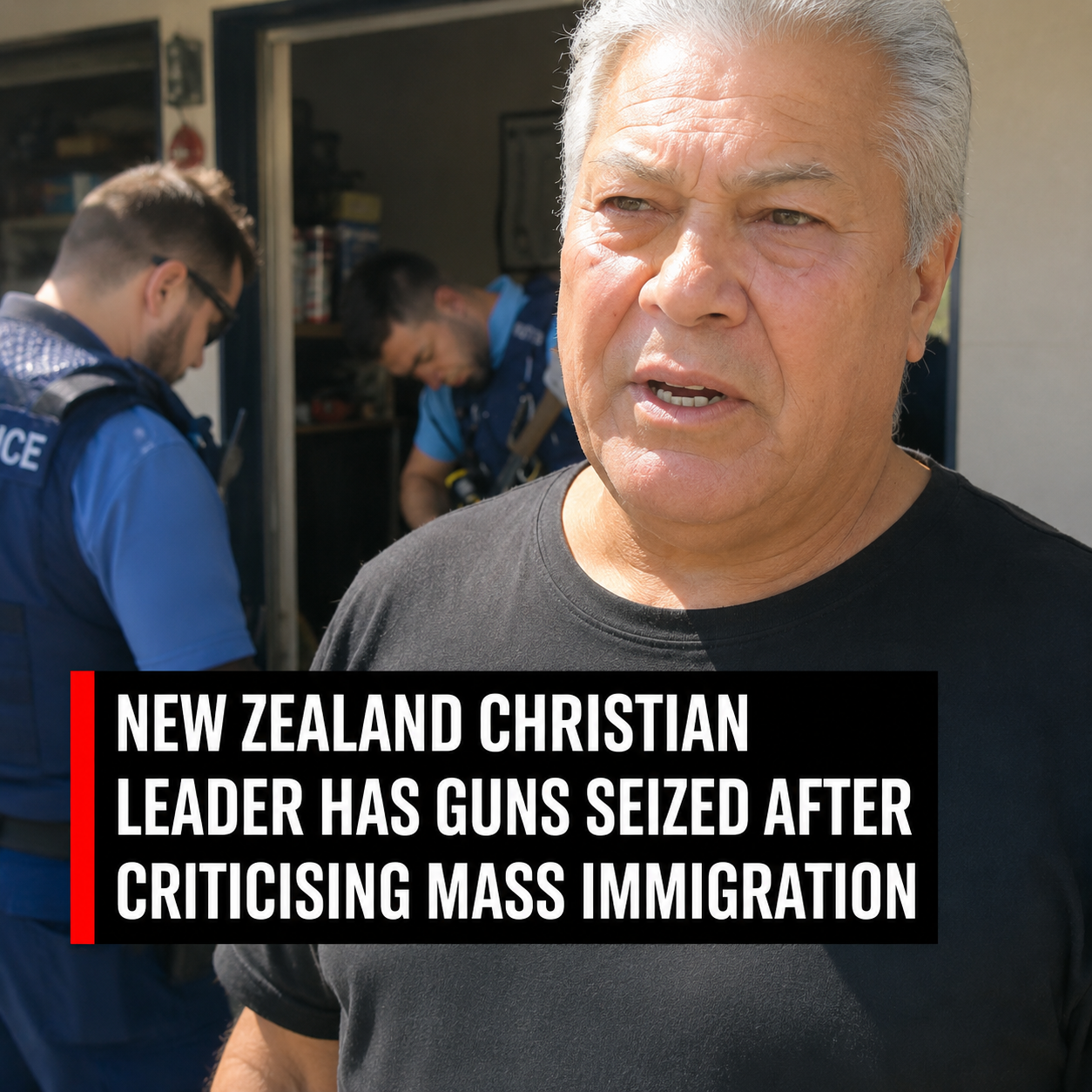
New Zealand Police have not commented on the details of Tamaki’s individual case but confirmed that temporary licence suspensions can occur while the Firearms Safety Authority assesses whether a licence holder continues to meet the legal “fit and proper person” standard required to possess firearms.
The firearms regulator said such measures are part of the country’s regulatory framework and do not, on their own, determine the outcome of any ongoing assessment.
The controversy began after videos and social media posts featuring Tamaki’s comments drew significant public attention. Several ministers and community representatives condemned the remarks, arguing they risked increasing tensions within New Zealand’s multicultural society. Police subsequently referred the material for legal assessment while also engaging with affected communities.
Tamaki has rejected suggestions that he intended to encourage violence. Instead, he argues that his comments reflected his views on immigration policy and national identity. He has also criticised the seizure of his firearms, describing it as an excessive response.
The incident has generated broader discussion across New Zealand about how authorities should balance freedom of expression with laws designed to protect public safety and prevent incitement. Supporters of stronger enforcement argue that inflammatory public statements deserve careful legal scrutiny, while others believe governments should exercise caution when official action follows controversial political speech.
The case also highlights New Zealand’s firearms regulatory system, which was significantly strengthened following reforms introduced after the 2019 Christchurch terrorist attacks. Under the current framework, police and firearms regulators have expanded powers to suspend licences while investigations are underway where public safety concerns arise.
No criminal charges relating to Tamaki’s recent public comments had been announced at the time of publication. Authorities have indicated that any further decisions will depend on the outcome of their legal assessment and the evidence available.
For now, the matter remains under review, with debate continuing over the appropriate balance between individual freedoms, public accountability and the responsibilities that accompany holding a firearms licence.






