Two northern New South Wales neighbours have been charged with manslaughter following the death of an alleged serial home invader during what police say began as a citizen’s arrest, a case that is already reigniting debate about how far members of the public can legally go when confronting suspected offenders.
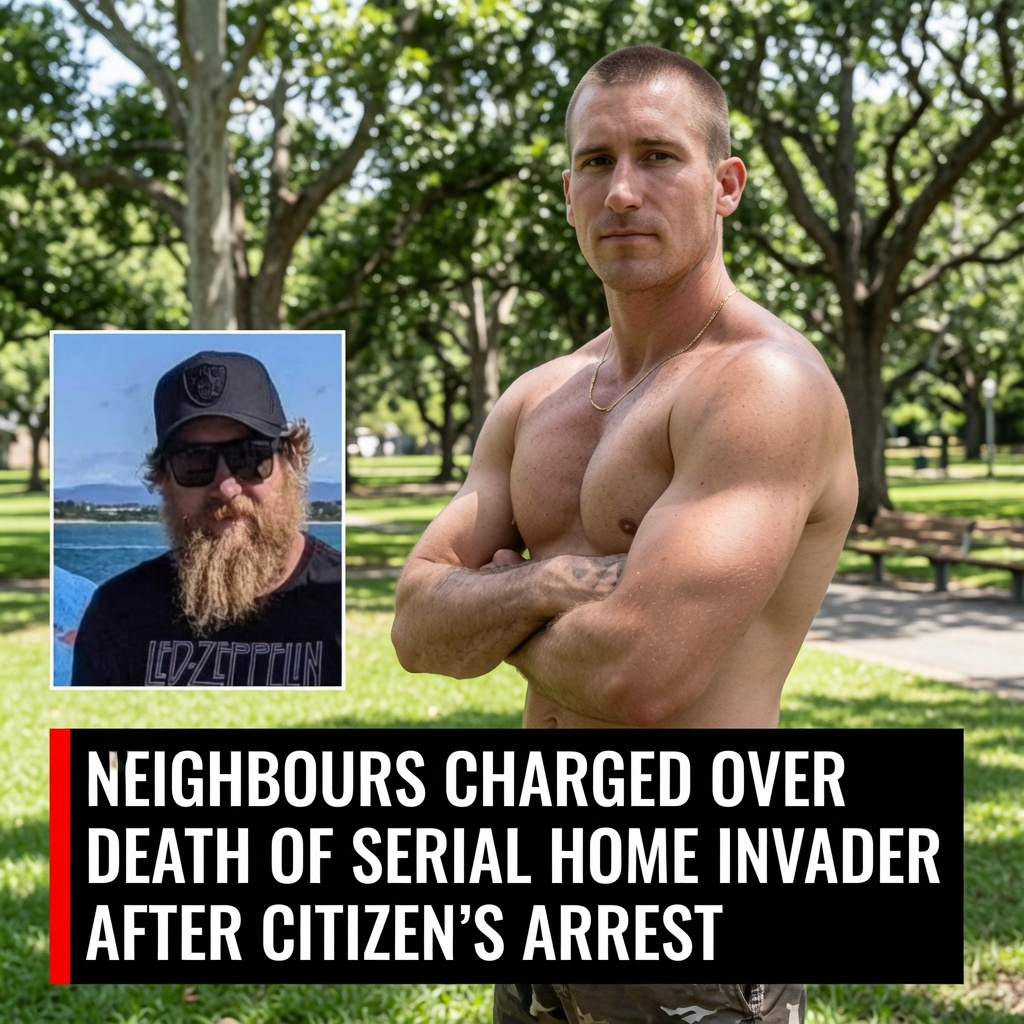
Police allege 42-year-old plumber Michael Henry Harding and 30-year-old Luke Michael Manning confronted Vaughn Cummings in Bray Park, near Murwillumbah, before chasing and detaining him during the early hours of 8 April.
Cummings, 34, was one of the most wanted men in the region at the time. Investigators say he had 12 outstanding arrest warrants and had evaded repeated attempts by police to take him into custody during a months-long search.
Emergency services were called to Bellevue Avenue shortly after 4.30am after reports of a suspicious man moving through the neighbourhood. When officers arrived, Cummings had already been restrained on the footpath and was suffering critical injuries.
Paramedics treated him at the scene before transporting him to Gold Coast Hospital. Despite extensive medical treatment, he died two days later.
Following a three-month investigation conducted under Strike Force Raison, detectives charged Harding and Manning with manslaughter.
A third person, 43-year-old Sandi Williams, has been charged with allegedly hindering the discovery of evidence relating to the investigation.
All three have been granted conditional police bail and are scheduled to appear before Tweed Heads Local Court on 27 July.
The precise circumstances surrounding Cummings’ fatal injuries remain before the courts, and police have not publicly alleged exactly how those injuries were inflicted. Earlier reports indicated baseball bats were seized from the scene for forensic examination as part of the investigation.
The incident followed months of frustration throughout communities around Murwillumbah and Tweed Heads, where residents had repeatedly reported sightings of Cummings while police continued searching for him.
Authorities had issued numerous public warnings urging residents not to approach him themselves.
Police considered him dangerous and repeatedly advised anyone who encountered him to contact emergency services rather than intervene personally.
According to police, officers had come close to arresting Cummings only one day before the fatal confrontation.
Detective Sergeant Gary Sheehan previously said investigators were actively attempting to locate him because of the outstanding warrants.
“The last interaction with him was the day previously; however he managed to escape despite the best efforts of police in the area,” Detective Sergeant Sheehan said after the incident.
Cummings had accumulated a lengthy criminal history over several years.
Residents frequently discussed alleged break-ins, vehicle thefts and suspicious activity on local community pages during the months leading up to his death.
Several residents reported police had advised them to secure vehicle keys inside their homes because of fears Cummings could target parked cars.
Others publicly claimed their stolen vehicles had been linked to investigations involving him, although those social media comments themselves were never official findings.
The case has sparked widespread discussion across Australia because it sits at the difficult intersection between community self-defence and criminal law.
Australian law does allow citizens to arrest another person in certain limited circumstances.
In New South Wales, a private citizen may arrest someone they find committing an offence or whom they reasonably suspect has committed a serious offence.
However, the law also requires that only reasonable and necessary force be used, and excessive force may expose the person making the arrest to criminal liability.
Whether force used is considered reasonable depends heavily on the specific facts of each case, including the threat perceived, the behaviour of the suspect and the actions taken during the detention.
Those legal principles are expected to become central issues as the Bray Park prosecution progresses through the courts.
The matter has also drawn comparisons with another highly publicised New South Wales prosecution that ultimately ended in complete acquittal.
In 2016, Newcastle father Ben Batterham confronted Ricky Slater after discovering the intruder inside his daughter’s bedroom.
Slater fled before Batterham chased him and restrained him in a headlock.
Slater later died after suffering multiple cardiac arrests.
Despite acting during what many viewed as an attempt to protect his family, Batterham was charged with murder and manslaughter.
In 2019, a jury acquitted him on all charges.
Several years later, the NSW Supreme Court ruled prosecutors had acted unreasonably in pursuing the case and awarded Batterham damages over the prosecution. That decision has continued to influence public discussion whenever citizen’s arrests result in serious injury or death.
Legal experts have long cautioned that although citizen’s arrest powers exist, they carry significant legal risk.
Unlike trained police officers, members of the public generally lack specialised training in safely restraining potentially violent individuals.
Medical complications, unexpected injuries or rapidly escalating confrontations can transform an attempted detention into a criminal investigation, regardless of the original intentions of those involved.
Police across Australia consistently advise the public that personal safety should remain the priority.
Where possible, witnesses are encouraged to observe, gather information and immediately contact police rather than physically confronting suspected offenders.
That advice was particularly relevant in Cummings’ case because authorities had repeatedly warned residents not to approach him while the search was ongoing.
Investigators have not suggested that the outstanding warrants against Cummings affect the criminal charges now faced by the three accused.
Instead, the prosecution will focus on the circumstances surrounding the confrontation itself and whether any criminal offences were committed during the attempted detention.
Under Australian criminal law, every accused person is presumed innocent unless and until proven guilty in court.
The allegations against Harding, Manning and Williams have not yet been tested before a judge or jury.
The first court appearance later this month is expected to begin what could become a closely watched legal proceeding examining not only the facts of the confrontation but also broader questions surrounding the limits of citizen intervention in suspected criminal activity.
For residents across regional Australia, where police response times can sometimes be longer than in metropolitan areas, the case is likely to continue prompting difficult questions about when, if ever, neighbours should physically intervene when they believe a crime is taking place.
Until those issues are examined through the judicial process, the circumstances surrounding Vaughn Cummings’ death—and whether the actions taken that morning amounted to lawful restraint or criminal conduct—remain matters for the courts to determine.






