Nationalist activist Joel Davis is set to face a landmark criminal trial in New South Wales next year after pleading not guilty to a charge of publicly inciting hatred on racial grounds, in what is expected to become one of the earliest judicial tests of the state’s new hate speech legislation.
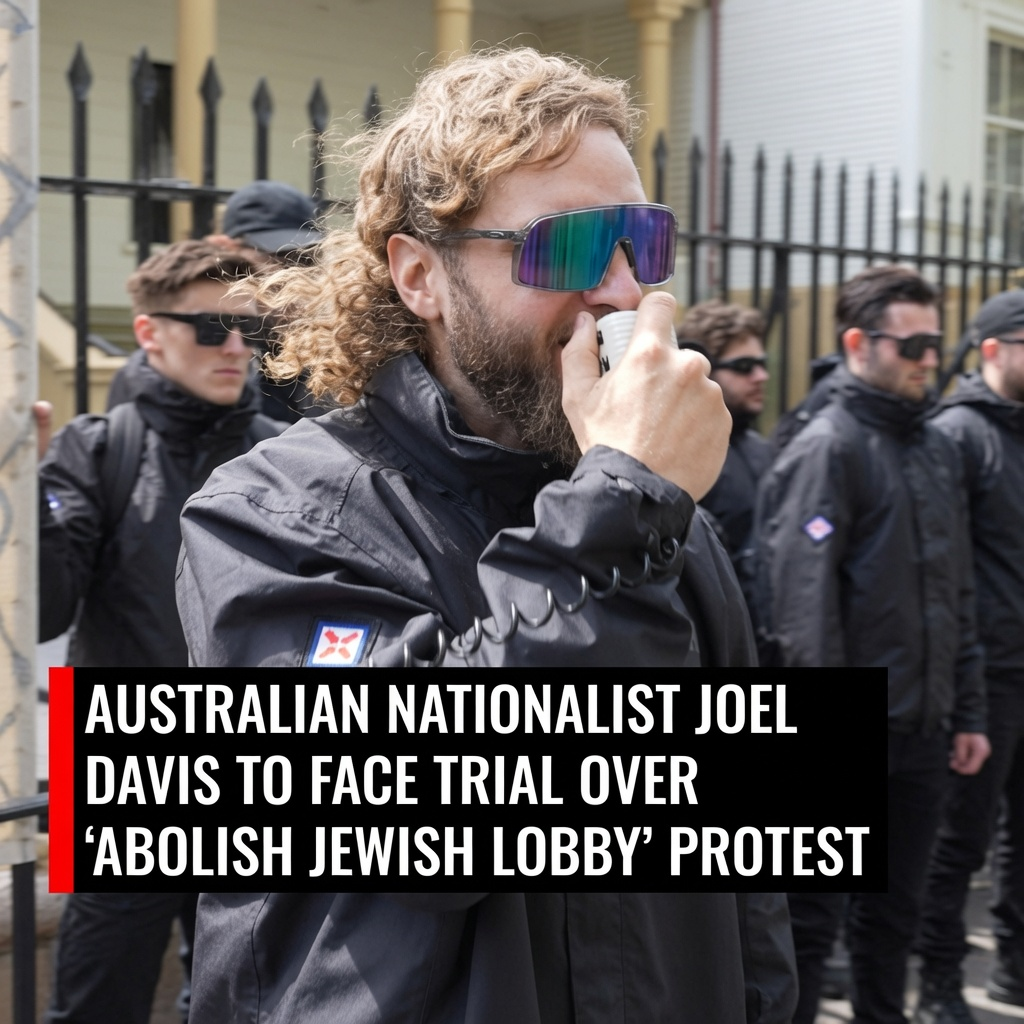
Davis, 31, appeared before Sydney’s Downing Centre Local Court, where a magistrate scheduled a one-day defended hearing for 22 February. He remains on bail while contesting the allegation and continues to deny the offence.
The prosecution alleges Davis committed the offence through remarks delivered during a public rally held outside the New South Wales Parliament in November last year. The demonstration centred on criticism of what organisers described as the influence of Jewish lobby groups in Australian politics.
According to the court, both the prosecution and defence agreed that a full day would be required despite only two witnesses being expected to give evidence. One witness is anticipated to appear as a historian with expert knowledge relevant to the case, while lawyers also acknowledged that the legislation itself is relatively new and likely to require careful legal interpretation.
The case is expected to attract close attention from legal observers because it will examine how New South Wales courts interpret the recently introduced offence of publicly inciting hatred on racial grounds in circumstances involving political protest and public speech.
Davis has pleaded not guilty to the charge.
Under New South Wales criminal procedure, that means prosecutors must prove the elements of the alleged offence beyond reasonable doubt before any conviction can be recorded.
The activist is also facing separate Commonwealth charges alleging the use of a carriage service to menace, harass or offend in connection with an alleged Telegram post concerning independent federal MP Allegra Spender.
His defence successfully argued that the two matters are sufficiently connected for them to be heard together on the same court date.
The Commonwealth allegations remain before the courts and have not been determined.
Davis continues to be subject to strict bail conditions imposed after his earlier arrest.
Among those conditions is a prohibition on using social media platforms while the criminal proceedings remain unresolved.
The speech at the centre of the New South Wales prosecution was delivered during a rally attended by dozens of members of the former National Socialist Network outside Parliament House.
During the protest, demonstrators stood beside a banner reading “Abolish the Jewish lobby” while criticising recently enacted hate speech legislation introduced by the New South Wales Government.
Davis argued during his speech that the laws had resulted from lobbying by Jewish organisations and criticised what he described as increasing restrictions on political expression.
The rally itself had been approved in advance by police and proceeded without reported violence.
Months later, however, investigators charged Davis after reviewing the content of speeches delivered during the event.
New South Wales Police previously stated that the investigation was conducted by specialist officers from the Security Investigation Unit within the Counter Terrorism and Special Tactics Command, who sought legal advice before laying charges.
The sequence of events has become an important aspect of public discussion surrounding the case.
In parliamentary evidence earlier this year, NSW Police Commissioner Mal Lanyon said an internal review had concluded that the demonstration itself did not breach existing laws at the time it occurred.
Nevertheless, prosecutors later alleged that the content of Davis’s speech amounted to a criminal offence under the state’s new racial vilification provisions.
The legislation under which Davis has been charged came into force as part of a broader package of reforms introduced by the Minns Government following a series of anti-Semitic incidents across Sydney.
The reforms created new criminal offences relating to the intentional public incitement of hatred on protected grounds while also introducing protest-related measures, some of which were subsequently invalidated by the courts.
The racial vilification offence carries a maximum penalty of two years’ imprisonment if a defendant is convicted.
The laws were designed to address speech considered capable of encouraging hatred that could escalate into intimidation or violence against protected groups.
Supporters argue the legislation fills an important gap by providing stronger protections against serious hate speech.
Critics, however, have questioned whether broadly framed offences could risk restricting political communication or controversial public debate, particularly where speech concerns matters of government policy or public interest.
Those broader constitutional and legal questions may receive increased attention as Davis’s case progresses.
His lawyer indicated in court that the prosecution raises novel legal issues because the offence is new and has received limited judicial consideration.
The activist’s legal difficulties extend well beyond the New South Wales proceedings.
He is also facing multiple charges in Victoria relating to alleged hate speech offences arising from podcast comments and political activity. Those proceedings remain before the Victorian courts and have been adjourned pending further hearings.
In South Australia, Davis is separately contesting a charge relating to the alleged display of a prohibited Nazi symbol during an Australia Day march in 2025.
Like the New South Wales matter, that prosecution has not yet been determined, and Davis denies the allegations against him.
The cumulative proceedings mean the activist is simultaneously defending criminal matters in three Australian jurisdictions.
The New South Wales case also follows an earlier prosecution under the same hate speech laws involving Sydney man Brandon Koschel, who became the first person convicted under the legislation after making anti-Semitic remarks during an Australia Day speech.
Although Koschel’s sentence was reduced on appeal, the District Court observed that Parliament introduced the legislation in response to increasing concern over anti-Semitic incidents and the potential for hate speech to contribute to violence.
That earlier judgment provides some guidance regarding Parliament’s objectives, but Davis’s case is expected to examine different factual circumstances involving a political protest rather than direct statements about an ethnic or religious group.
The proceedings have also attracted attention because they sit at the intersection of several competing legal principles.
Australian law recognises the importance of political communication within the nation’s democratic system, while governments also possess the authority to criminalise certain forms of conduct that intentionally incite hatred or threaten public safety.
How those competing principles should be balanced remains a matter for the courts applying the legislation enacted by Parliament.
For that reason, legal observers are expected to follow the February hearing closely.
The outcome may help clarify how New South Wales courts interpret the scope of the state’s hate speech offences and the evidentiary threshold prosecutors must satisfy when criminal charges arise from speeches delivered during political demonstrations.
Until the matter is determined, Davis remains presumed innocent under Australian law, and the allegations against him have not been proven in court.






