A video showing untidy aisles inside a Kmart store in Sydney’s west has sparked a heated online debate, with Australians divided over whether the scenes reflect poor customer behaviour, inadequate staffing or broader social changes within one of the country’s fastest-growing communities.
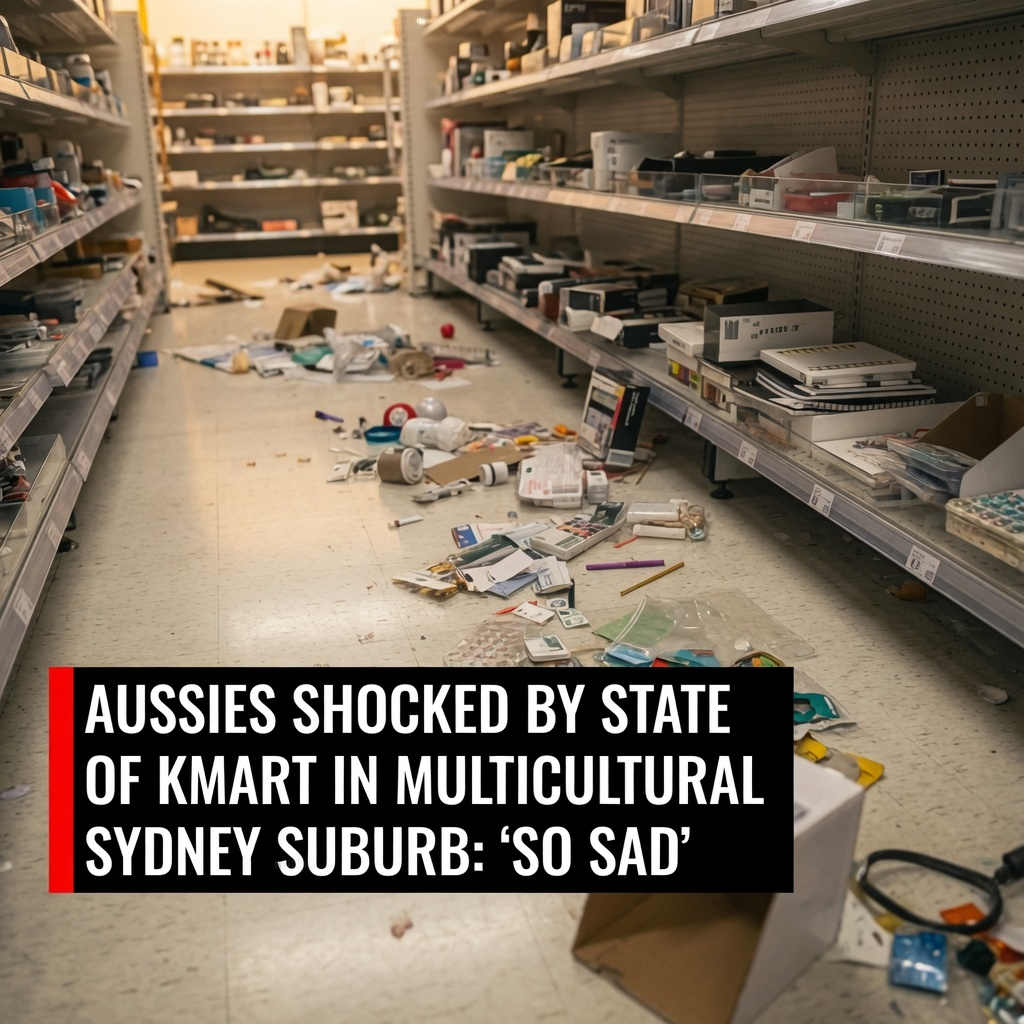
The short clip, shared on Instagram by a local resident, showed products scattered across the floor in the children’s footwear and stationery sections of Kmart Blacktown. Several items appeared to have been opened, removed from their packaging or left in the wrong locations after customers had inspected them.
The person who uploaded the video captioned it by saying the store appeared to become worse every time they visited.
Within hours, hundreds of social media users had responded, expressing frustration at the condition of the store.
Many described the scenes as disappointing and questioned why shoppers would leave merchandise scattered throughout the aisles rather than returning items to the shelves.
Others argued the footage reflected a broader decline in customer behaviour that retail workers have increasingly reported across Australia since the pandemic.
However, the discussion quickly moved beyond retail etiquette.
Some commenters linked the condition of the store to Blacktown’s rapidly changing demographics and Australia’s recent record levels of overseas migration.
Several posts suggested the suburb had changed significantly over recent decades, with some claiming shopping behaviour had deteriorated alongside population growth.
Other users strongly rejected those claims, arguing there was no evidence connecting untidy retail stores to migration or cultural background.
Instead, they pointed out that busy Kmart stores across Sydney and Melbourne frequently experience similar problems, particularly during weekends, school holidays and major sales periods.
Some commenters even claimed other stores, including Bankstown and Parramatta, regularly appeared messier than Blacktown, suggesting the issue was more closely related to customer volumes than local demographics.
The debate reflects broader public discussion about Australia’s rapidly growing outer suburbs.
Blacktown is one of the largest and most culturally diverse local government areas in New South Wales. According to the 2021 Census, approximately 48.8 per cent of residents in the suburb of Blacktown were born in Australia, while India was the largest overseas country of birth, followed by the Philippines, Sri Lanka and China. English was the only language spoken at home by around 46 per cent of residents, illustrating the area’s multicultural character.
The wider Blacktown local government area has experienced substantial population growth over the past decade, driven by both interstate movement and overseas migration. It has become one of Sydney’s most important centres for new housing development, attracting young families and skilled migrants seeking more affordable accommodation than inner-city suburbs.
Australia’s post-pandemic migration surge has further accelerated that growth.
The Albanese Government has overseen historically high levels of net overseas migration following the reopening of international borders, largely reflecting the return of international students, skilled workers and temporary visa holders after COVID-19 disruptions.
While migration has helped address labour shortages across numerous industries, it has also intensified debate over housing availability, transport infrastructure, healthcare services and population growth.
That broader national conversation helps explain why a relatively simple retail video quickly became linked to immigration despite the footage itself showing only untidy shelves and discarded products.
Retail experts generally caution against drawing wider social conclusions from isolated incidents.
Large discount department stores experience particularly heavy customer traffic, with thousands of shoppers moving through individual stores every day. Children’s clothing, footwear, toys and stationery departments are often among the busiest sections, making them more susceptible to misplaced merchandise.
Employees in major retail chains routinely spend significant portions of each shift recovering stock, reorganising shelves and returning unwanted items to their correct locations.
Former retail workers commenting online noted that similar scenes can develop within minutes during busy trading periods, particularly when staffing levels are stretched or stores experience unexpected customer surges.
Several shoppers familiar with Blacktown Kmart said the store had developed a reputation for being untidy long before recent migration increases.
Some recalled visiting the store decades earlier and described it as consistently busy because of its location within one of western Sydney’s largest shopping centres.
Online customer reviews posted over recent years also include complaints about cluttered aisles and high customer volumes, suggesting concerns about store presentation predate the latest social media controversy.
Even so, the viral nature of the video ensured it became another flashpoint in Australia’s increasingly polarised discussion about migration, community standards and urban growth.
The reaction also highlighted the growing influence of short-form social media videos in shaping public debate.
Brief clips filmed inside supermarkets, shopping centres and retail stores frequently attract hundreds of thousands of views, often becoming focal points for discussions extending far beyond the events captured on camera.
While such videos can highlight genuine concerns about customer behaviour, retail conditions or public safety, they rarely provide the broader context needed to determine how representative the scenes are.
In the case of the Blacktown Kmart footage, viewers saw only a small number of aisles at one point in time. The video did not indicate how long the products had been on the floor, how busy the store was at the time or whether staff were already in the process of restoring the affected areas.
Retail industry representatives have previously noted that maintaining store presentation has become increasingly challenging during periods of heavy customer traffic.
Discount department stores such as Kmart attract millions of customers each year because of their affordable pricing, broad product range and extended trading hours. Popular product releases, seasonal promotions and school holiday periods can result in exceptionally high foot traffic, placing additional pressure on employees responsible for replenishing shelves and recovering stock.
Retail workers have frequently shared their own experiences on social media, describing how neatly organised displays can become disordered within minutes during busy trading periods. Many have encouraged customers to return unwanted items to shelves or hand them to staff rather than leaving them in random locations.
The Australian Retailers Association has also highlighted increasing challenges associated with retail crime, customer abuse and staffing pressures across the sector. While untidy shelves are not uncommon in high-volume stores, retailers generally work to restore presentation throughout the trading day.
The online discussion surrounding Blacktown also reflects wider political debate about Australia’s migration program.
Net overseas migration reached record levels following the reopening of international borders after the COVID-19 pandemic, driven by returning international students, skilled workers and temporary visa holders. The federal government has since introduced measures intended to moderate migration growth while continuing to address workforce shortages in critical industries.
Population growth has placed additional pressure on housing, transport networks, schools and health services, particularly across outer suburban areas of Sydney, Melbourne and Brisbane where many new arrivals choose to settle.
Supporters of lower migration levels argue these pressures have outpaced infrastructure investment, contributing to declining quality of life in rapidly expanding suburbs.
Others contend migration remains essential to Australia’s long-term economic performance, helping fill labour shortages, support universities, expand the tax base and offset demographic ageing.
Those competing perspectives mean discussions about migration frequently extend beyond policy into broader debates about social cohesion, cultural identity and community expectations.
The reaction to the Blacktown video demonstrated how quickly local incidents can become symbols within those larger national conversations.
At the same time, researchers studying multicultural communities have consistently cautioned against attributing individual behaviour to ethnicity or country of birth without evidence. Poor customer behaviour occurs across a wide range of locations and demographic groups, and isolated incidents cannot reliably be used to draw conclusions about entire communities.
Blacktown itself has often been recognised as one of Australia’s most culturally diverse urban centres. Residents from more than 180 countries live within the local government area, contributing to a wide range of languages, religions, businesses and community organisations. The suburb has experienced decades of migration and remains one of Sydney’s fastest-growing regions.
Many local residents responding to the video expressed disappointment that the online discussion had shifted away from customer behaviour and toward cultural stereotypes.
Others maintained that demographic change should not be ignored when discussing evolving community standards, arguing that rapid population growth inevitably changes the character of suburbs over time.
Neither position is easily resolved through a short social media clip.
What the footage clearly showed was a retail environment where products had been left scattered across the floor and shelves, creating additional work for employees and reducing the shopping experience for customers.
Beyond that, explanations for why the store appeared untidy remain open to interpretation.
For Kmart, the issue is ultimately one of customer experience. Regardless of the reasons behind the mess, shoppers generally expect stores to be clean, organised and safe to navigate. Maintaining those standards in busy locations requires cooperation between retailers, staff and customers alike.
The debate also serves as a reminder of how rapidly everyday incidents can become politically charged in an era dominated by social media.
A short video filmed in a suburban department store evolved into a nationwide discussion touching on migration, multiculturalism, population growth, retail standards and Australia’s changing communities.
Whether viewers saw the footage as evidence of declining shopping etiquette, inadequate staffing, the effects of rapid population growth or simply an isolated busy day depended largely on their existing views rather than the limited information contained in the video itself.
As Australia continues to debate migration levels and the pressures facing rapidly growing suburbs, similar incidents are likely to attract intense public attention, illustrating how ordinary moments in everyday life can quickly become part of much larger national conversations.






