Melbourne’s housing market has entered what many analysts describe as its most severe downturn in more than a decade, with new figures showing that almost every suburb has recorded falling property values over the past three months.
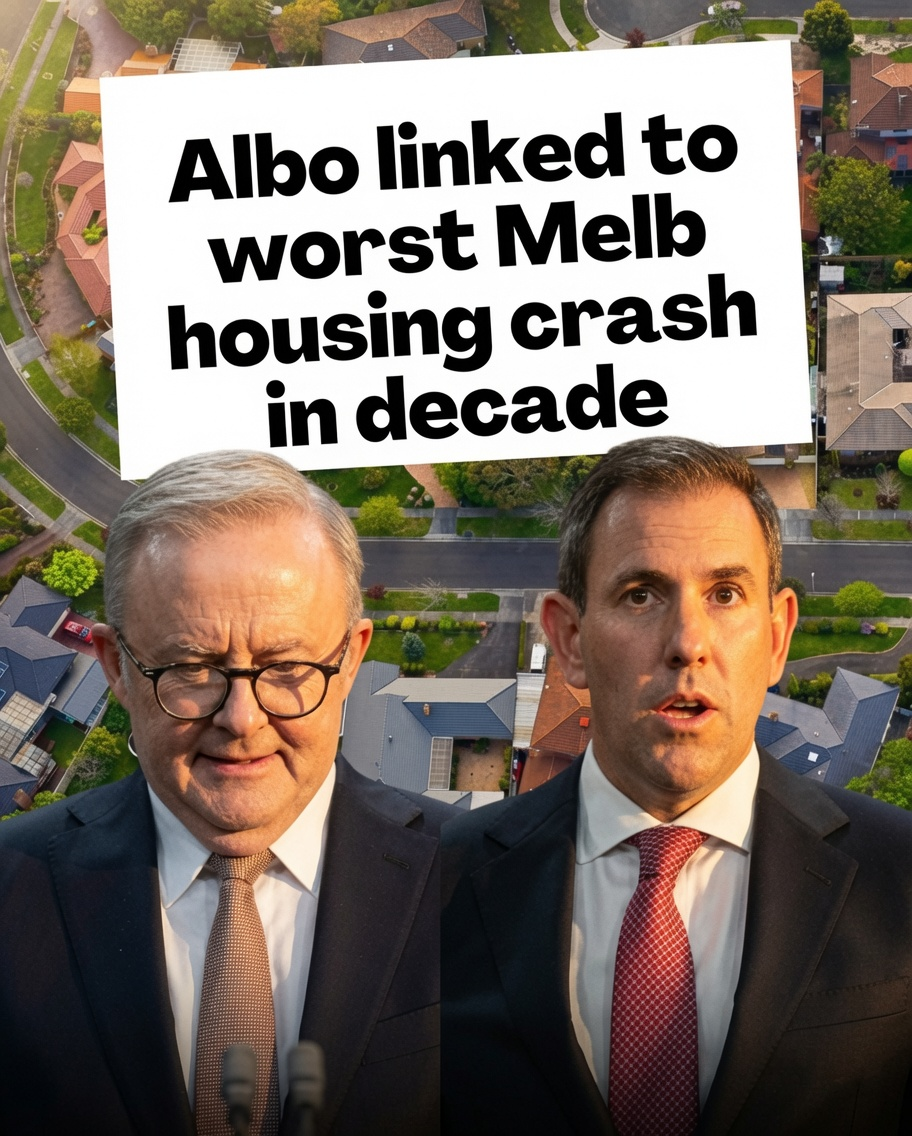
According to the latest quarterly market data, around 93 per cent of Melbourne suburbs experienced declines in residential property values during the June quarter, highlighting the scale of the city’s weakening housing market. The breadth of the decline is significantly greater than previous corrections seen following interest rate increases in recent years and has intensified concerns among homeowners, investors and the broader property industry.
The downturn comes as Australia’s housing market adjusts to several major economic and policy changes. Higher interest rates have increased borrowing costs, affordability remains under pressure, and investors are reassessing future returns following the Albanese Government’s proposed changes to negative gearing and capital gains tax arrangements.
Critics of the federal government’s housing tax reforms argue they have undermined confidence in the investment market at a time when supply remains constrained. They contend that reduced investor participation risks placing additional pressure on housing construction and the availability of rental accommodation, particularly in Melbourne where investor activity has traditionally represented a significant share of the market.
The latest figures suggest only a relatively small number of suburbs managed to record price growth during the quarter, with most of those located in Melbourne’s outer fringe or semi-rural growth corridors where affordability continues to attract buyers seeking larger homes and lifestyle opportunities. Areas such as Romsey and Lancefield were among the strongest performers despite the broader market weakness.
Housing analysts say Melbourne’s correction has been deeper than many other Australian capital cities due to a combination of higher housing supply, weaker investor sentiment and broader economic uncertainty. Premium suburbs have generally experienced the largest declines as discretionary buyers become more cautious in a higher interest rate environment.
Although falling prices can create opportunities for some first-home buyers, economists note that affordability is determined by more than purchase prices alone. Mortgage repayments remain elevated because borrowing costs are considerably higher than they were during the pandemic-era property boom, meaning lower prices do not necessarily translate into easier home ownership.
The federal government’s housing reforms remain at the centre of political debate.
Under the announced changes, negative gearing for residential property will largely be limited to new housing from 1 July 2027, while existing investments purchased before the May 2026 budget announcement will generally be grandfathered. The government also plans to replace the existing 50 per cent capital gains tax discount with an inflation-indexed system alongside a 30 per cent minimum tax rate on future capital gains. Existing gains accrued before the reforms take effect are expected to retain transitional protections.
The Albanese Government argues the changes are intended to improve housing affordability, encourage investment into new housing supply rather than existing dwellings, and create a fairer tax system that gives first-home buyers a better opportunity to enter the market. Officials estimate the reforms will help redirect investment while preserving existing arrangements for many current investors.
However, property industry groups, some economists and the Coalition have expressed concerns that the reforms could discourage investment in established housing, particularly in cities such as Melbourne where rental demand remains strong. They argue reduced investor demand may weigh on prices in the short term while also reducing the pool of rental properties over time.
Industry observers caution that separating the effects of tax policy from broader economic conditions is difficult. Melbourne’s market has also been influenced by multiple Reserve Bank interest rate increases, slower household borrowing capacity, changing migration patterns and cautious consumer confidence. These factors have combined to soften demand across much of the metropolitan area.
Recent auction results and sales activity suggest buyers remain active but are becoming increasingly selective. Well-presented homes in desirable locations continue to attract competition, while properties requiring significant renovation or carrying premium price expectations have generally experienced longer selling periods and greater discounting.
Some market participants believe the current environment may favour owner-occupiers over speculative investors. Lower prices can reduce the amount required for a deposit, while less competition from investors may improve purchasing opportunities for households intending to live in the property rather than rent it out.
At the same time, sellers face a more competitive market. Many homeowners who purchased near the peak of the recent property cycle may now receive offers below previous valuations, particularly if they need to sell quickly or are refinancing under higher mortgage repayments.
Melbourne’s property market has historically experienced periods of correction followed by recovery as population growth, employment and infrastructure investment support long-term housing demand. Analysts caution against assuming current price movements will necessarily continue indefinitely, noting that housing markets are influenced by a wide range of economic and demographic factors.
Future market performance will likely depend on several variables, including interest rate decisions, employment conditions, migration levels, construction activity and the eventual implementation of the federal government’s housing tax reforms. Any improvement in borrowing conditions could help stabilise buyer demand, while continued economic uncertainty may prolong the adjustment.
For investors, the policy changes mean future purchasing decisions may increasingly favour newly constructed homes, which remain eligible for more favourable tax treatment under the government’s announced framework. Property professionals say many investors are now reviewing acquisition strategies well ahead of the reforms scheduled to commence in 2027.
Meanwhile, the political debate surrounding housing affordability continues to intensify. The Coalition has criticised Labor’s reforms, arguing they reduce investment incentives and contribute to weaker market confidence. Labor maintains that the measures are necessary to improve fairness within the tax system and boost the supply of newly built homes over the longer term.
Whether Melbourne’s current downturn proves to be a temporary correction or the beginning of a more prolonged adjustment remains uncertain. What is clear is that Australia’s second-largest city is currently experiencing one of its broadest housing market declines in recent memory, with almost every suburb recording weaker property values as households, investors and policymakers navigate a rapidly changing housing landscape.






