A Victorian court has sentenced a Melbourne chef to a community-based order rather than imprisonment after he was convicted of sexually assaulting a man he met through the dating app Grindr, with the judge finding that a custodial sentence would be more onerous because the offender now identifies as a transgender woman.
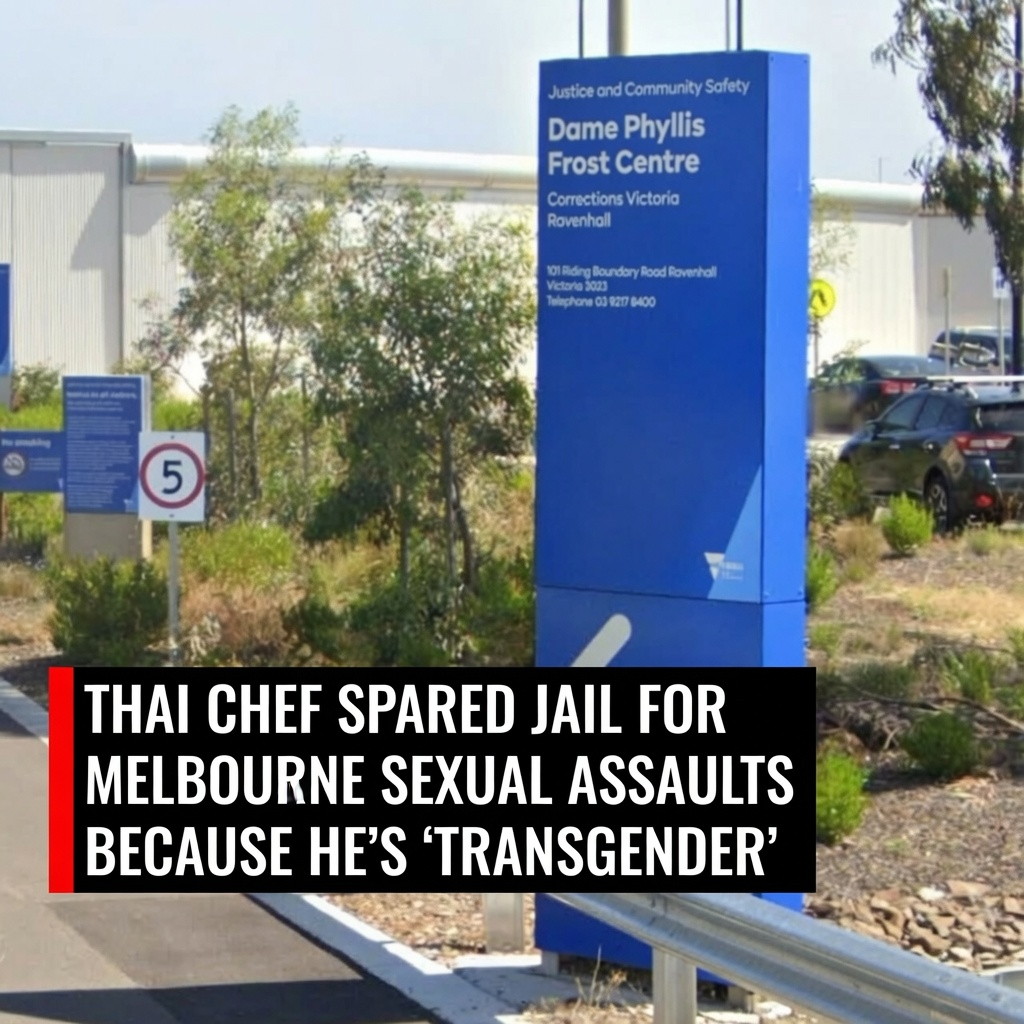
Thawat Prommachan, 32, was found guilty by a jury in December 2025 of two counts of sexual assault arising from an incident in February 2024. He was acquitted of two rape charges during the same trial.
The County Court of Victoria later imposed a two-year Community Corrections Order requiring 250 hours of unpaid community work rather than a prison sentence.
The sentencing decision has attracted public attention because the court accepted evidence that imprisonment would be significantly more difficult for Prommachan due to his gender transition, alongside other personal circumstances and rehabilitation prospects.
According to evidence presented during the trial, Prommachan met the complainant through Grindr before arranging what was understood to be a therapeutic, non-sexual massage.
The jury accepted that sexual contact occurred without consent after the complainant repeatedly refused and told Prommachan to stop.
The victim later described suffering significant psychological harm, including post-traumatic stress symptoms, reduced feelings of personal safety, impacts on sexual functioning and lost income while recovering from the assault.
Police evidence also included an interview in which Prommachan acknowledged he understood the complainant had not consented.
According to court material, he told investigators:
“I know when people say ‘no’ the first time, I shouldn’t keep going.”
Judge considered multiple sentencing factors
Sentencing Judge Kate Hawkins described the offending as serious but concluded that imprisonment was not the only appropriate outcome after weighing the principles required under Victorian sentencing law.
Australian courts are required to balance a range of considerations when imposing sentence, including punishment, denunciation, deterrence, protection of the community, rehabilitation and an offender’s personal circumstances.
Judge Hawkins noted that Prommachan had no relevant prior sexual offending history, had complied with court orders while on bail and had engaged with treatment after the offences.
The court also heard that he had begun openly identifying as a transgender woman after the offending occurred and had commenced hormone-related treatment, including testosterone-blocking medication.
The judge referred to Prommachan using female pronouns throughout the sentencing remarks, consistent with his current gender identity.
Judge Hawkins observed that the offending appeared to coincide with significant changes in Prommachan’s life, including the commencement of gender transition and ongoing psychological treatment.
Expert evidence on imprisonment
A key issue during sentencing was evidence from forensic psychiatrist Professor Rajan Darjee.
Professor Darjee assessed Prommachan as presenting a relatively low risk of future sexual offending and outlined the challenges transgender prisoners may experience within correctional facilities.
His report stated that transgender inmates can face increased risks of harassment, bullying, violence or segregation depending on where they are accommodated.
The psychiatrist also expressed concern that imprisonment could worsen existing mental health issues and reduce rehabilitation prospects.
Judge Hawkins accepted that transgender and gender-diverse prisoners can be particularly vulnerable to abuse in custody and found this was a legitimate sentencing consideration.
She concluded that prison would be more onerous for Prommachan than for many other offenders because of those circumstances.
The court therefore determined that the objectives of punishment, denunciation and general deterrence could still be achieved through a substantial Community Corrections Order combined with treatment requirements.
Health and rehabilitation
The court heard that Prommachan was diagnosed with HIV in 2017 and remains on antiretroviral medication.
Evidence also suggested he was likely living with attention deficit hyperactivity disorder (ADHD) and had been receiving psychological support, including services specialising in transgender clients.
Judge Hawkins directed that rehabilitation programs addressing sexual offending should be delivered individually rather than in a group setting, citing concerns about potential vulnerability during group-based treatment.
The sentencing remarks indicate the court viewed rehabilitation as an important factor in reducing the likelihood of future offending.
Community Corrections Orders in Victoria
A Community Corrections Order (CCO) is one of the most significant non-custodial penalties available under Victorian law.
Unlike a simple good behaviour bond, a CCO can include mandatory community work, treatment programs, supervision by Corrections Victoria, restrictions on movement and numerous other conditions.
Failure to comply with those conditions can result in an offender being returned to court and potentially resentenced, including the possibility of imprisonment.
Victorian courts generally reserve imprisonment for offences where no lesser sentence is considered appropriate after taking all statutory sentencing principles into account.
Broader debate over transgender prisoners
The case has also renewed broader public discussion about how correctional systems manage transgender prisoners.
Across Australia, correctional authorities increasingly assess placement decisions individually rather than solely according to biological sex.
Factors typically considered include safety, security, medical needs, legal obligations and the protection of both the individual prisoner and other inmates.
Those policies have generated significant public debate in recent years, particularly in Victoria following several high-profile cases involving transgender offenders.
Supporters argue that transgender prisoners face well-documented risks of assault and discrimination within custody and require appropriate protection under human rights and anti-discrimination laws.
Critics contend that sentencing decisions should focus primarily on the seriousness of the offending and that personal characteristics should not substantially reduce punishment for serious crimes.
Balancing punishment and rehabilitation
The Prommachan case illustrates the complex balancing exercise undertaken by sentencing courts.
Judges must weigh the gravity of an offence alongside the offender’s prospects for rehabilitation, community protection, mental health, personal circumstances and the practical impact of imprisonment.
While the seriousness of the offending was not disputed, the court concluded that a carefully structured Community Corrections Order could satisfy the purposes of sentencing without immediate incarceration.
Whether that outcome strikes the appropriate balance is likely to remain a matter of public debate, particularly as Victoria continues to examine how its justice and correctional systems respond to offenders with complex medical, psychological and gender-related circumstances.






