A significant legal battle is unfolding in Australia that could help define the limits of government power, political freedom and constitutional rights for years to come.
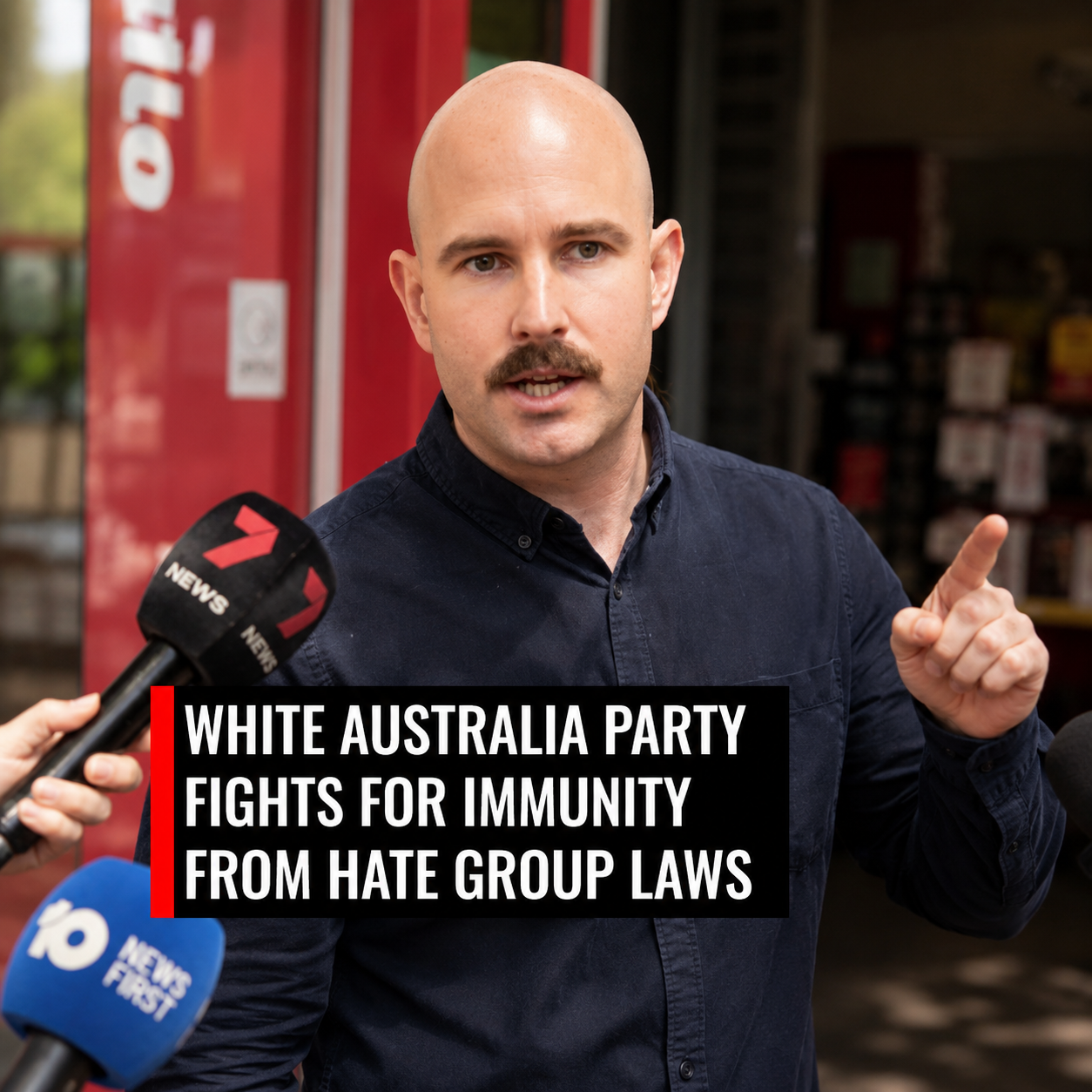
At the centre of the dispute is a court challenge involving newly enacted laws targeting prohibited hate groups and the question of whether an organisation subject to those laws should receive temporary legal protection while its broader constitutional challenge proceeds through the courts.
While the case itself has attracted strong opinions, the legal issues involved extend far beyond any single organisation.
The outcome could influence how future governments regulate political movements, advocacy groups and organisations considered controversial or extreme.
For many Australians, the case raises a fundamental question.
How far should governments be allowed to go when restricting organisations they believe pose a threat to social cohesion, public safety or democratic values?
Supporters of stronger restrictions argue governments have a responsibility to protect communities from organisations that promote hatred, division or intimidation.
They contend that modern democracies should not be required to tolerate groups whose activities may undermine social harmony or encourage discrimination.
Others, however, warn that expanding government powers in this area carries long-term risks.
They argue that laws designed to target unpopular organisations today could potentially be used more broadly in the future if adequate safeguards are not maintained.
This is one reason the current legal challenge is attracting such close attention from constitutional lawyers and civil liberties advocates.
The dispute is ultimately about more than politics.
It concerns the balance between public protection and individual freedoms, a tension that has shaped democratic societies for generations.
Australian courts have historically played an important role in determining where that balance should sit.
When governments introduce laws affecting political communication, association or participation, judicial review often becomes the mechanism through which competing interests are tested.
The latest case appears likely to become another example of that process.
At issue is not simply whether particular legislation is popular.
The central legal question is whether the laws operate within constitutional boundaries and whether affected parties are entitled to temporary relief while those questions are considered.
Such interim protections are not unusual in major legal disputes.
Courts frequently examine whether immediate enforcement could create consequences that cannot easily be reversed if a challenge later succeeds.
That principle is one reason injunction applications often attract considerable public interest.
They can have immediate effects even before the broader legal arguments are resolved.
The case also arrives during a period of increasing political debate about extremism, social division and the responsibilities of governments to maintain community safety.
Across many Western democracies, lawmakers have introduced new measures designed to address concerns about hate-based activity, radicalisation and political violence.
Australia has been part of that broader trend.
Supporters of these approaches argue modern threats require stronger legal tools.
They point to concerns about public safety, community confidence and the need to prevent harmful conduct before it escalates.
Critics often respond that governments must be careful not to sacrifice fundamental freedoms in pursuit of those objectives.
They argue that democratic systems are strongest when legal restrictions remain narrowly defined and subject to rigorous judicial oversight.
The court’s decision will therefore be closely watched not only by politicians but also by legal experts, civil rights advocates and policy analysts.
Many see the dispute as part of a broader national conversation about where Australia should draw the line between security and liberty.
That conversation has become increasingly prominent in recent years.
Questions surrounding online speech, public protests, political activism and government regulation have generated significant debate across the country.
Each new legal challenge contributes to a developing body of precedent that may shape future policy decisions.
The implications extend beyond the organisations directly involved.
Smaller political parties, advocacy groups and community organisations may all be watching closely to understand how courts interpret the scope of government authority under the new framework.
Business groups and legal observers are also paying attention because certainty and predictability remain important principles within democratic governance.
When major legal powers are introduced, stakeholders often seek clear guidance regarding how those powers will be applied and reviewed.
The judiciary plays a critical role in providing that clarity.
Regardless of the outcome, the proceedings are likely to become a significant reference point in future discussions about political freedoms and government authority.
If the legislation survives legal scrutiny, supporters may view the decision as confirmation that stronger intervention powers can coexist with democratic principles.
If aspects of the laws are limited or challenged successfully, governments may face pressure to reconsider how similar measures are designed in the future.
Either way, the broader debate is unlikely to disappear.
Australians continue to wrestle with complex questions about freedom, security and the role of the state in regulating public life.
As society becomes more politically fragmented and public debates become increasingly intense, those questions are likely to grow even more significant.
The court’s ruling may address an immediate legal dispute, but its impact could extend well beyond the present case.
For many observers, it represents an important test of how Australia balances democratic freedoms with efforts to protect the broader community.
And that balance remains one of the most consequential issues facing modern democracies today.






