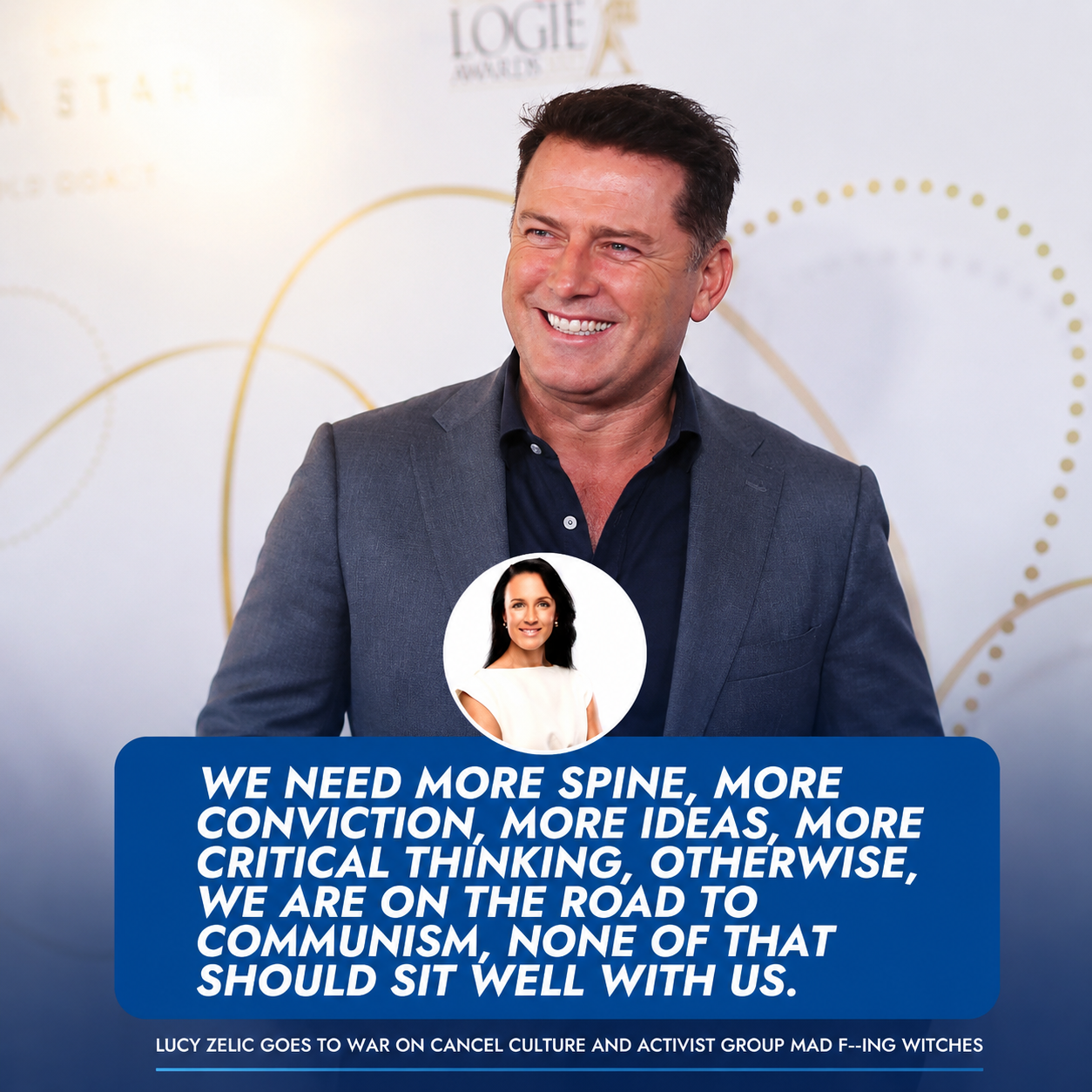
A fresh debate over free speech, public accountability and online activism has emerged after broadcaster Lucy Zelić criticised what she described as Australia’s growing “cancel culture” during a radio commentary this week.
Speaking on Sydney radio station 2GB, Zelić argued that people should be able to express opinions and participate in public debate without automatically risking their careers. She said disagreement and open discussion are essential in a democratic society and questioned whether campaigns targeting employers and advertisers had become an increasingly influential way of policing public speech.
During the broadcast, Zelić specifically criticised activist group Mad Fucking Witches (MFW), alleging the organisation had pursued what she described as a “vendetta” against several high-profile media personalities. Those remarks reflected her opinion and formed part of a broader discussion about the impact of organised online campaigns.
MFW has become one of Australia’s most prominent online activist groups in recent years. The organisation has organised campaigns encouraging advertisers to reconsider their support for media personalities and organisations that it believes promote misogyny, racism or other harmful conduct. Supporters argue such campaigns encourage corporate accountability, while critics contend they can discourage open debate and place excessive pressure on employers.
The discussion reflects a broader international conversation about so-called cancel culture. Although there is no universally accepted definition of the term, it is commonly used to describe organised public efforts to withdraw support from individuals or organisations following controversial statements or behaviour. Whether such campaigns represent legitimate accountability or an excessive restriction on free expression remains the subject of ongoing debate.
Advocates of advertiser campaigns argue businesses have the right to decide where their brands appear and that consumers are equally entitled to encourage companies to align advertising decisions with community expectations. From that perspective, public pressure campaigns are viewed as a form of consumer activism rather than censorship.
Critics, however, argue that organised campaigns can sometimes create a chilling effect on public discussion, particularly when employers or commercial partners respond quickly to online pressure before broader public debate has taken place. They contend that disagreement should generally be addressed through discussion rather than efforts to remove individuals from public platforms.
Media analysts note that disputes over cancel culture have become increasingly common as audiences, advertisers and content creators interact across television, radio, podcasts and social media. Public figures now face immediate and highly visible reactions to controversial comments, while advocacy groups have greater ability than ever to mobilise supporters online.
As the conversation continues, differing views remain firmly established. Some Australians see organised activist campaigns as an important mechanism for promoting accountability, while others regard them as placing unnecessary limits on free expression. Zelić’s comments have added another perspective to a debate that continues to shape Australia’s media and political landscape.