Residents of Sydney’s rapidly growing suburb of Austral have voiced growing frustration over persistent illegal dumping, with photographs of rubbish abandoned along local roads igniting an intense community debate about responsibility, population growth, infrastructure and civic behaviour.
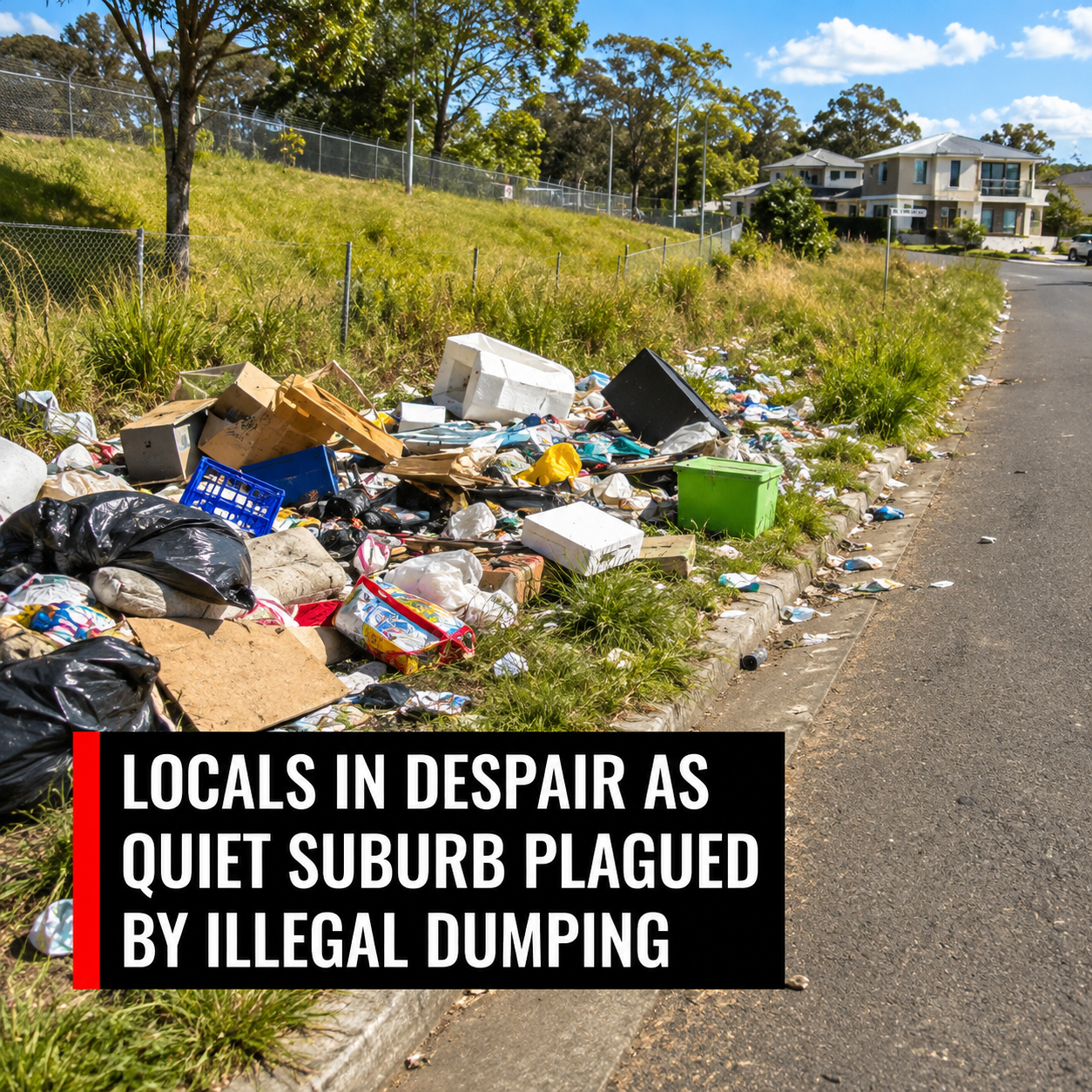
The latest controversy began after a local resident shared photographs showing piles of discarded household waste and construction materials dumped beside Sixth Avenue and Lippizan Road.
The resident described the situation as something that would once have been considered unacceptable in Australia.
“This wasn’t the Australian way of life,” the resident wrote while questioning whether councils now needed surveillance cameras and enforcement officers throughout developing suburbs simply to keep public spaces clean.
The post quickly attracted almost 2,000 comments, revealing sharp divisions over what many believe is becoming an increasingly common problem across parts of western Sydney.
Many commenters argued that the issue reflected a decline in community standards and respect for public spaces, with some directly linking the behaviour to Australia’s high levels of immigration in recent years.
Others strongly disagreed, instead blaming inadequate waste disposal facilities, rising costs associated with landfill, rapid urban expansion and insufficient council resources.
The discussion soon extended well beyond rubbish itself, touching on broader concerns surrounding infrastructure, planning and the changing character of rapidly expanding suburbs.
Several residents argued that illegal dumping had become noticeably worse as Austral experienced significant residential growth driven by large housing developments associated with Western Sydney’s expanding population.
One commenter claimed Australia had changed dramatically over recent years and argued that increasing migration was reshaping communities in ways many long-term residents found concerning.
Another suggested that illegal dumping reflected cultural attitudes imported from overseas, although such views were strongly contested elsewhere in the discussion.
Others rejected those claims entirely, insisting the behaviour should not be attributed to any particular community and instead reflected poor enforcement and inadequate waste management policies.
Some residents argued Liverpool City Council should make local waste disposal easier and less expensive.
Several suggested that free access to waste facilities would remove much of the incentive for people to dump rubbish illegally.
“We pay enough in rates,” one resident wrote. “Make the tips free.”
The debate echoes similar arguments raised repeatedly across metropolitan Australia, where councils often face competing pressures between recovering waste management costs and discouraging illegal disposal.
Construction waste featured prominently in the photographs shared online, leading several locals to suggest the problem extends beyond ordinary household rubbish.
Building materials can be expensive to dispose of legally, particularly during periods of intense residential development, creating financial incentives for illegal dumping by unscrupulous operators.
Austral has experienced extraordinary growth during the past decade as western Sydney continues expanding towards the future Western Sydney International Airport.
Large tracts of previously semi-rural land have been transformed into new housing estates, bringing thousands of additional residents alongside major infrastructure projects.
While population growth has created new opportunities for businesses and homeowners, it has also placed increasing pressure on roads, waste services and local government resources.
Liverpool City Councillor Peter Ristevski also entered the discussion, arguing that council infrastructure was already struggling to keep pace with development.
He questioned whether additional major projects should proceed if existing services were unable to adequately manage current community expectations.
His comments linked illegal dumping to broader concerns surrounding planning decisions and infrastructure capacity rather than viewing the issue solely as one of law enforcement.
Ristevski has previously been outspoken on issues involving local infrastructure, development and council governance, regularly arguing that basic municipal services should receive greater priority.
The councillor’s latest comments, however, also generated criticism from those who argued illegal dumping should not be connected to wider debates surrounding migration or cultural change.
Illegal dumping remains a significant issue for councils across New South Wales.
The NSW Government has funded multiple Illegal Dumping Prevention Program projects aimed at identifying dumping hotspots, improving surveillance, educating communities and supporting enforcement efforts against offenders. Recent parliamentary business papers highlight funding for councils to install cameras, lighting and other deterrent measures in known dumping locations.
Local governments frequently report that illegally abandoned rubbish creates environmental risks, increases maintenance costs and diverts funding away from other community services.
Commonly dumped materials include household furniture, mattresses, renovation waste, tyres, garden refuse and asbestos-containing building materials.
Environmental agencies warn that some illegally discarded waste can contaminate waterways, create fire hazards and expose nearby residents to hazardous substances.
Councils across Sydney have increasingly installed surveillance cameras, warning signs and targeted patrols at known dumping hotspots in an effort to identify offenders.
However, enforcement remains challenging because dumping often occurs late at night or in isolated industrial and semi-rural locations.
Austral itself has attracted attention previously over illegal dumping concerns as development accelerated throughout the district. Local representatives have argued for stronger surveillance, while others have suggested expanding ranger patrols to deter offenders.
The suburb has also been the focus of wider infrastructure debates, including road upgrades, traffic management and recreational facilities as its population continues growing.
The online discussion demonstrates how local issues can rapidly evolve into broader political debates.
For some residents, illegal dumping represents a straightforward law enforcement problem requiring tougher penalties and improved surveillance.
Others see it as evidence that local infrastructure has failed to keep pace with unprecedented residential growth.
Still others believe it reflects wider social and cultural changes occurring across Australia’s fastest-growing suburbs.
Whether responsibility lies primarily with individuals, councils, planning systems or broader demographic changes remains fiercely contested.
What appears less disputed is that residents want cleaner streets, stronger enforcement against offenders and greater accountability for those responsible.
As Austral continues to grow alongside western Sydney’s broader transformation, balancing rapid development with community expectations for public amenity is likely to remain an ongoing challenge for both residents and local authorities.






