Australia’s long-running debate over how much multinational gas companies should contribute to public finances has returned to the political spotlight, with delegates at the Australian Labor Party’s national conference preparing to endorse language calling for Australians to receive a “fairer return” from the nation’s natural resources.
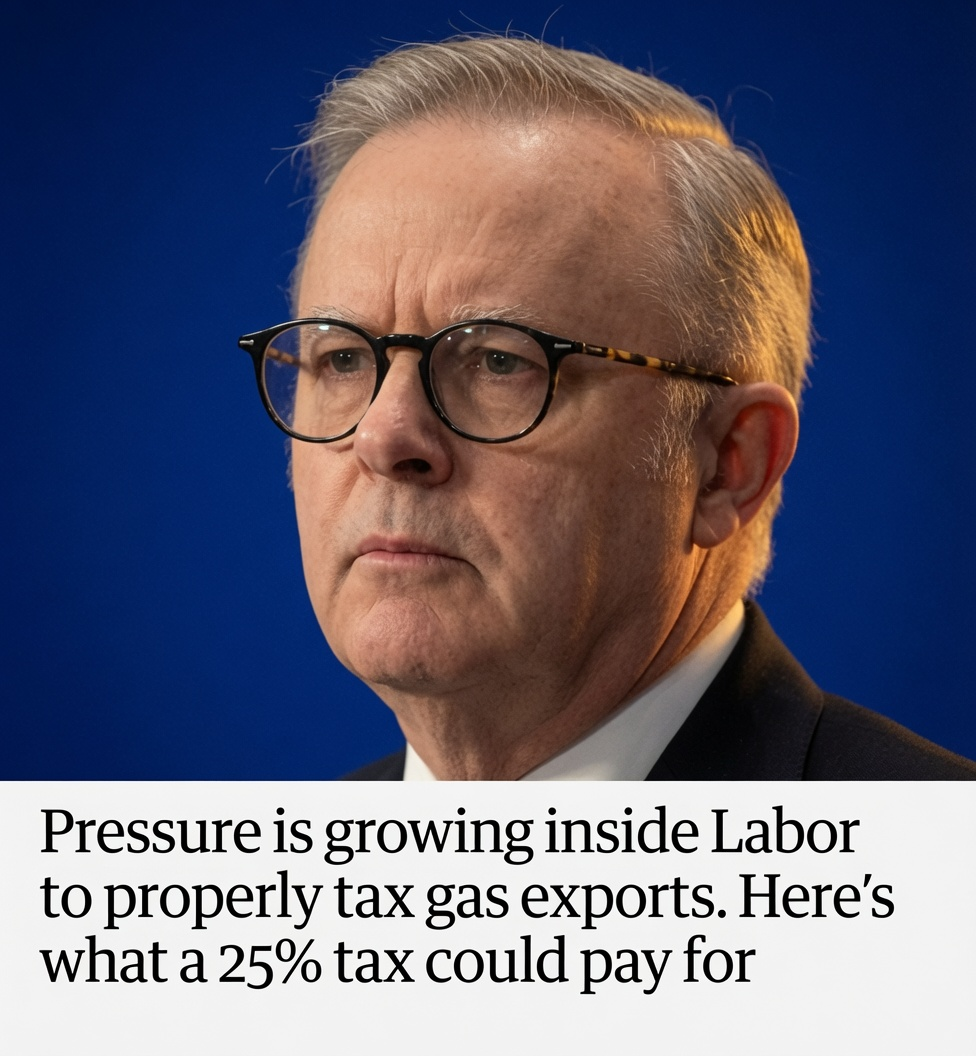
While the proposed wording does not commit the Albanese government to introducing a new tax immediately, it represents one of the clearest signals yet that pressure for significant reform of Australia’s gas taxation system is growing from within Labor itself, rather than only from the Greens, crossbench MPs and trade unions.
At the centre of the debate is an increasingly simple political question: why has Australia become one of the world’s largest exporters of liquefied natural gas while government tax revenue from the industry has remained comparatively modest?
Supporters of reform argue that the existing Petroleum Resource Rent Tax (PRRT) has failed to deliver an appropriate share of resource wealth to Australian taxpayers despite decades of booming LNG exports.
Australia is now the world’s second-largest exporter of LNG behind the United States, with exports worth tens of billions of dollars annually. Over roughly the past quarter-century, LNG has become one of Australia’s most valuable export industries, transforming from a relatively minor contributor into a major pillar of national trade.
Critics say government revenue has failed to keep pace with that expansion.
Much of the criticism centres on the structure of the PRRT itself. Unlike a straightforward export levy, the PRRT is a profits-based tax that allows companies to deduct large exploration, development and operating costs before tax becomes payable. Companies can also carry forward deductible expenses, meaning some projects may take many years before generating taxable profits.
Supporters of reform argue these provisions have allowed major LNG producers to continue exporting enormous volumes of gas while paying relatively little in PRRT.
Some offshore gas developments also pay no state royalties because of where production occurs, further fuelling criticism that Australians are not receiving adequate returns from publicly owned natural resources.
The latest proposal attracting political attention is a flat 25% tax on gas exports.
The idea has been promoted by the Australian Council of Trade Unions (ACTU) and supported by several economists, with estimates suggesting it could generate around A$17 billion annually—many times higher than the average annual revenue currently collected through the PRRT.
Advocates argue such revenue could fund major public services without directly increasing household gas prices because the levy would apply to export earnings rather than domestic consumption.
Among the frequently cited possibilities are expanding Medicare to include universal dental care, increasing funding for public schools or making childcare significantly more affordable.
Supporters also argue an export-based tax could encourage producers to prioritise domestic supply where commercially attractive, although the practical effects remain contested.
The Albanese government, however, has consistently resisted adopting the proposal.
Earlier this year Prime Minister Anthony Albanese argued that imposing a new export tax on existing contracts could undermine Australia’s reputation as a reliable trading partner, particularly with major LNG customers across Asia.
The government has instead defended reforms already made to the PRRT, arguing those changes will bring forward tax payments and increase future revenue from mature gas projects.
Critics remain unconvinced.
Budget projections released this year suggested PRRT revenue is expected to remain relatively modest over coming years, reinforcing claims that previous reforms have not substantially changed long-term returns to taxpayers.
That apparent gap between booming export earnings and comparatively limited tax receipts has become a powerful political argument for those advocating broader reform.
Business groups and gas producers, however, present a very different perspective.
Industry representatives argue Australia’s LNG sector required extraordinarily large upfront investment over many years before exports began generating profits. They maintain the PRRT was deliberately designed as a profits-based tax to recognise those commercial risks.
They also argue Australia’s international competitiveness depends on maintaining a stable investment environment.
According to the industry, major changes to taxation rules could discourage future investment in new gas developments, reduce employment and ultimately weaken Australia’s position in global energy markets.
Another concern raised by industry is sovereign risk.
Frequent changes to taxation settings after companies have committed billions of dollars to projects may create uncertainty for international investors considering future developments across Australia’s resources sector.
The debate therefore extends well beyond taxation.
It reflects broader questions about how Australia balances three competing objectives: attracting private investment, maintaining reliable export relationships and ensuring the Australian public receives an appropriate share of profits generated from finite natural resources.
The issue has also become increasingly political because support for stronger gas taxation is no longer confined to Australia’s traditional progressive parties.
Independent Senator David Pocock has advocated greater returns from gas exports, while unions have campaigned heavily for reform. Some conservative voices have likewise questioned whether multinational energy companies are contributing enough given the scale of Australia’s LNG exports.
Labor’s proposed platform amendment reflects that changing political landscape.
The draft wording commits the party to ensuring Australians receive “a fairer return” from natural resources through “appropriate taxation arrangements” while continuing Australia’s role as a reliable international energy supplier.
Importantly, however, party platform language does not automatically translate into government policy.
National conference resolutions often establish long-term policy direction rather than immediate legislative commitments, and governments retain considerable flexibility when determining budgets and taxation policy.
Even if delegates overwhelmingly support stronger wording on resource taxation, any actual changes would still require cabinet approval and legislation through Parliament.
For now, the conference appears more significant as an indication of shifting political sentiment than as confirmation of imminent tax reform.
Nevertheless, the symbolism matters.
For much of the past decade, calls for major changes to Australia’s gas taxation regime came primarily from outside government.
The latest conference debate suggests dissatisfaction with the existing system is becoming increasingly visible inside Labor itself, potentially creating additional pressure on Treasurer Jim Chalmers and Prime Minister Anthony Albanese in future budgets.
Whether that pressure ultimately results in a new export levy, further reforms to the PRRT or no significant changes at all remains uncertain.
What is clear is that Australia’s gas taxation debate has entered a new political phase.
As LNG continues generating enormous export earnings, questions over how much of that wealth should flow back to Australian taxpayers are unlikely to disappear anytime soon. The discussion now extends beyond opposition parties and independent MPs to include influential voices within Labor itself, ensuring resource taxation will remain a prominent issue in Australia’s economic and political debate over the coming years.






