Beloved New Zealand actor Sam Neill, whose distinguished career stretched across more than five decades and earned him a place among the world’s most respected screen performers, has died at the age of 78.
Neill passed away at St Vincent’s Private Hospital in Sydney, surrounded by his family, who described his death as “sudden and unexpected” while noting that he had remained cancer-free following years of treatment for a rare form of blood cancer.
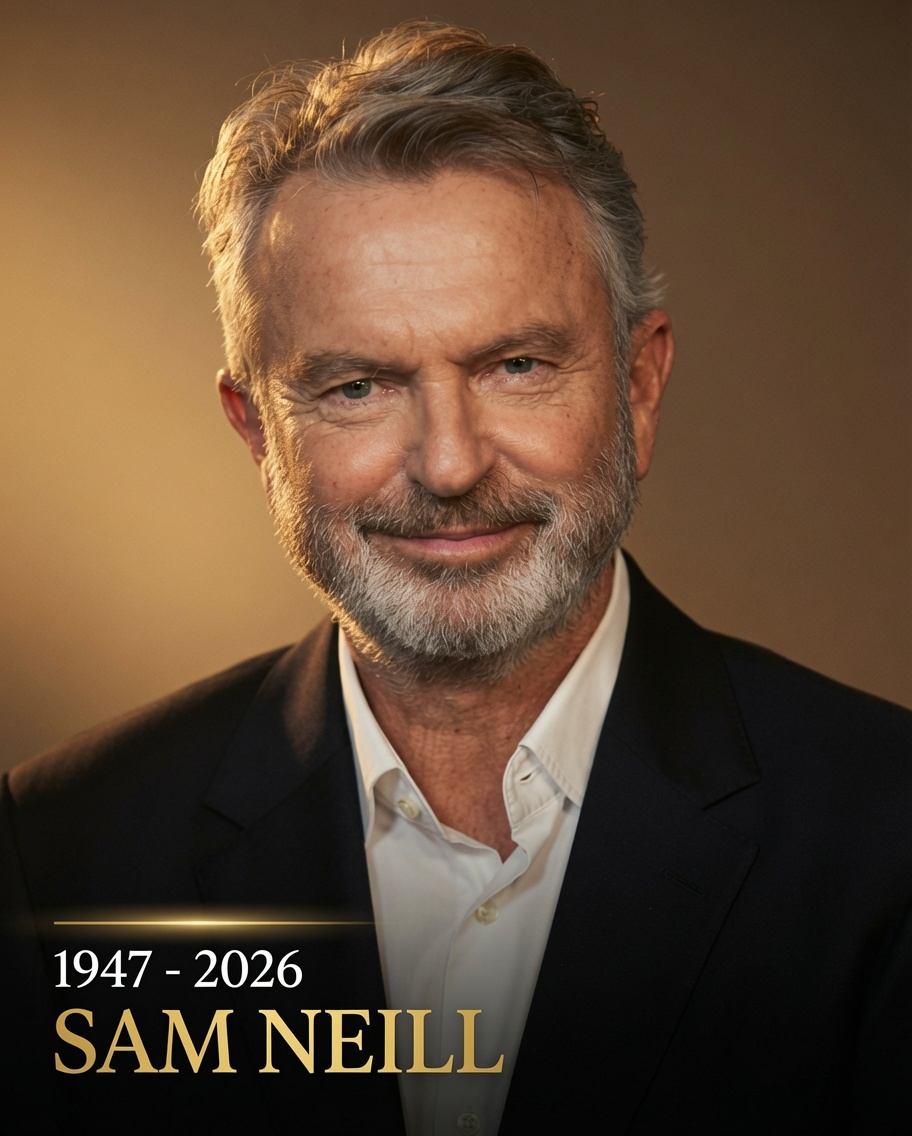
In a heartfelt statement shared through his official social media accounts, the family said Sam had been surrounded by loved ones and had “passed with the dignity that has characterised his whole life”. They also expressed gratitude to the medical staff who cared for him during his final days while requesting privacy as they mourned an “immeasurable loss”.
For millions of moviegoers, Neill will forever be remembered as Dr Alan Grant, the quietly courageous palaeontologist who became the emotional centre of Steven Spielberg’s 1993 blockbuster Jurassic Park. His portrayal transformed him into one of the most recognisable actors of his generation and cemented his place in cinematic history.
Although dinosaurs introduced him to a global audience, Neill’s career was remarkably diverse. He moved comfortably between major Hollywood productions, acclaimed independent films and prestige television, earning admiration from critics and fellow actors alike for his understated, intelligent performances.
Born Nigel John Dermot Neill in Omagh, Northern Ireland, on 14 September 1947, he moved with his family to New Zealand as a child. It was there that he developed a love of acting while studying at the University of Canterbury before joining the country’s growing film industry during the 1970s.
His breakthrough arrived with the landmark New Zealand thriller Sleeping Dogs in 1977, widely regarded as one of the films that helped launch New Zealand’s modern cinema. The performance opened international doors and introduced audiences to an actor capable of combining quiet authority with emotional depth.
Throughout the following decades Neill built an extraordinary filmography. He starred in My Brilliant Career, The Hunt for Red October, Dead Calm, The Piano, Sirens, Event Horizon, Hunt for the Wilderpeople and countless other productions that showcased his versatility across drama, thriller, adventure and comedy.
Television audiences likewise embraced his work. His performances in productions including Reilly: Ace of Spies, Merlin, The Tudors, Peaky Blinders and more recently Apples Never Fall demonstrated that his talent extended well beyond the big screen.
Neill’s portrayal of Dr Alan Grant remains among the defining performances of modern blockbuster cinema. Initially introduced as a scientist uncomfortable around children, the character gradually evolved into the moral heart of the original Jurassic Park. Neill returned to the role in Jurassic Park III and reunited with the original cast in Jurassic World Dominion, delighting generations of fans.
Beyond acting, Neill became known for his warmth, humour and authenticity. His social media presence attracted a devoted following during the COVID-19 pandemic as he shared videos from his vineyard, introduced viewers to his farm animals and offered gentle reflections on everyday life that resonated with audiences around the world.
Outside film sets, he was deeply committed to his New Zealand vineyard, Two Paddocks, in Central Otago. Winemaking became one of his great passions, and he frequently described the property as a place of peace that balanced the demands of an international acting career.
In 2023 Neill publicly revealed that he had been diagnosed with angioimmunoblastic T-cell lymphoma, a rare and aggressive form of blood cancer first detected while he was promoting Jurassic World Dominion. Rather than hiding his illness, he discussed it openly in his memoir Did I Ever Tell You This?, offering readers an honest account of mortality, resilience and gratitude.
After conventional chemotherapy became less effective, Neill underwent an innovative clinical treatment that successfully placed the disease into remission. Earlier this year he happily announced there was no detectable cancer in his body, describing the result as extraordinary.
His family confirmed that he remained cancer-free at the time of his death, making his passing all the more unexpected. No specific cause of death has yet been publicly announced.
Tributes quickly flowed from across Australia, New Zealand and the international film community. Political leaders, actors, directors and fans praised not only his remarkable body of work but also his generosity, humility and unmistakable presence on screen.
Australian Prime Minister Anthony Albanese joined many others in recognising Neill’s enormous contribution to film and culture, while colleagues remembered a performer who consistently elevated every production in which he appeared.
Fellow actors frequently spoke of Neill’s professionalism and kindness. Despite decades of international fame, he retained a reputation as one of the industry’s most approachable figures, known for mentoring younger performers and treating cast and crew with equal respect.
Over the course of his career Neill received numerous honours, including a BAFTA Award for Reilly: Ace of Spies, Golden Globe and Emmy nominations, and many Australian and New Zealand industry awards recognising his outstanding contribution to film and television.
His influence extended beyond awards. Generations of filmmakers cited him as an inspiration because of his willingness to embrace challenging roles rather than simply pursuing commercial success. Whether leading a Hollywood blockbuster or appearing in an intimate independent drama, Neill brought intelligence, warmth and credibility to every character.
His memoir revealed an individual who approached life with humour despite confronting serious illness. Rather than focusing solely on his achievements, Neill wrote candidly about family, friendship, ageing and appreciating ordinary moments, themes that resonated strongly with readers.
He is survived by his children, grandchildren and extended family, who have asked for privacy as funeral arrangements are made.
For audiences around the world, however, Sam Neill’s legacy is already secure. His performances helped define modern cinema, introduced unforgettable characters to millions of viewers and demonstrated that genuine humanity can shine through even the biggest blockbuster spectacle.
From facing dinosaurs on Isla Nublar to delivering deeply affecting dramatic performances across more than 150 film and television productions, Sam Neill leaves behind one of the richest and most admired careers in Australasian entertainment history.
His work will continue to entertain, inspire and move audiences for generations to come, ensuring that one of New Zealand’s greatest actors is never truly gone.






