Jim’s Group founder Jim Penman has issued a direct challenge to Prime Minister Anthony Albanese, urging him to spend an entire day working as one of Australia’s thousands of franchise operators before claiming his government understands the realities facing small business.
Penman argues that genuine experience on the ground would reveal a stark contrast between political rhetoric in Canberra and the daily pressures confronting Australians who own and operate franchise businesses.
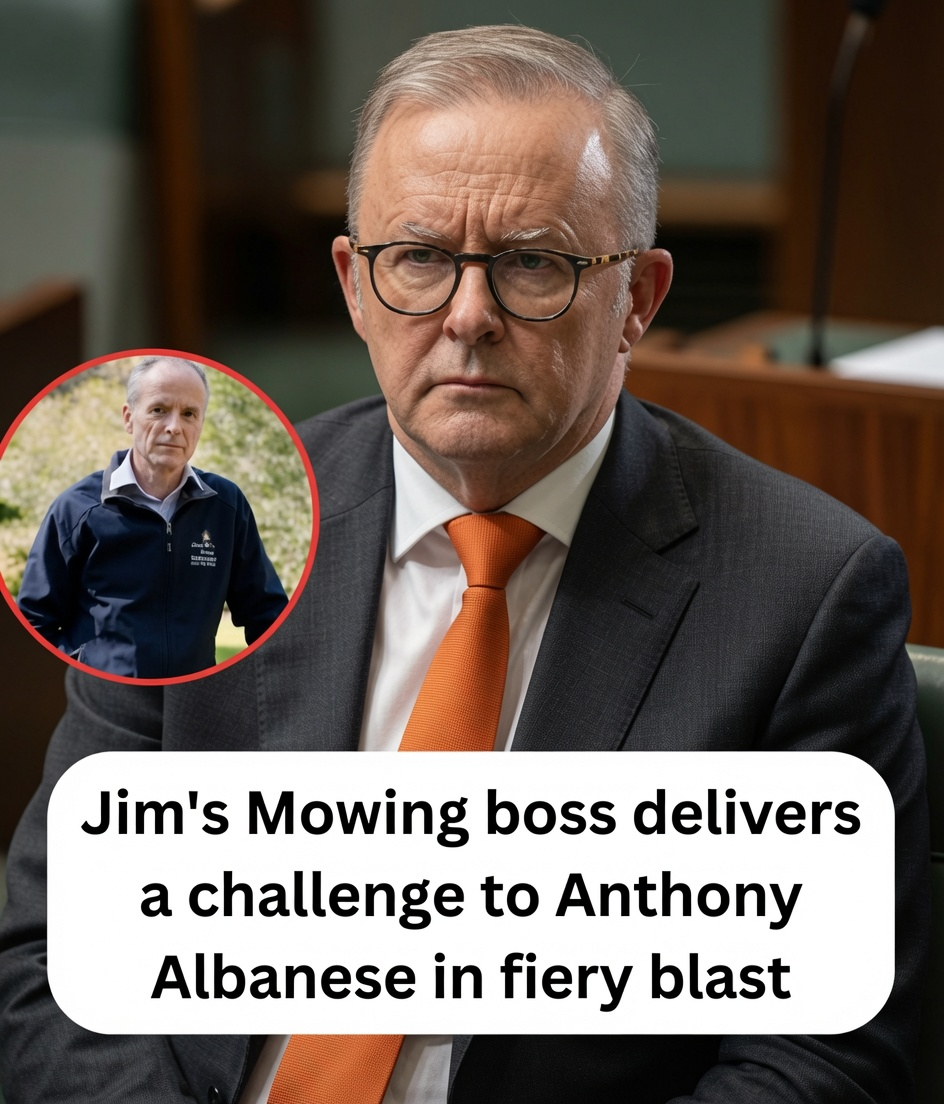
According to Penman, a single day in the shoes of a franchisee would involve far more than simply serving customers. It would mean juggling financial obligations, responding to clients, travelling between jobs, maintaining equipment, managing staff, paying suppliers and navigating an increasingly complex web of taxes and regulatory requirements.
For many franchise operators, owning a business represents years of savings, significant personal debt and an ongoing financial commitment that extends well beyond normal working hours.
Unlike salaried employees, franchisees typically invest their own capital into purchasing equipment, vehicles, licences and the right to operate under an established brand. Many also sign long-term commercial leases, employ staff and accept personal financial risk should the business fail.
Penman believes this reality is frequently overlooked during political debate.
While governments regularly describe small business as the backbone of Australia’s economy, he argues that policy discussions often fail to reflect the pressures experienced by those responsible for keeping these businesses operating every day.
Running a franchise involves far more than generating sales. Owners must continually balance rising operating costs while remaining competitive in an environment where many consumers remain sensitive to price increases following years of elevated inflation.
Fuel costs, insurance premiums, wages, superannuation obligations, payroll administration, equipment maintenance and taxation all continue regardless of whether customer demand remains strong.
For service-based businesses, additional challenges include late invoice payments, cancelled appointments, unexpected vehicle repairs and fluctuating workloads caused by seasonal demand or broader economic uncertainty.
Penman’s challenge centres on the belief that these practical realities cannot be fully appreciated from ministerial offices or parliamentary debate.
He argues that the Prime Minister should experience first-hand what it means to answer customer enquiries, prepare quotations, drive between appointments, solve unexpected problems and then determine what remains after operating expenses, taxation and compliance costs have all been paid.
At the heart of Penman’s criticism is the suggestion that governments have become increasingly effective at collecting revenue from small businesses while doing comparatively little to reduce the administrative burden those businesses face.
He contends that compliance obligations have expanded steadily in recent years, requiring business owners to devote increasing amounts of time and money to paperwork, reporting requirements and regulatory obligations rather than serving customers or growing their operations.
Small business organisations across Australia have frequently identified red tape as one of the sector’s most persistent concerns.
Whether operating independently or within a franchise network, owners must comply with taxation law, workplace legislation, occupational health and safety requirements, superannuation obligations and industry-specific regulations.
Many argue that while each individual requirement may have a legitimate policy objective, the cumulative administrative burden can become overwhelming, particularly for businesses employing only a handful of staff.
Australia’s franchise sector occupies a significant position within the national economy.
Franchising spans industries including home maintenance, cleaning, gardening, food services, automotive repairs, health, fitness, retail and professional services. Together, franchise businesses employ hundreds of thousands of Australians and contribute billions of dollars in economic activity each year.
Jim’s Group itself has grown into one of Australia’s largest franchise organisations since Penman established the business more than three decades ago. Beginning with lawn mowing services, the company has expanded into dozens of specialist divisions covering everything from electrical work and plumbing to cleaning, pest control, fencing, removals and information technology support.
That experience has given Penman extensive exposure to the opportunities—and vulnerabilities—facing owner-operated businesses across metropolitan and regional Australia.
His comments also reflect broader concerns expressed by many within Australia’s small business community as operating costs have continued to rise over recent years.
Although inflation has moderated from its recent peak, many businesses continue to face higher expenses for wages, utilities, insurance, transport and financing than they did only a few years ago.
At the same time, households confronting their own cost-of-living pressures are often less willing or able to accept corresponding increases in the prices charged by small businesses.
This leaves many operators attempting to absorb additional costs themselves, reducing already tight profit margins.
For franchisees, the financial equation can be particularly demanding because many operate within pricing expectations associated with nationally recognised brands while also meeting franchise fees and contractual obligations.
Penman argues that these pressures are difficult to appreciate without direct experience running such a business.
Penman’s comments arrive at a time when the role of small business has become an increasingly prominent issue in Australian political debate.
Successive governments have described small and family-owned businesses as the backbone of the national economy. Collectively, they account for the overwhelming majority of Australian businesses and employ millions of people across metropolitan, regional and rural communities.
Yet despite broad political agreement about their importance, disagreements persist over how governments can best support the sector while maintaining workplace protections, taxation revenue and regulatory standards.
The Albanese Government has promoted a range of measures designed to assist small businesses, including energy bill relief, investment incentives, skills initiatives and reforms intended to improve workplace conditions. Ministers have argued these policies provide both economic stability and long-term productivity benefits.
Critics, however, contend that many operators continue to feel weighed down by increasing compliance obligations and rising operating costs that cannot easily be passed on to customers.
Penman’s challenge taps directly into that frustration.
Rather than debating policy in abstract terms, he argues that Australia’s political leaders should witness first-hand the realities confronting business owners every day. In his view, spending a single day as a franchisee would provide insights that no departmental briefing or economic report could fully replicate.
Such a day, he suggests, would begin before sunrise and extend well beyond ordinary office hours.
A franchise operator may spend the morning responding to customer enquiries before travelling across suburbs to complete scheduled work. Between appointments there are invoices to issue, suppliers to contact, staff rosters to review, equipment to maintain and unexpected problems requiring immediate attention.
Behind every completed job sits an extensive list of financial obligations that customers rarely see. Vehicle repayments, fuel, insurance, franchise fees, maintenance costs, accounting expenses, software subscriptions, superannuation contributions and taxation all reduce the revenue generated from each day’s work.
Business owners must also prepare for periods when work slows unexpectedly. Unlike employees receiving regular wages, many franchisees bear the financial consequences of seasonal fluctuations, economic downturns or sudden changes in consumer confidence.
For those who have borrowed heavily to establish their businesses, those risks are amplified.
Penman argues that this willingness to carry personal financial risk deserves greater recognition from policymakers.
He believes franchisees are often portrayed simply as business owners without sufficient acknowledgement of the personal sacrifices involved. Many have invested family savings, mortgaged homes or committed years of income to building enterprises that may ultimately succeed—or fail—depending on factors beyond their control.
Those pressures have become more visible during recent years as Australian businesses navigated pandemic disruptions, supply chain constraints, labour shortages and the sharp rise in inflation that followed.
Although economic conditions have improved in some areas, many operators continue to report that profitability remains under pressure despite maintaining strong customer demand.
The challenge facing governments is balancing support for business with broader economic priorities, including wage growth, consumer protections, fiscal responsibility and workplace regulation.
That balancing act inevitably produces disagreement between policymakers and business groups over where the appropriate line should be drawn.
Penman’s remarks illustrate that ongoing debate. His criticism is less about a single government policy than about what he sees as a widening disconnect between political messaging and commercial reality.
Whether or not the Prime Minister ever accepts such an invitation, the proposal itself carries symbolic weight.
It reflects a broader sentiment among many small business owners that lived experience matters when designing policy. They argue that understanding the pressures of entrepreneurship requires more than reviewing economic indicators or consulting industry reports—it requires direct exposure to the daily decisions, financial uncertainty and personal responsibility that accompany business ownership.
For franchise operators, success depends not only on hard work but also on navigating countless variables outside their control. Profit margins can be influenced by fuel prices, insurance premiums, labour costs, customer confidence, interest rates and regulatory changes, all while maintaining the standards expected of an established national brand.
Penman’s challenge therefore resonates beyond the franchise sector itself.
It raises a broader question about how political leaders engage with the businesses that employ millions of Australians and contribute substantially to economic growth. Supporters argue that greater practical engagement would lead to more informed policymaking, while others maintain that governments must weigh the interests of workers, consumers and employers simultaneously.
Regardless of where that debate ultimately lands, Penman’s comments have once again highlighted the central role small businesses play within Australia’s economy and the ongoing conversation about how governments can best support those prepared to invest their own money, time and livelihoods in building them.
Whether Anthony Albanese chooses to spend a day operating a Jim’s Group franchise remains to be seen. But Penman’s invitation has already succeeded in drawing attention to the daily realities of thousands of Australians who start work each morning knowing that every decision they make carries personal financial consequences.
For many franchisees, that reality extends well beyond politics. It is reflected in every invoice issued, every customer served, every wage paid and every bill settled. In Penman’s view, understanding that experience is essential for anyone seeking to shape policy affecting Australia’s small business sector.






