Jacinta Allan has resigned as Premier of Victoria, bringing an end to her tenure as the state’s leader and setting in motion one of the biggest political changes in Victorian politics ahead of the next state election.
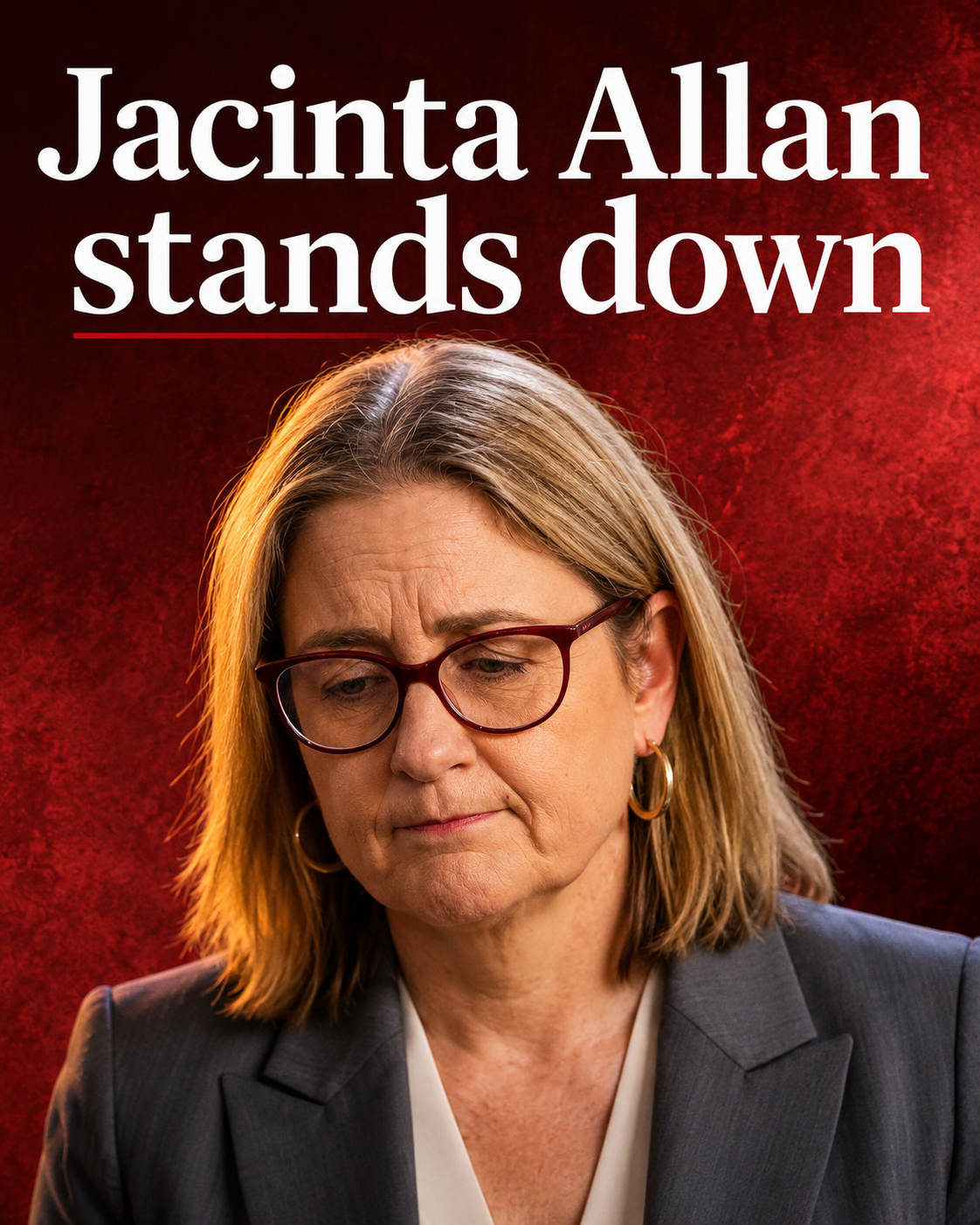
Ms Allan announced she would step down before a scheduled Labor caucus leadership vote, allowing the governing party to choose a new leader without a prolonged internal contest.
The decision immediately cleared the path for Deputy Premier Ben Carroll, who secured the backing of Labor colleagues before later being sworn in as Victoria’s 50th Premier.
While leadership changes are not uncommon in Australian politics, Ms Allan’s resignation marks the end of a significant period for the Victorian Labor Government, which has governed the state for more than a decade.
Her departure also signals Labor’s attempt to reset its political message as it prepares for the next Victorian election amid growing pressure over the state’s economic and fiscal outlook.
From Daniel Andrews’ successor to Premier
Jacinta Allan became Premier in September 2023 following the surprise resignation of Daniel Andrews, who had led Victoria for almost nine years.
Having served as one of Labor’s most senior ministers for many years, Ms Allan inherited a government facing enormous challenges, including rising state debt, major infrastructure commitments, housing affordability issues and increasing pressure from the cost of living.
She entered the role promising stability and continuity following the Andrews era, seeking to reassure both the Labor Party and Victorian voters that the government would continue delivering major projects while addressing everyday concerns.
However, the political environment proved increasingly difficult.
Throughout her premiership, Labor faced sustained criticism from opposition parties over government spending, infrastructure delays, integrity concerns and Victoria’s financial position.
Public debate also intensified around housing affordability, healthcare pressures and economic management, placing additional scrutiny on the government during Ms Allan’s relatively short time as Premier.
Although she remained publicly committed to leading Labor into the next election, speculation surrounding the party’s leadership continued to grow as opinion polling and political pressure mounted.
Leadership change avoids internal division
Rather than forcing Labor MPs into a contested leadership battle, Ms Allan chose to resign before the scheduled caucus vote.
The move enabled the parliamentary party to unite quickly behind a successor and avoid a potentially damaging internal contest that could have further weakened Labor’s position.
Senior Labor figures moved rapidly to finalise the leadership transition, with Ben Carroll emerging as the consensus candidate.
Mr Carroll was elected unopposed before later being sworn in as Victoria’s new Premier, ensuring the government could present an image of stability despite the unexpected change at the top.
Political observers noted that avoiding a divisive leadership spill was likely intended to minimise uncertainty and allow the government to quickly refocus on governing.
A government facing significant challenges
The leadership transition comes at a critical time for Victoria.
The state continues to face pressure from one of Australia’s largest public debt burdens following years of infrastructure investment and pandemic-era spending.
At the same time, households continue to grapple with rising living costs, while housing affordability remains a major issue across metropolitan Melbourne and regional Victoria.
Businesses have also raised concerns about construction costs, labour shortages and regulatory complexity affecting investment across the state.
Those economic pressures have increasingly shaped the political debate heading towards the next state election.
For Labor, changing leaders presents an opportunity to refresh its image while attempting to convince voters that it can address the issues dominating public discussion.
Whether that strategy succeeds is likely to become one of the defining political questions over the coming months.
Ben Carroll promises a different approach
Following his election, Mr Carroll immediately sought to distinguish himself from previous Labor administrations.
In his first public appearance as Premier, he declared:
“I am not Daniel Andrews. I am not Jacinta Allan.”
The statement was widely interpreted as an attempt to reassure Victorians that his government would not simply continue the policies and leadership style of his predecessors.
Mr Carroll also announced plans to establish a royal commission into Victoria’s building industry, describing it as one of the first priorities of his government.
He said restoring public confidence in the sector would form part of a broader agenda aimed at strengthening accountability and improving trust in government institutions.
Despite promising change, Mr Carroll is expected to face ongoing questions about his own role in previous Labor governments after serving in senior ministerial positions for many years.
Labor looks ahead to the next election
For the Victorian Labor Party, replacing its leader is about more than simply filling the office of Premier.
The leadership transition represents an opportunity to reset the government’s political narrative before voters return to the polls.
Supporters hope a new Premier can draw a line under recent political challenges while presenting a renewed vision for Victoria.
Opposition parties, however, are expected to argue that changing leaders does not erase Labor’s record after more than a decade in government.
They are likely to continue focusing on state debt, infrastructure spending and economic management as key election issues.
Meanwhile, the composition of Mr Carroll’s ministry and the policy priorities announced over coming weeks will be closely watched by both political observers and the business community.
As for Jacinta Allan, she has not publicly outlined what role she intends to play following her resignation as Premier.
Whether she remains active in Victorian politics or gradually steps back from public life remains unclear.
Her resignation nevertheless marks the end of a significant chapter in Victorian Labor’s history and opens another as Ben Carroll assumes leadership of Australia’s second most populous state.
With the next election drawing closer, the success or failure of Labor’s leadership transition may ultimately determine whether the party can retain the confidence of Victorian voters after more than a decade in office.






