A heritage-listed church building in central Sydney is preparing to begin a very different chapter in its long history, with its transformation into a new arts and nightlife venue prompting discussion about heritage conservation, adaptive reuse and the changing role of historic buildings in modern Australian cities.
The venue, known as UNHOLY PLAYHOUSE, will occupy a deconsecrated church on Kent Street that dates back to the nineteenth century. Rather than reopening as a place of worship, the building is being redeveloped as a performance space, bar and creative hub featuring live music, theatre, visual arts and community events. Organisers describe the project as an effort to provide independent artists with an accessible venue while preserving a historic landmark through continued public use.
The announcement has attracted widespread attention because of the venue’s planned programming, which includes cabaret performances, live music, DJ events, themed parties, gospel-inspired karaoke and a theatrical production titled Possession, promoted as Australia’s first “live exorcism” performance. While the title has generated headlines, organisers present the event as part of a broader artistic and theatrical program rather than a religious ceremony.
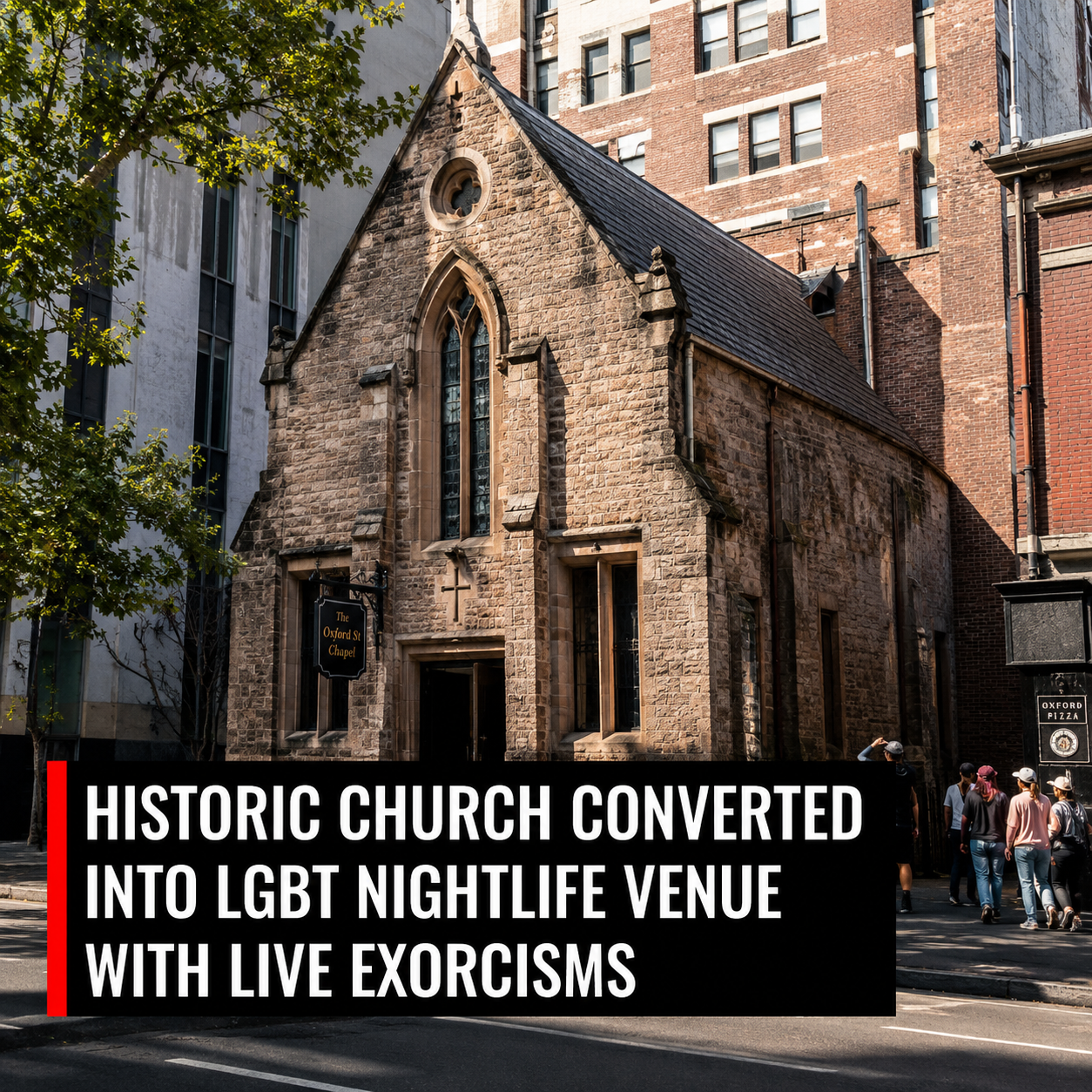
The discussion extends well beyond one entertainment venue. Across Australia and many other countries, historic churches that no longer serve active congregations have increasingly been adapted for new purposes, including theatres, galleries, libraries, community centres, restaurants and residential developments. Supporters argue that adaptive reuse allows significant buildings to remain maintained and accessible instead of falling into disrepair, while critics sometimes question whether certain new uses adequately respect the cultural and historical significance of the original structures.
In this case, the building had already ceased operating as a church before the current project was announced. The organisers emphasise that the venue is intended to function as an independent cultural space supporting emerging artists, musicians and performers from a wide range of creative disciplines. Weekly programming is expected to include performances by more than 140 artists alongside exhibitions, comedy, live music and community events.
Public reaction has reflected the diversity of opinion often associated with heritage buildings and national cultural symbols. Some commentators have questioned whether a former place of worship should host entertainment events with deliberately provocative branding, arguing that many people continue to associate such buildings with religious traditions regardless of their current legal status. Others respond that once a church has been formally deconsecrated, it can appropriately serve new community purposes while preserving the building itself for future generations.
Urban planners and heritage specialists have long noted that adaptive reuse frequently offers one of the most practical ways to preserve ageing buildings in rapidly growing cities. Maintaining heritage properties can be expensive, and many former religious buildings face uncertain futures if they no longer have active congregations capable of funding ongoing maintenance. Converting them into cultural venues, educational facilities or community spaces can provide sustainable long-term uses while retaining important architectural features.
The project also reflects broader changes within Sydney’s cultural landscape. Independent music venues and creative spaces have faced increasing financial pressure in recent years, leading artists and organisers to search for alternative locations capable of supporting performances, exhibitions and community events. Projects such as UNHOLY PLAYHOUSE are presented by their organisers as efforts to create new opportunities for Australia’s independent arts sector while making use of historically significant buildings.
Questions about the relationship between artistic expression and religious heritage are not unique to Australia. Similar debates have emerged internationally whenever former churches have been converted into hotels, restaurants, museums or performance venues. In many cases, the conversation focuses less on whether redevelopment should occur and more on how historic buildings can be adapted in ways that respect both their architectural significance and the communities connected to their history.
The branding of UNHOLY PLAYHOUSE has attracted particular attention because it deliberately draws upon religious imagery. Organisers describe the concept as theatrical, creative and playful, intended to create a distinctive identity within Sydney’s competitive arts and nightlife scene. Whether audiences interpret that approach as artistic expression, cultural commentary or unnecessary provocation has become one of the central questions in public discussion surrounding the venue.
For Sydney, the redevelopment illustrates how historic buildings continue to evolve alongside the communities around them. While opinions differ about the venue’s programming and branding, the project has already succeeded in generating a broader conversation about heritage conservation, the future of independent arts, the adaptive reuse of significant buildings and the balance between preserving history and encouraging contemporary cultural expression. As the venue prepares to open its doors, those conversations are likely to continue well beyond its first season of performances.






