Nicole Kidman has remembered Sam Neill as “one of the greats” as friends, co-stars, filmmakers and political leaders around the world mourn the sudden death of the beloved New Zealand actor.
Neill, whose extraordinary career stretched from the emerging New Zealand film industry of the 1970s to the global phenomenon of Jurassic Park, died in Sydney on Monday at the age of 78.
His family described the loss as “sudden and unexpected” and said Neill had remained cancer free following his battle with stage-three blood cancer.
The family said he died surrounded by loved ones and thanked staff at a private Sydney hospital for their care.
No cause of death was detailed in the family’s announcement.
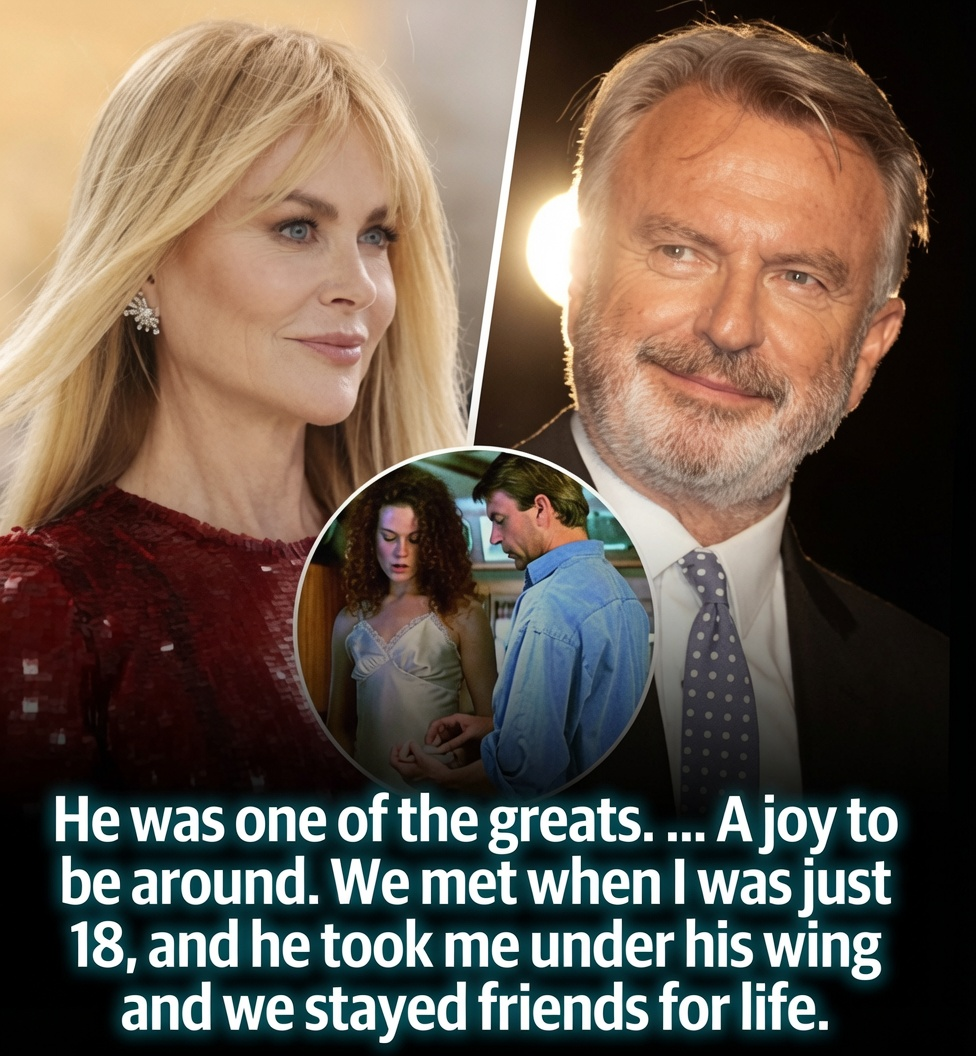
Within hours, the tributes began arriving from both sides of the Tasman and across Hollywood. Yet among the most personal was a remembrance from Kidman, whose friendship with Neill began when she was a young Australian actor still years away from becoming one of the world’s biggest film stars.
“He was one of the greats. … A joy to be around,” Kidman said in a statement to The Sydney Morning Herald.
“We met when I was just 18, and he took me under his wing and we stayed friends for life.
“He was charming, kind, funny, and intelligent. He will be greatly missed, and my heart goes out to his family.”
The friendship began around a film that would change Kidman’s career.
Kidman and Neill starred together in the 1989 psychological thriller Dead Calm, playing married couple Rae and John Ingram.
Directed by Phillip Noyce, the film followed the couple after they encountered a stranger at sea, with Billy Zane completing the central cast. Its claustrophobic setting and intense performances helped turn the Australian production into an international success.
For Kidman, it became a major breakthrough and an early demonstration of the screen presence that would eventually carry her to Hollywood and an Academy Award.
Neill was already the more experienced performer.
Kidman’s memory of him taking her “under his wing” captured a side of the actor that would appear repeatedly in the tributes following his death: an established star who seemed largely uninterested in behaving like one.
Jimmy Barnes described Neill not simply as a friend, but as family.
The Cold Chisel frontman recalled long evenings of food, wine and conversation at Neill’s Central Otago winery, Two Paddocks.
“My dear friend Sam left us today,” Barnes wrote. “I can’t believe we will no longer be eating great food together and sharing the odd glass of wine down at his winery, while laughing, singing and solving the problems of the world together.”
Barnes said Neill “lifted our spirits when he walked in the room” and remembered a friendship that endured through serious illness for both men.
“He sat with me while I recovered in hospital and I sat with him when he needed me,” Barnes wrote.
“We shared a lot in this life and for that, I will be always thankful. Rest easy, dear Sam. You are always in our hearts.”
For Magda Szubanski, the news was particularly difficult to comprehend.
The Australian actor and comedian, who recently announced she was in remission following her own cancer treatment, fought back tears in a video tribute to Neill.
She said she had spoken with him only recently and remembered him as an “exceptional man” who was talented, kind, classy and “wryly hilarious”.
“This is just devastating news,” Szubanski said.
Her farewell also captured Neill’s famously eccentric affection for animals and wine, imagining him in “happy paddocks beyond the sky” surrounded by excellent wine, good company and animals.
It was an image that would have been familiar to millions who followed Neill away from the cinema.
On social media, he had cultivated a public persona far removed from the polished distance of a conventional Hollywood star. There were farm animals, vineyard updates, dry jokes and an apparently inexhaustible supply of affection for the creatures living around him.
That warmth became inseparable from the way audiences saw him.
To one generation, Neill would always be palaeontologist Dr Alan Grant, standing before dinosaurs in Steven Spielberg’s Jurassic Park.
To Australian audiences, he was part of the fabric of films including My Brilliant Career, Evil Angels and Death in Brunswick.
To New Zealand, he was one of the artists who helped prove that a small national film industry could produce performers with a genuinely global reach.
And to friends, according to the flood of messages following his death, he was Sam: the man who arrived with humour, listened, shared wine and stayed when somebody was sick.
Steven Spielberg remembered Neill as a performer who brought humanity to one of cinema’s biggest spectacles.
Neill’s role as Alan Grant in the original 1993 Jurassic Park made him internationally recognisable on a scale few of his earlier films could have achieved.
Yet Grant was never written or performed as a conventional action hero.
He was wary, intelligent and frequently exasperated. Neill’s restrained performance provided a human centre to a film filled with groundbreaking visual effects and creatures audiences had never seen depicted with such realism.
Spielberg was among the Hollywood figures who joined the outpouring of tributes, while Laura Dern, who played Dr Ellie Sattler, mourned the man with whom she had shared one of cinema’s most enduring franchises.
Neill returned as Grant in Jurassic Park III and, decades after the original film, reunited with Dern and Jeff Goldblum for Jurassic World Dominion.
Director Colin Trevorrow described Neill as a “deeply soulful and beautiful man”.
“It’s not every lifetime you get to befriend a legend,” Trevorrow wrote.
He remembered Neill’s tranquillity, his love of wine and the calm assurance he brought to his characters.
New Zealand actor Karl Urban called Neill “a national treasure” and an inspiration to those who followed in his footsteps.
“Sam was truly brilliant,” Urban wrote. “An inspiration for many who followed in his trailblazing footsteps. A beautiful man.”
The description of Neill as a trailblazer was not an exaggeration.
When his screen career began, New Zealand cinema was still trying to establish itself.
Born Nigel John Dermot Neill in Omagh, Northern Ireland, in 1947, Neill moved to New Zealand with his family as a child.
He adopted the name Sam while young and eventually found his way into filmmaking, initially working behind the camera before becoming an actor.
His breakthrough in Roger Donaldson’s 1977 film Sleeping Dogs came at a pivotal moment for New Zealand cinema. The film is now regarded as a landmark production in the country’s modern screen history.
Neill followed it with Gillian Armstrong’s My Brilliant Career, opposite Judy Davis, before moving into increasingly international work.
Over the decades that followed, his credits became remarkably varied.
He played Damien Thorn in Omen III: The Final Conflict. He appeared in Andrzej Żuławski’s disturbing cult film Possession. He starred opposite Meryl Streep in Evil Angels, known internationally as A Cry in the Dark.
There was The Hunt for Red October, The Piano, Event Horizon and In the Mouth of Madness.
On television, a later generation encountered him as the formidable Chester Campbell in Peaky Blinders.
Neill could play charming, threatening, romantic, exhausted or quietly absurd. His screen persona was often built around restraint. Even when surrounded by chaos, he could make stillness interesting.
New Zealand Prime Minister Christopher Luxon said Neill had begun his career “when there was barely a film industry in this country to speak of”.
“For more than fifty years he took New Zealand stories to the world and his talents helped make our film industry into what it is today — one of our greatest cultural exports,” Luxon said.
“His work will be watched and loved long after all of us.”
Australian Prime Minister Anthony Albanese also paid tribute, saying Neill had earned a special place in Australian hearts through his appearances in so many beloved local stories.
“Wry and dry, thoughtful and laconic, Sam fought illness with the same dignity, humour and conviction that gave strength to his every performance,” Albanese said.
“He will be much mourned and long remembered.”
Neill had been unusually candid about his confrontation with cancer and mortality.
He revealed in 2023 that he had been diagnosed the previous year with stage-three angioimmunoblastic T-cell lymphoma, a rare form of blood cancer.
The diagnosis came after he noticed swollen glands while promoting Jurassic World Dominion.
His first chemotherapy treatment failed. Neill later received another cancer drug and went into remission, although he spoke publicly about the possibility that the treatment might eventually stop working.
Those conversations were delivered with the dry directness familiar to anyone who had watched his interviews.
He did not present himself as fearless. Instead, he appeared determined not to allow illness to become the defining story of his life.
His 2023 memoir, Did I Ever Tell You This?, began partly as a way of occupying himself during treatment. What emerged was not simply a cancer memoir but a collection of stories about acting, family, friendship and a career Neill sometimes seemed faintly surprised to have experienced.
In April, he shared the news that he was cancer free.
That detail made Monday’s announcement particularly shocking to friends and admirers.
His family was careful to state that Neill had remained cancer free when he died. The loss, they said, was sudden and unexpected.
It is why so many of the first reactions carried the same sense of disbelief.
Kidman had known him for most of her adult life.
Barnes had shared hospital rooms, dinners and wine with him.
Szubanski had spoken to him recently.
Filmmakers remembered a collaborator. Actors remembered an example. Political leaders in two countries claimed him, with affection, as part of their national stories.
Perhaps that is the most fitting measure of Neill’s unusual career.
Hollywood knew him as a star of one of the biggest films ever made.
New Zealand knew him as one of its own.
Australia regarded him with the comfortable familiarity reserved for performers who had been present in its stories for decades.
And his friends remembered the man who sat beside them in hospital and stayed for another glass of wine.
“He was charming, kind, funny, and intelligent,” Kidman said.
For an actor whose career encompassed dinosaurs, submarines, psychological horror, colonial dramas and television gangsters, the final tributes have been strikingly consistent.
Sam Neill was admired for his work. He appears to have been loved for the person he was when the cameras stopped.
He was 78.