An online fundraiser supporting comedian Lisa Spencer has attracted significant public attention after she lost her job following a controversial satirical video that sparked widespread backlash across Australia.
The donations are only part of the story.
What has truly captured attention is the growing debate over whether Australia is witnessing accountability in action or another example of cancel culture reaching into people’s livelihoods.
The controversy has divided public opinion and reignited arguments that have become increasingly common across the country in recent years.
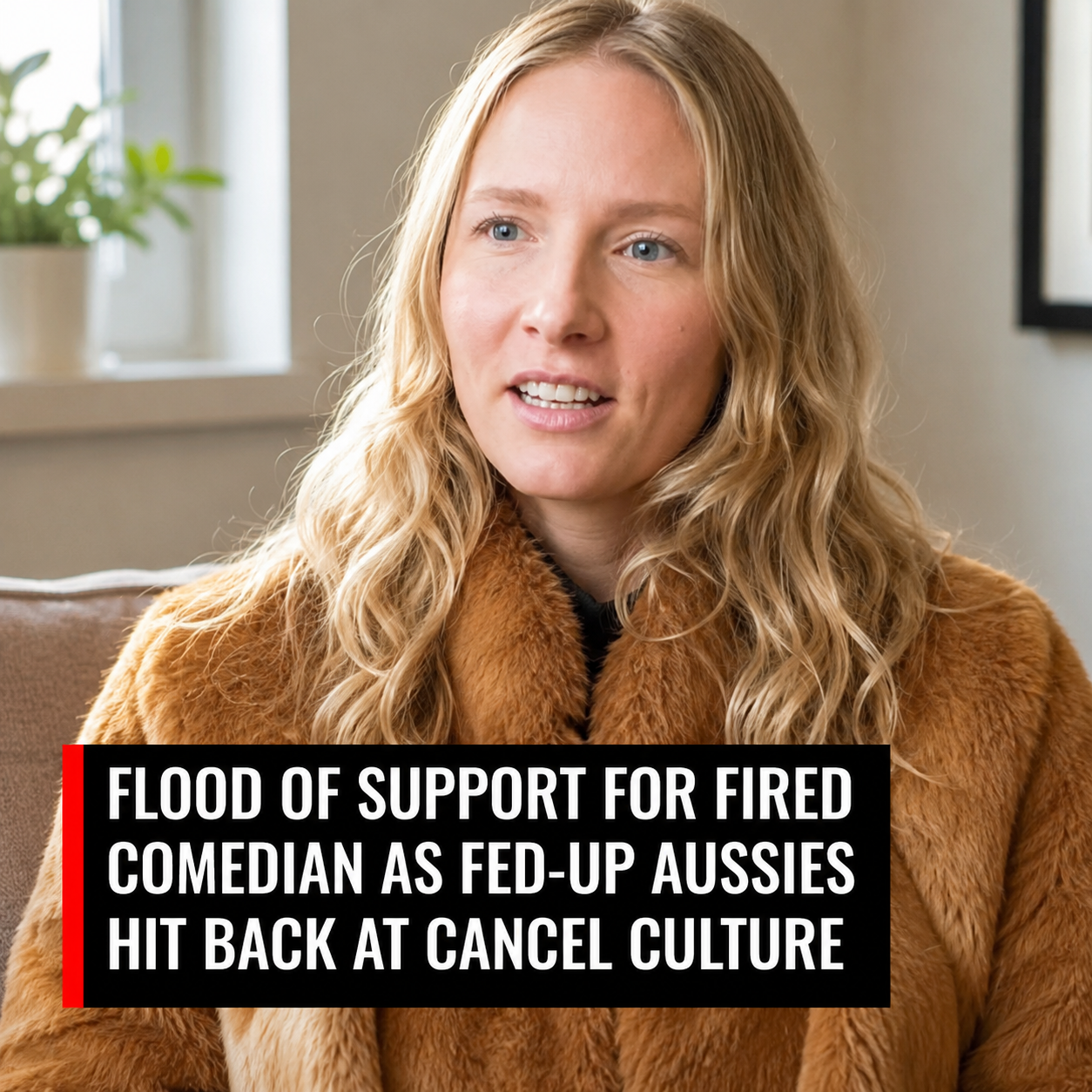
Spencer became the centre of a national controversy after posting a satirical video that many critics described as offensive and racist, triggering widespread condemnation from public figures, community leaders and media organisations. The backlash eventually led to her employer publicly distancing itself from her and confirming she was no longer employed by the company.
At the same time, many supporters rallied behind the comedian, arguing that people should not lose their jobs because of material posted outside the workplace.
That support quickly translated into financial donations and messages expressing frustration with what supporters describe as an increasingly punitive online culture.
The case highlights a broader shift occurring across modern workplaces.
Employers are facing growing pressure to respond when employees become involved in highly public controversies, particularly those connected to race, politics, religion or other sensitive social issues.
Many organisations now view public reputation as a critical business asset.
As a result, companies often move quickly when they believe public confidence, customer relationships or brand reputation could be affected.
For supporters of these decisions, businesses have every right to determine which values they wish to represent.
They argue that employers should not be forced to remain associated with public behaviour that conflicts with organisational standards.
Others see the issue differently.
They worry that social media outrage is increasingly capable of determining whether someone remains employed, regardless of whether any laws were broken.
This concern has become one of the defining elements of the wider cancel culture debate.
The argument extends well beyond comedy.
Writers, academics, broadcasters, entertainers and ordinary workers have all found themselves caught in public controversies amplified by social media platforms.
In many cases, the dispute becomes less about the original content and more about the consequences that follow.
Questions about free expression often sit at the centre of these discussions.
Australia protects freedom of political communication through its democratic institutions, but that does not necessarily protect individuals from social or professional consequences arising from controversial speech.
That distinction is often where public disagreement begins.
Many Australians support broad freedom of expression while simultaneously believing employers should retain the right to make their own employment decisions.
Balancing those two principles can be difficult.
The role of comedy has also become part of the conversation.
Historically, comedians have often relied on satire, exaggeration and provocation to challenge social norms and generate discussion.
Supporters of Spencer argue that controversial comedy should be judged differently from serious political commentary because its purpose is often to provoke reactions and challenge assumptions.
Critics respond that satire does not automatically shield content from criticism, particularly when it is perceived as reinforcing harmful stereotypes. The controversy surrounding Spencer’s video generated strong reactions from Indigenous advocates, media organisations and public figures who argued the material crossed that line.
Social media has dramatically changed the speed and scale of these disputes.
Content that once might have reached a relatively small audience can now become a national story within hours.
That rapid exposure increases both the opportunities and risks facing public figures.
It also creates an environment where employers, advertisers and organisations often feel compelled to respond quickly.
The economic dimension is frequently overlooked.
For many Australians, losing a job can have significant consequences for financial stability, housing security and family wellbeing.
This reality is one reason why employment-related controversies often attract strong emotional responses from the public.
People may disagree strongly about the underlying issue while still questioning whether professional consequences are proportionate.
The fundraising campaign appears to reflect those concerns.
Many donors are not necessarily commenting on the specific content itself.
Instead, they appear to be expressing frustration with what they see as a broader cultural trend involving public shaming, online pressure campaigns and employment consequences.
Others maintain that accountability is an essential part of modern public life.
They argue that individuals who choose to publish controversial content should reasonably expect public scrutiny and criticism.
The challenge is determining where accountability ends and punishment begins.
That question remains at the heart of many contemporary cultural debates.
Australia is not alone in confronting these issues.
Across Western democracies, disputes involving speech, employment and social media have become increasingly common.
Technology has amplified public reactions while also making it easier for communities to organise both support and opposition.
The result is a more polarised environment where controversies often become symbolic of larger ideological battles.
The fundraiser surrounding Lisa Spencer may eventually fade from the headlines.
But the broader questions raised by the case are unlikely to disappear.
How much influence should online outrage have over employment decisions?
Where should businesses draw the line between protecting their reputation and respecting personal expression?
And how should modern societies balance freedom of speech with social accountability?
Those questions continue to divide Australians, and the answers remain far from settled.