Elon Musk has found himself at the centre of another international political controversy after his social media activity during the Belfast riots triggered accusations that he was helping inflame an already volatile situation.
The world’s richest man is no stranger to political disputes.
But the reaction to his latest comments has been particularly fierce, with politicians, community leaders and critics accusing him of using his enormous online influence to amplify tensions during one of Northern Ireland’s most serious outbreaks of unrest in recent years.
The controversy emerged after violent disturbances erupted across parts of Belfast following a knife attack that quickly became a flashpoint in the growing debate over immigration and public safety.
As footage of the incident spread online, anger intensified.
Within hours, social media platforms were flooded with commentary, political arguments and competing narratives about what had happened and who was responsible.
Among the most influential voices to enter the debate was Elon Musk.
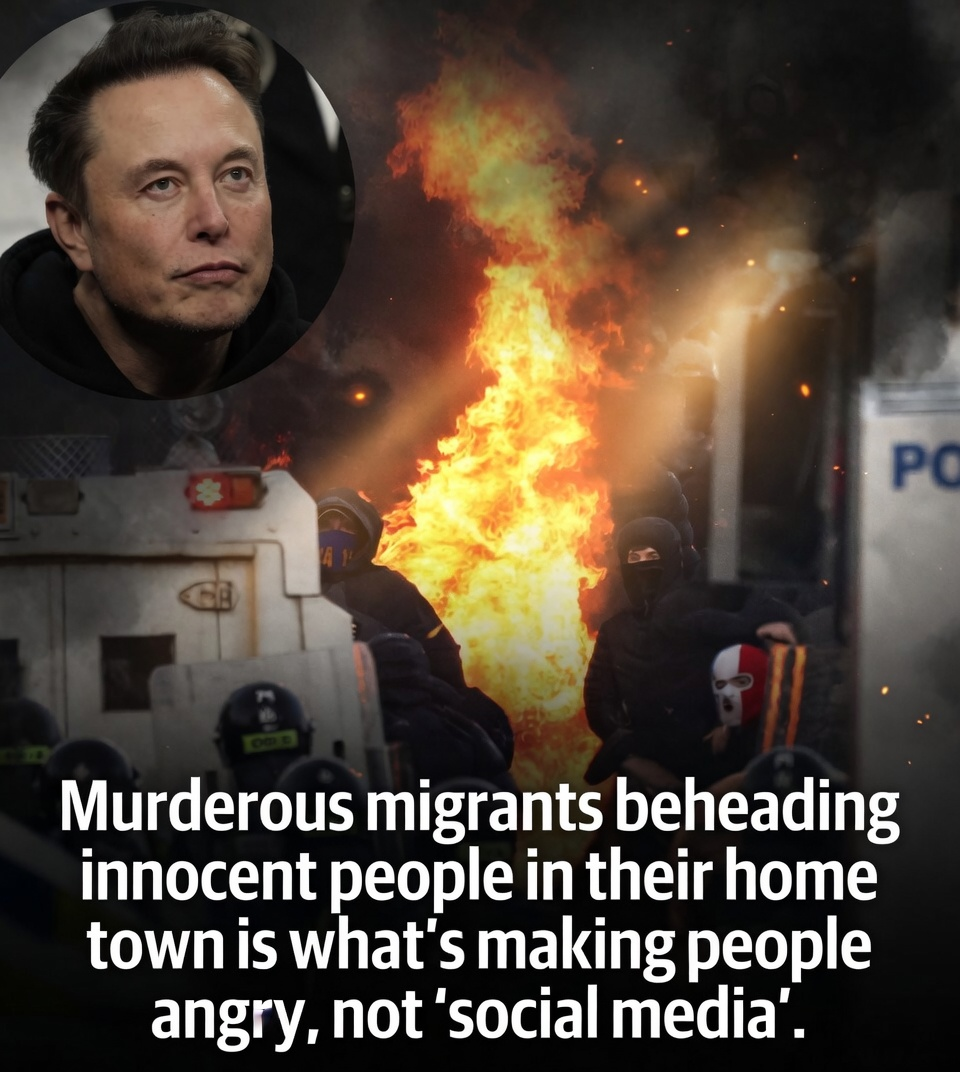
Musk used his platform on X to comment on the unfolding events and to amplify posts from anti-immigration figures who were linking the attack to broader concerns about migration policy.
He also publicly backed Restore Britain, the political movement led by Rupert Lowe, writing that only the party could save Britain. That endorsement immediately drew attention because Restore Britain had already become closely associated with calls for tougher immigration policies and mass deportations.
Critics argued the timing could hardly have been worse.
Belfast was already experiencing growing unrest.
Police were dealing with public disorder, reports of attacks on property and increasing fears that tensions could spread further.
Against that backdrop, Musk’s posts quickly became part of the story themselves.
Several political leaders accused online influencers of helping drive anger and division.
Among the strongest critics was Northern Ireland First Minister Michelle O’Neill, who argued that figures operating from outside the region were exploiting a local tragedy to advance political agendas.
Without directly influencing events on the ground, she suggested that powerful online personalities were helping create the atmosphere in which hostility and confrontation could flourish.
The criticism was not limited to local politicians.
Across Britain, commentators questioned whether social media platforms are becoming increasingly influential during periods of civil unrest.
Many pointed to the speed with which inflammatory content can spread compared with official information released by authorities.
Police investigations and court proceedings often take time.
Social media reactions happen almost instantly.
That gap has become a growing concern for governments around the world.
Supporters of Musk reject the accusations.
They argue that discussing immigration, crime and public safety is entirely legitimate.
From their perspective, Musk is highlighting concerns that many ordinary people already hold but feel unable to express openly.
They also argue that responsibility for criminal behaviour rests with those committing violence, not with individuals commenting on public events.
That defence has become increasingly common whenever debates emerge about the relationship between social media speech and real-world actions.
The central question is whether influential figures are merely reflecting public sentiment or actively shaping it.
The answer depends largely on political perspective.
What is undeniable is the scale of Musk’s reach.
With hundreds of millions of followers and ownership of one of the world’s largest social media platforms, few individuals possess a comparable ability to influence public conversations.
That reality means even brief comments can generate headlines across multiple countries.
The Belfast controversy is only the latest example.
Over the past several years, Musk has repeatedly become involved in debates surrounding migration, free speech, national identity and European politics.
His interventions have attracted praise from supporters who see him as willing to challenge establishment narratives.
They have also attracted criticism from opponents who accuse him of amplifying divisive rhetoric.
The situation in Belfast has intensified that argument.
The original knife attack generated widespread public concern and prompted renewed debate about immigration policy.
However, the subsequent riots shifted attention towards the role of social media itself.
Authorities and political leaders increasingly argued that online activity was helping fuel tensions and spread inflammatory claims faster than facts could be verified.
That concern is not unique to Northern Ireland.
Across Europe and North America, governments are grappling with how to respond to social media platforms that can instantly distribute information, opinion and outrage to millions of people.
Supporters of stronger regulation argue existing rules have not kept pace with technological change.
Critics warn that governments risk restricting legitimate political speech.
Musk has consistently aligned himself with the latter position.
He has frequently argued that open debate should be protected even when opinions are controversial or unpopular.
His critics counter that platforms also carry responsibilities when public safety is at risk.
The Belfast riots have become the latest battleground in that wider dispute.
For Musk, the controversy is unlikely to cause lasting political retreat.
His public responses to previous criticism suggest he remains convinced that social media platforms should allow robust and unrestricted discussion of contentious issues.
Yet the reaction from Belfast demonstrates the challenge that comes with extraordinary influence.
The larger the audience, the greater the scrutiny.
The larger the platform, the greater the consequences when public debate turns volatile.
Whether Musk’s comments genuinely contributed to the unrest will remain fiercely contested.
What is already clear is that the riots have become about far more than events on the streets of Belfast.
They have evolved into another global argument over immigration, social media power and the responsibilities that come with having one of the loudest voices on the internet.






