Victorian Premier Jacinta Allan is facing renewed political pressure after reports emerged that her government is considering major changes to the state’s long-standing council rate cap, a move critics argue could expose households to significantly higher local government charges at a time when many families are already struggling with the cost of living.
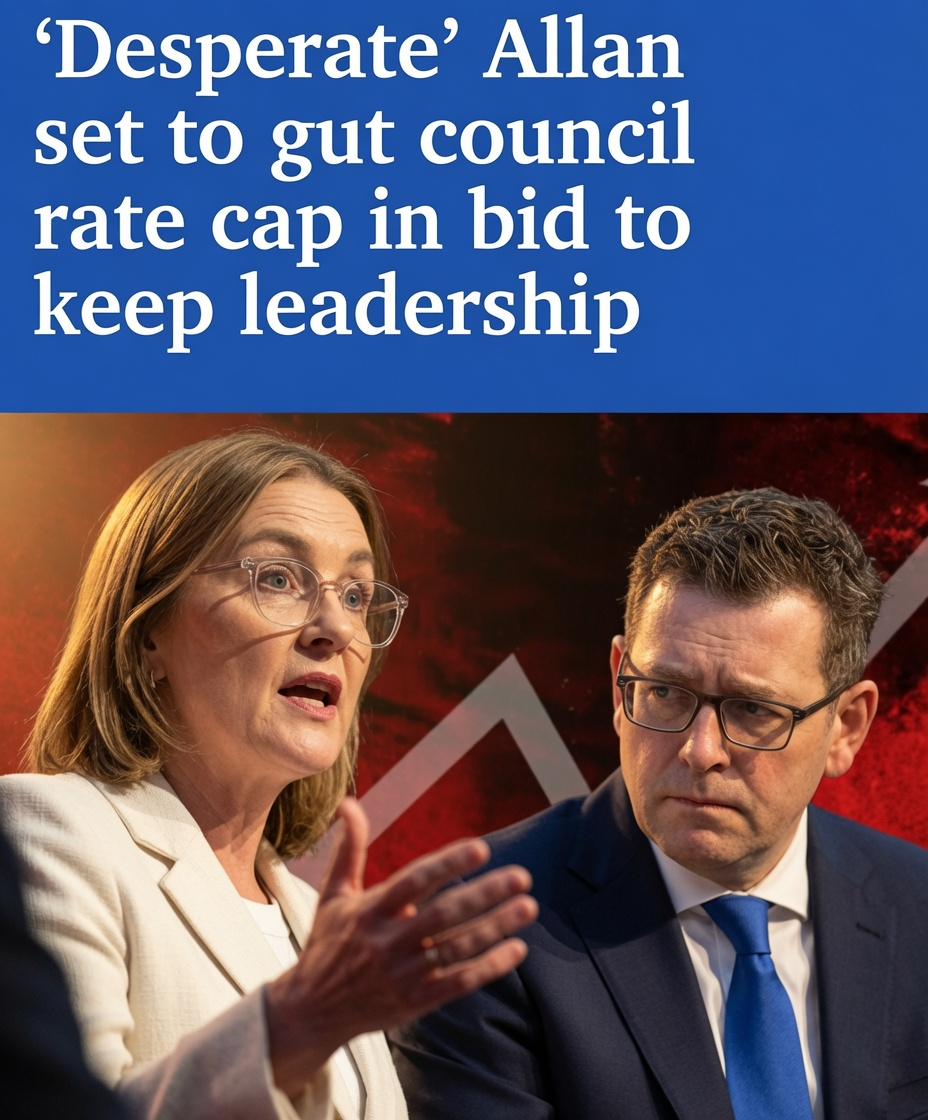
The proposal, first reported by Melbourne media and now dominating Victorian political debate, centres on altering the rate capping framework introduced in 2016 under the Andrews Government. The policy has limited annual council rate increases by linking them to inflation, requiring councils to seek approval from the Essential Services Commission if they wish to exceed the cap.
According to reports, the Allan Government is exploring whether staff wage increases could be exempted from the cap, allowing councils to pass those additional employment costs directly on to ratepayers without breaching the annual limit. While no final decision has been announced, cabinet is reportedly expected to consider the proposal.
The possibility of such a carve-out has immediately triggered accusations from the Opposition and other political parties that Labor is preparing to dismantle one of the few policies broadly viewed as protecting Victorian households from rapidly increasing council bills.
The timing has only intensified scrutiny.
Premier Allan is already under mounting leadership pressure after months of poor polling, internal unrest within the Victorian Labor Party and growing concern among MPs about the government’s prospects at the November state election. Multiple reports suggest sections of Labor are questioning whether Allan can lead the party into the campaign, although she has publicly shown no intention of stepping aside.
Critics have linked the proposed rate cap changes to those internal political challenges.
Reports claim the Australian Services Union (ASU), which has long opposed Victoria’s rate cap, supports reforms that would give councils greater flexibility to fund higher wages for local government employees. Observers have speculated that accommodating those concerns could strengthen Allan’s support among influential union-aligned members inside Labor, although the government has not confirmed any political motivation behind the proposal.
Government ministers have yet to outline the final shape of any reforms, and no legislation has been introduced.
Nevertheless, the debate has reignited broader questions about the future of council funding across Victoria.
The rate cap was originally introduced by the Andrews Government after years of community concern about unpredictable and often substantial increases in council rates.
Since 2016, annual increases have generally been tied to inflation, with councils permitted to seek higher rises only through a formal variation process assessed by the Essential Services Commission.
Supporters argue the system has provided certainty for households and businesses while encouraging councils to improve efficiency rather than relying on higher rates.
Opponents, however, have argued for years that the cap has become increasingly difficult to manage as wage costs, construction expenses, insurance premiums and infrastructure maintenance costs have all risen faster than inflation.
Many Victorian councils say they face growing financial pressure as they attempt to maintain roads, libraries, sporting facilities, maternal health services, waste collection and other essential community services.
The Municipal Association of Victoria has previously argued that councils need greater flexibility to deal with rising operational expenses and increasing community expectations.
For residents, however, any change to the cap raises immediate questions about household budgets.
Council rates are one of the largest recurring costs for property owners, particularly retirees and families on fixed incomes.
If staffing expenses—which reportedly account for between 40 and 50 per cent of council operating costs—were excluded from the cap, councils could potentially pass larger wage increases directly on to ratepayers. Whether every council would choose to do so remains uncertain, but critics argue the proposal would significantly weaken the original intent of the legislation.
Victorians are already confronting a range of financial pressures including mortgage repayments, insurance costs, electricity bills and higher grocery prices.
That broader economic backdrop explains why even relatively technical changes to council funding arrangements have become politically sensitive.
The debate also reflects wider tensions between the Victorian Government and local councils.
Over recent years, councils have argued that new responsibilities have increasingly been transferred to local government without corresponding increases in funding, placing additional strain on municipal budgets.
State governments, meanwhile, have sought to balance demands for improved local services with ongoing cost-of-living relief for households.
The proposed reforms therefore sit at the intersection of competing priorities:
- keeping council rates affordable;
- allowing councils to maintain services;
- funding competitive wages for local government staff; and
- managing the state’s broader fiscal and political pressures.
Politically, the issue could become another test of Allan’s leadership.
The Premier has spent much of 2026 attempting to restore confidence following controversy surrounding the state’s handling of corruption allegations linked to major infrastructure projects and broader concerns about Labor’s electoral position.
Recent polling has suggested Labor faces a difficult path to re-election, while reports of internal dissatisfaction have fuelled ongoing speculation about possible leadership alternatives.
Despite that pressure, Allan has consistently maintained that her government remains focused on governing rather than internal politics.
Whether the rate cap proposal proceeds in its reported form remains unclear.
The government could ultimately adopt a more limited reform, abandon the proposal entirely or introduce additional safeguards designed to protect ratepayers while providing councils with greater financial flexibility.
Until cabinet reaches a formal decision, much of the debate remains centred on reported proposals rather than final government policy.
Even so, the controversy illustrates how deeply cost-of-living issues continue to shape Victorian politics.
What began as a discussion about council funding has quickly become another flashpoint in the broader debate over Labor’s leadership, union influence and the balance between protecting public services and shielding households from rising costs.
With the state election approaching, any decision affecting council rates is likely to attract intense scrutiny from voters across metropolitan Melbourne and regional Victoria alike.






